Author: anil

  • Role of Blockchain in Supply Chain Management

    Role of Blockchain in Supply Chain Management

    The past 10 years have seen a very fast development of supply chain management. Against this backdrop, what was a simple linear flow of the goods has now become a sophisticated, interdependent ecosystem of manufacturers, suppliers, logistics providers, regulators, and consumers. As trade and customer pressures intensify across the globe and the need to be more transparent increases, conventional supply chain systems are finding it hard to manage. This is the area where blockchain technology is becoming an empowering force of trust, visibility, and efficiency of operation in supply networks.

    Blockchain is no longer considered to be linked only with cryptocurrencies. It is redefining the way data are captured, distributed, and checked in business today. In supply chain management it serves as a single source of the truth that can be trusted by all the stakeholders, and friction and uncertainty is minimized with every step in the process.

    Understanding Blockchain Beyond the Hype

    In its simplest form, blockchain is a distributed electronic registry authenticating transactions in more than one system in a secure and immutable manner. All transactions are time-stamped and checked by the participants in the network and are included in a chain of records that can never be changed in the future. This architecture eliminates the necessity of centralized control, and data integrity is preserved.

    In the case of supply chains, this implies that information about the origin of the products, their shipping status, quality checks, and transfers of ownership can be stored permanently and accessed in real time. Blockchain development has become a viable strategy that many enterprises are looking into as a way of modernizing the stagnant supply chain processes and ensuring the sustainability of their operations in the long term.

    Why Traditional Supply Chains Face Growing Challenges

    The new supply chains are global, inter-temporal, and inter-regulative. Although globalization has enhanced scalability and cost reduction, it has also come with some such risks as data silos, counterfeit goods, shipment delays, and compliance failures.

    One of the largest pain points includes the lack of end-to-end visibility. In case of fragmented data in more than one system, decision-makers can hardly react quickly to disruption. Paperwork, slowness in reporting, and poor incompatible data standards only contribute to more operational inefficiencies and loss of money.

    Blockchain in supply chain management addresses these issues by enabling seamless data sharing while maintaining accountability among all participants.

    Transparency and Trust Through Shared Ledgers

    An efficient supply chain is based on transparency. Blockchain produces a common registry where all the authorised members can access the same validated data. This avoids conflict by having wrong records, and it fosters trust among partners that might not have a close relationship among themselves.

    Blockchain solutions, when integrated with the newest cloud solutions, will be able to achieve scalability and provide real-time access to key supply chain data. The integration enables the businesses to track the shipments, inventory level, and the performance of the suppliers within one digital space and enhance coordination and responsiveness.

    Enhancing Traceability From Source to Consumer

    One of the most useful advantages of blockchain in supply chain management is traceability. The product can be traced back to the sourcing stage of raw material until the ultimate delivery stage, with all the stages being registered on the ledger. This is particularly significant with such industries as food, pharmaceuticals, and luxury goods, where the level of authenticity and safety is paramount.

    With a full product history, any company can easily know the origin of defects, recalls can be handled better, and it can demonstrate compliance with the regulatory regulations. This is also beneficial to the consumers who get insight into the sources of products and their production, which enhances brand trust.

    Automation and Operational Efficiency

    Blockchain also allows automation, which is done by smart contracts, or self-executing contracts, which are activated by other conditions being satisfied. As an example, payment may be made automatically after delivery of goods and verification of goods, which will save time and administrative overheads.

    Blockchain can be incorporated in digital ecosystems where the creation of apps is involved, as user-facing platforms can enable stakeholders to monitor the movements of shipments, authorize transactions, or get access to compliance information in real time. Such automation minimizes errors by humans and speeds up supply chain operations without loss of control.

    Cost Reduction Across the Supply Network

    Hidden costs that may arise due to inefficiencies in supply chains are usually excess inventory, manual reconciliation, and dispute resolution. Blockchain saves these costs by excluding the middlemen and paperwork.

    This is because all parties operate on the same verified data , therefore the reconciliation process is cut drastically. This results in reduced operational costs, quicker turnaround time, and increased profitability in the long run. Financial implications of adopting blockchain in the long run may be high, particularly for large and multi-tier supply chains.

    Supporting Sustainability and Ethical Practices

    Businesses around the world have developed the concept of sustainability as a priority. Blockchain assists organizations to monitor their supply chains in the areas of environmental impact, ethical sourcing, and labor practices. Authenticated information simplifies reporting sustainability measures and achievement of ESG.

    Companies can ensure that they act responsibly and prevent greenwashing by storing the carbon footprint, the origins of the materials, and the certifications of suppliers in a blockchain. Such openness builds trust and helps in long-term brand value amongst the stakeholders.

    Security and Data Integrity Advantages

    The safety of blockchain is ensured by the decentralized structure and cryptographical authentication. After data is written, it cannot be changed without the agreement of the network, and it becomes incredibly hard to commit fraud and modify data.
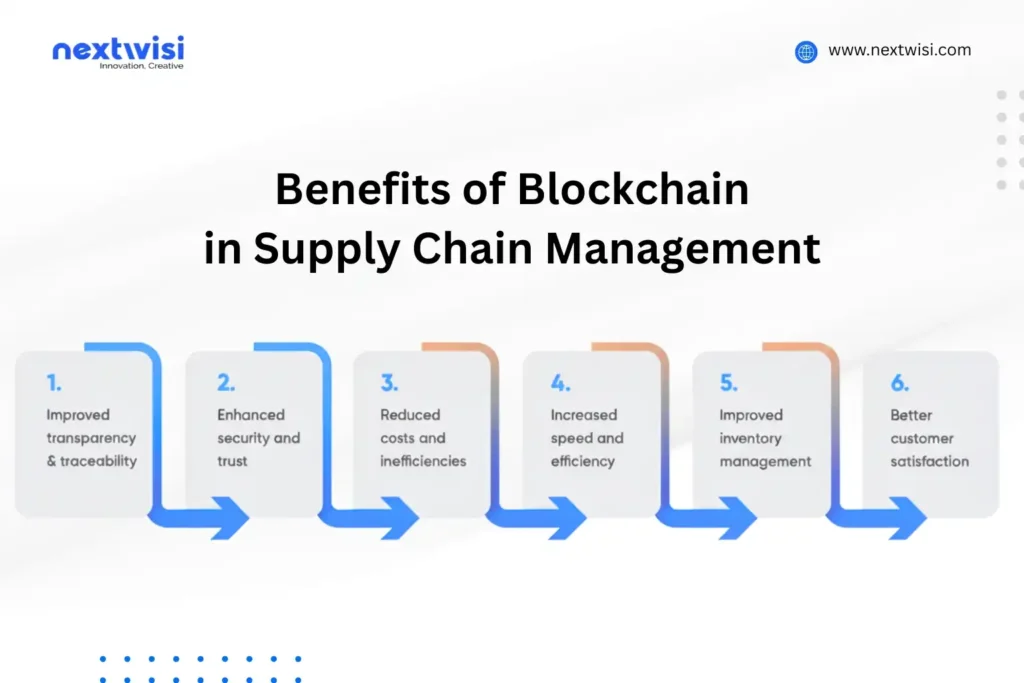
    Benefits of Blockchain
in Supply Chain Management

    Such immutability is especially useful in the supply chains where the accuracy of data is vital. Blockchain will preserve information integrity in the product lifecycle, either through quality assurance records or custom documentation.

    Challenges to Consider Before Implementation

    Although blockchain has its benefits, such adoption does not come without difficulties. The process of integrating with the legacy systems may be complicated, and large volumes of transactions still pose a challenge of scalability. Legal and regulatory uncertainty is also possible, as blockchain standards are still developing around the world.

    In order to successfully implement, the correct blockchain framework must be selected, supply chain partners need to collaborate, and it has to be carefully planned. Companies also need to invest in competencies and forms of governance to operate blockchain networks successfully.

    The Future of Blockchain in Supply Chain Management

    The digital, interconnected, and data-driven supply chain management is the future. Blockchain will become a key factor in making ecosystems transparent where the trust is embedded in the system instead of being imposed by means of manual controls.

    With more people using it, blockchain will become more intertwined with IoT, analytics, and automation tools, providing more business opportunities and efficiency incentives. Building more resilient and flexible supply chains will provide early adopters with a competitive edge.

    Conclusion

    Blockchain in supply chain management is reshaping how businesses manage data, logistics, and partnerships. From improved traceability and security to cost reduction and sustainability, the long-term value of blockchain adoption is clear.

    Experienced technology partners should be involved in the implementation of the secure and scalable blockchain solutions by companies willing to do it. One such company is Nextwisi Solutions, which offers professional blockchain development solutions to assist businesses in designing, implementing, and optimizing blockchain-based supply chain systems that are customized to the needs of real-life business operations.
  • Cloud Migration Consulting Services Explained: Benefits, Process, and Business Use Cases

    Cloud Migration Consulting Services Explained: Benefits, Process, and Business Use Cases

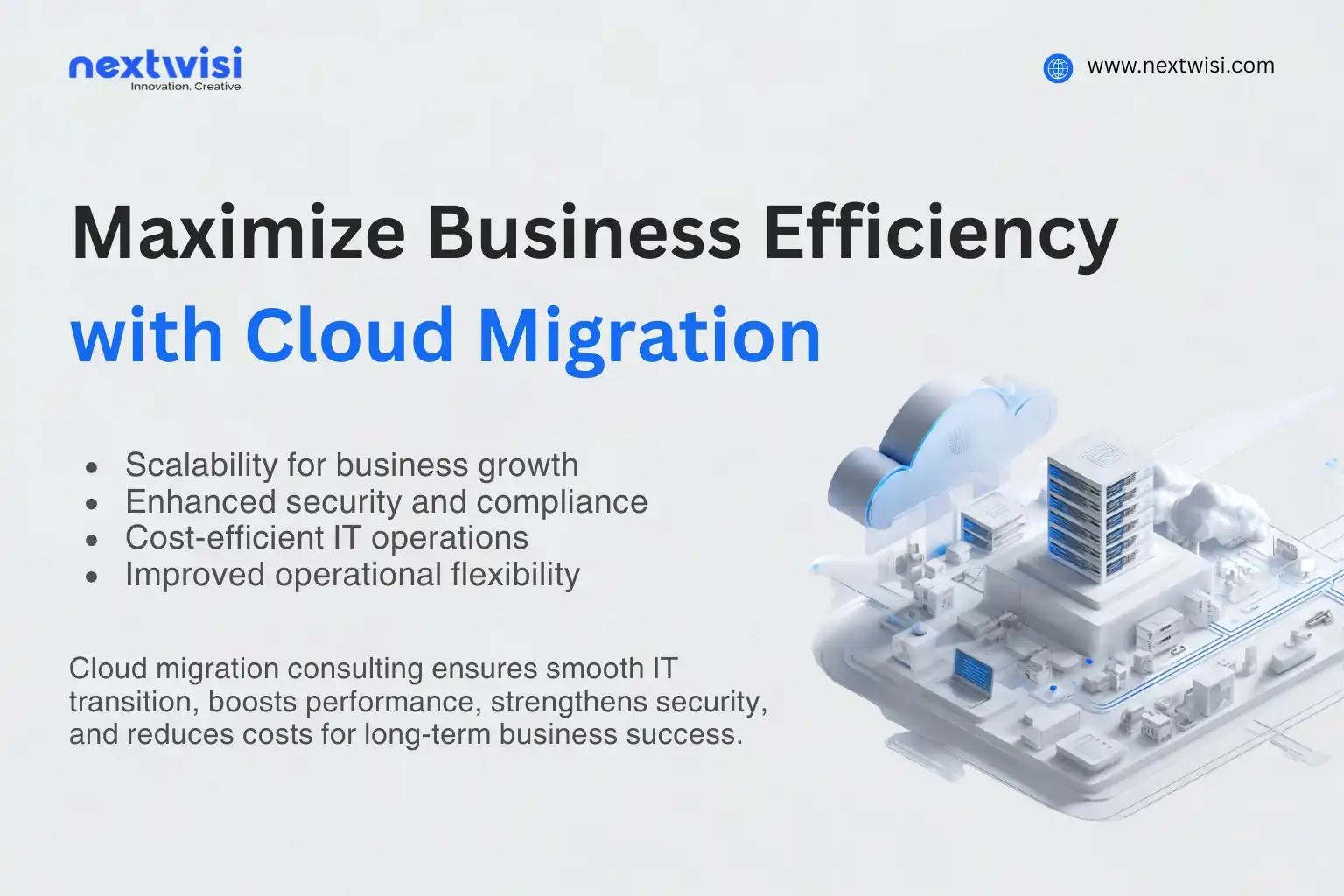
    The modern-day business environment is characterized by speed, scalability, and reliability as a measure of success. Conventional on-premise infrastructure tends to cause bottlenecking when companies expand, add new digital services, or venture into new markets. The high maintenance costs, lack of flexibility, and performance problems are forcing organizations to seek alternative solutions. The increase in demand has rendered cloud migration consulting services an important segment of contemporary IT strategy.

    Cloud migration is not merely a technical transformation. It is a business transformation that has an effect on business operations, security, customer experience, and business growth over the long term. Unless properly planned by experts, cloud adoption may result in downtime, security threats, and cost surprises. This is the reason why companies are turning to professional consulting more so as to have a comfortable and well-organized migration process.

    What Are Cloud Migration Consulting Services?

    Cloud migration consulting services are dedicated services that aid the organizations to transfer applications, data, and workloads of their homes and on-premise settings to cloud platforms in a dependable and secure way. Such services include evaluation, planning, the migration process, and optimization after migration , as part of the process of making sure that the use of clouds is in line with business goals.

    Consultants do not use a generic approach but instead perform a study of the current IT ecosystem. They determine the dependencies, performance requirements, and security needs and propose the most appropriate cloud model and migration strategy. This strategy mitigates the operational risk and makes sure that cloud investments can bring quantifiable business value.

    Why Cloud Migration Has Become Essential for Businesses

    With the increasing pace of digital transformation, companies require IT systems that are able to quickly adapt to change. Older infrastructure is usually limiting innovation and making operations more complex. On the other hand, cloud environments are flexible, scalable, and cost-effective.

    Organizations are as well under pressure to accommodate remote working, data security, and compliance requirements. Through highly skilled cloud migration consulting, companies are able to transition their IT infrastructure without disrupting their operations, as well as to modernize their IT infrastructure.

    Cloud Deployment Models Explained

    Selecting an appropriate cloud deployment model is among the significant aspects of the migration process. Consultants assist companies in choosing a model depending on the workload, security, and scaling-out strategies.

    The public cloud environments are the perfect choice in case of an organization that wants to be cost-effective and be able to scale quickly. Businesses with sensitive information and those that need to be tightly restricted are fond of private cloud solutions. Multi-cloud and hybrid models also provide flexibility and safety in balance in which organizations can strategically allocate workloads.

    Cloud Migration Strategies Used by Consultants

    Migration tactics vary with different applications. The appropriate choice of the strategy can guarantee low disruption and long-term performance.

    Ordinary migration strategies are:

    • Re-hosting applications with fewer changes in a shorter period to adopt the cloud faster.
    • Rebuilding applications that are not highly optimized to enhance efficiency.
    • Refactoring applications to enable full scalability using cloud-native applications.

    Successful cloud migration consulting services involve the use of a structured strategy, which assists businesses in avoiding unnecessary work and performance problems.

    Cloud Migration Step-by-Step Process

    This can be achieved by having a clear migration process that guarantees predictable results and minimized risk during the transition.

    It typically begins with a sophisticated cloud preparedness examination. The consultants examine the infrastructure, applications, and data dependencies to find out the possible risks and compatibility problems. On the basis of this analysis,, a migration roadmap is developed, which establishes timelines, tools, and responsibilities.

    Under the migration stage, applications and data are transferred in stages in a controlled fashion to reduce downtimes. Encryption, identity management, and compliance policies are security controls that are used to safeguard confidential information. Once migrated, the systems are made performant, cost-effective, and scalable.

    Key Business Benefits of Cloud Migration Consulting Services

    Engaging seasoned consultants is more than just an undertaking to modernize infrastructure. Companies are able to achieve flexibility in operations, enhanced performance, and enhanced security.

    Major benefits include:

    • Scalability on demand and supports the growth of business without the limitations of the hardware.
    • Realized cost efficiency in IT through matching the cloud usage to the real requirements of the business.
    • Better security posture using industry-best practices.

    The benefits of cloud migration consulting services do not make them one-time projects but a long-term investment.

    Industry-Wise Use Cases of Cloud Migration

    Migration to the cloud is a popular trend in a variety of industries with diverse objectives and difficulties. Big organizations rely on cloud solutions to modernize their old systems and help in digital transformation. The medical institutions use safe cloud computing systems to store valuable patient information and address regulatory standards.

    Cloud infrastructure is used by e-commerce businesses to manage traffic peaks and enhance customer experience. Cloud migration is an option that financial institutions depend on to increase the level of data analytics, security, and operational effectiveness. In both instances, the cloud migration consulting services will make sure that the migration is in compliance with the industry rules and performance requirements.

    Importance of Post-Migration Cloud Management

    The process of migrating clouds is not terminated by the migration of workloads. It is important to have constant monitoring and optimization to control cost and maintain performance. Cloud environments have a tendency of becoming inefficient in the long run, unless they are well managed.

    Continuous services like monitoring, performance tuning, and cloud hosting management make businesses stable and reliable. The services guarantee the efficient utilization of cloud resources and accommodate changes in business demands.

    Choosing the Right Cloud Migration Consulting Partner

    The effectiveness of cloud migration highly relies on the experience of the consulting partner. Organizations need to find a provider that has a successful history of experience, an established migration process, and effective post-migration support.

    Such firms as Nextwisi Solutions are oriented to customized cloud strategies, which make security, scalability, and operational efficiency a top priority. This is because their consulting-based model enables companies to circumvent the typical challenges of migration and succeed in the long run.

    Common Challenges in Cloud Migration

    Cloud migration may prove to be problematic without proper management despite the planning.

    Nobody can tell with certainty, but some of the challenges may comprise:

    • The migration process that impacts business.
    • Incompatibility with old applications.
    • Risks of security and compliance.
    • Unexpected cloud costs

    A professional cloud migration consulting service would resolve these issues by doing it in phases, performing ongoing testing, and actively optimizing it.

    Future of Cloud Migration Consulting

    The cloud technologies remain upgrading, which even increases the significance of expert consulting. Enterprises are moving towards hybrid and multi-cloud approaches in order to achieve the balances of flexibility and control. The future of cloud migration is being developed in the form of cloud-native development, automation, and sophisticated cost governance.

    Companies that strategize properly using the appropriate consulting strategy can better cope with these changes and be competitive.

    Conclusion

    Cloud migration is a business move with far-reaching consequences on all aspects of a business. Through proper cloud migration consulting services, organizations have an opportunity to modernize infrastructure, enhance security, and have sustainable scalability.

    A guided approach to consulting is used to achieve the highest value of cloud investments, regardless of the planning, execution, optimization, or cloud hosting & management. Reliable partners such as Nextwisi Solutions unite businesses to prepare a successful cloud migration and ensure their long-term digital transformation and operational efficiency.

  • Blockchain in Intellectual Property: The Ultimate Guide for Modern Creators

    Blockchain in Intellectual Property: The Ultimate Guide for Modern Creators

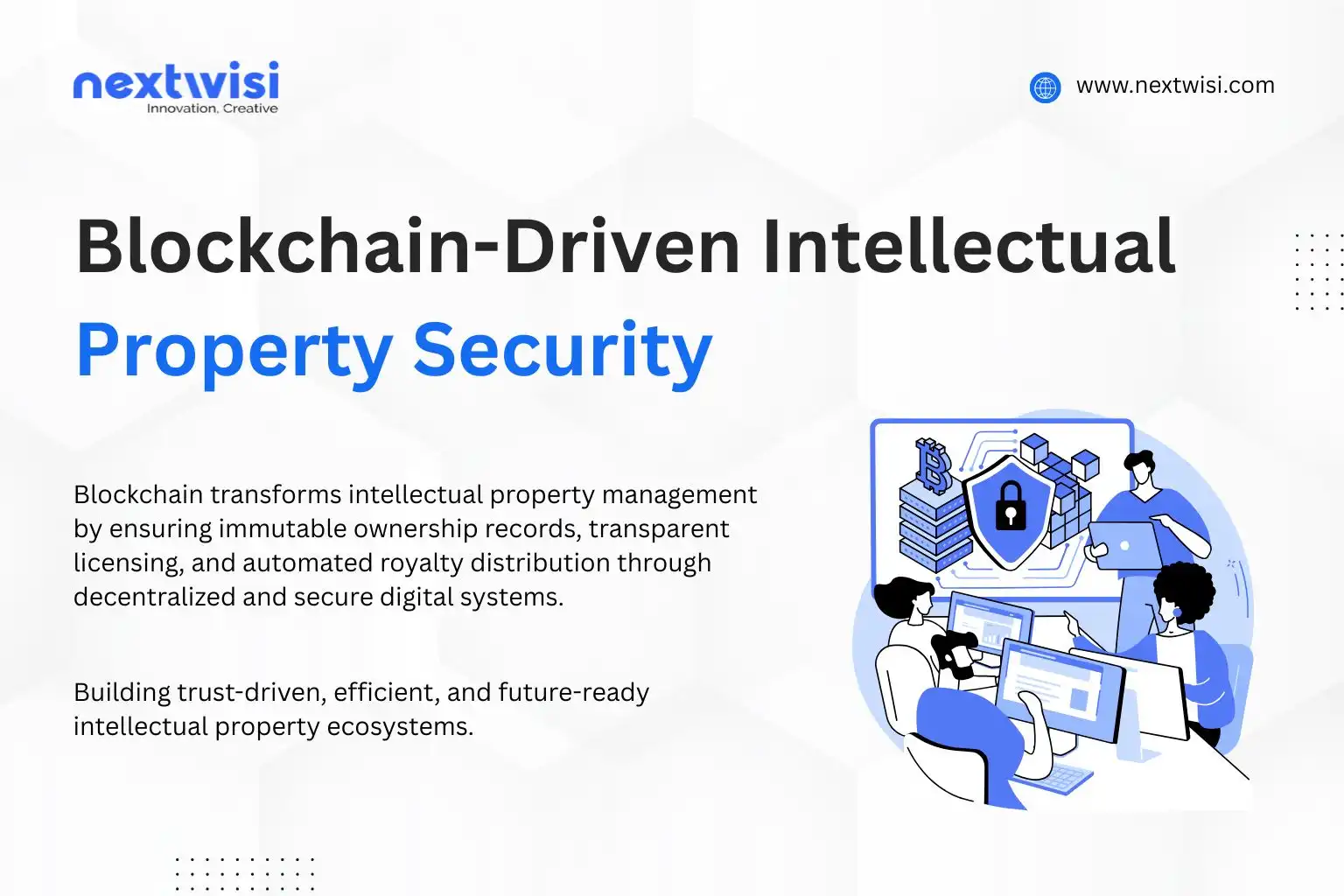
    With a more digital and innovations-driven economy, intellectual property has turned out to be one of the most valuable assets to both individuals and enterprises. Nevertheless, the traditional intellectual property systems are usually caught up by the issues of sluggish registrations, claim of ownership, lack of transparency and high enforcement expenses. Blockchain in Intellectual Property proposes a new paradigm applicable to these issues, which will solve them with the help of decentralization, transparency, and impartiality.

    With the use of blockchain technology, artists, companies, and the legal system can create a reliable, irreversible, and universal intellectual property management system. This change is transforming the way intellectual property is developed, authenticated, barred and enacted within industries.

    Why Blockchain in Intellectual Property Is Gaining Rapid Adoption

    The increasing use of Blockchain in Intellectual Property is supported by the fact that it generates trust in the digital space where ownership and unauthorized use of property is widespread. In contrast to centralized databases, blockchain stores records in more than one node, which means that no one can change or manipulate the data.

    This decentralized system allows stakeholders to check the ownership of IP immediately, simplify the processes of licensing and minimize the reliance on intermediaries, which makes the administration of IP more effective, transparent, and safe.

    Key Contributions of Blockchain in Intellectual Property

    The principles of blockchain technology present the core advancements that address the years of inefficiencies in the traditional IP framework. It can do much more than record-keeping since it can be automated, make it visible, and decentralized.

    Key contributions include:

    • Unchangeable evidence of creation: Blockchain creates unchangeable, time stamped digital files that permanently determine the creation, authenticity, and ownership of intellectual property assets throughout the lifecycle.
    • Clear ownership tracking: All ownership transfers, updates or licensing operations are stored on a distributed registry and can be seen in real time, eliminating disputes in audit, partnership or acquisition scenarios.
    • Decentralized control: Blockchain enables creators and businesses to directly control IP validation and management through avoiding unnecessary intermediaries and eliminating bureaucratic delays.

    Unalterable Proof of Ownership and Authenticity

    Among the most effective advantages of blockchain, one should mention the possibility to grant unquestionable evidence of ownership. When intellectual property is stored on the blockchain it is assigned a permanent digital token that indicates its presence at a particular point in time.

    This unalterable history can also enable inventors, creators and organisations to demonstrate originality, to fight back infringement allegations and to settle any case more effectively by providing evidence of blockchain-based transactions that can be verified in a court of law.

    Transparent Ownership Transfers and Due Diligence

    The transfer of ownership under patents, trademarks and copyright may be complicated especially when preparing deals to merge, acquire or license out. Intellectual Property Blockchain eases these procedures by having a transparent and ever-updating ledger of ownership.

    Any change of ownership would always be documented, thus making the due diligence faster, less litigation risk, and the access to the same verified information would be made available to all parties involved in the transaction lifecycle.

    Decentralized IP Management and Creator Empowerment

    The conventional intellectual property is a system that heavily depends on centralized structures to assist in registration, validation and enforcement. This tends to cause delays, increased expenses, and lack of control in creators. Blockchain comes with a decentralized approach that vests the ownership power squarely in the hands of IP owners.

    Removing middlemen allows blockchain to achieve quicker registrations, enhanced visibility, and enhanced agency over creators and a high level of data integrity and security.

    How Blockchain Streamlines Intellectual Property Licensing

    The traditional methods of licensing intellectual property deal with complicated contracts, slow royalty payments, and compliance checks that are done manually. Intellectual Property Blockchain reinvents this process by automating the workflow of licensing by use of smart contracts.

    Blockchain-powered licensing benefits include:

    • Distribution of royalty: Smart contracts can automatically pay out royalty payments whenever licensed intellectual property is utilized in a way that the correct payment is made without manual calculation or delays.
    • Greater compliance monitoring: All licensing operations are transparently documented, which allows the stakeholders monitoring all activities to know how and who is using them, as well as to verify contractual compliance and to minimize the chances of disputes over unauthorized exploitation.

    Role of Blockchain Development in IP Ecosystems

    Blockchain development at advanced stages is very important in the construction of the customized intellectual property that is specific to the industry. These platforms facilitate secure IP registries, auto-workflow, decentralized marketplace, and NFT integrations.

    Organisations are able to develop IP ecosystems based on scalable blockchain development frameworks that meet regulatory requirements, enhance the effectiveness of operations, and facilitate future innovation in global markets.

    Tokenization and NFTs in Intellectual Property

    Through tokenization, intellectual property can be digitized into a token or alternatively known as non-fungible token (NFT) on the blockchain. This innovation within Blockchain in Intellectual Property creates new opportunities for monetization and ownership flexibility.

    IP NFT opens up possibilities of fractional ownership, trading more easily worldwide, increasing liquidity, and better monitoring of unlicensed use, especially in the creative sector (art, music, games, and digital media).

    Cloud Services Supporting Blockchain-Based IP Platforms

    A large number of IP solutions, which run on blockchain, use cloud services to guarantee a high availability, performance optimization and scalability. Cloud infrastructure helps to maintain the smooth access to data, off-chain storage, and resilience of the systems.

    With the combination of cloud services and blockchain network, organizations have a balanced architecture where IP safety is guaranteed without compromising speed, elasticity, and economical scale.

    Real-World Applications of Blockchain in Intellectual Property

    A number of organizations have managed to use blockchain to modernize intellectual property management. The creators use tools such as Blockai to safeguard digital property using the blockchain method of creating time stamps that cannot be used to violate copyright.

    Verisart offers digital certificates that are digital proofs of ownership of artworks and luxury goods, which allow the creation of non-fungible tokens and eases the process of authenticity verification. Bernstein provides certified version histories, which track the history of innovation development and have a transparent ownership history.

    These practical applications show the usefulness of the Blockchain in Intellectual Property in industries.

    Improved Trust and Collaboration Across IP Stakeholders

    The distributed ledger of blockchain will make sure that all the legitimate parties have access to the same verified information at the same time. This openness enhances confidence between creators, licensees, regulators and enterprises.

    A single and auditable IP transaction record can minimize conflicts, enhance cooperation, and hold the whole intellectual property ecosystem accountable by the blockchain.

    App Development Enabling Accessible IP Management

    Custom app development plays a vital role in making blockchain-based IP solutions accessible to non-technical users. Intuitive applications enable the creators and businesses to register IP assets, license and keep track of royalties in an efficient manner.

    IP management tools make blockchain infrastructure usable and user friendly, closing the divide between complex blockchain infrastructure and daily operational requirements, and are used and adopted across industries.

    Challenges in Adopting Blockchain in Intellectual Property

    Despite its transformative potential, Blockchain in Intellectual Property faces adoption challenges. Legal ambiguity, standardization, interoperability and complicated system integration are still a great hurdle.

    Moreover, the implementation of blockchain-driven IP rights in different jurisdictions needs regulatory clarity, cooperation across the borders, and consistency between the regulations and the new technologies.

    WIPO’s Role in Blockchain and IP Integration

    The World Intellectual Property Organization (WIPO) also encourages the use of blockchain by offering task forces, pilot projects, and global standardization projects. These are the attempts to coordinate the use of blockchains in international IP systems.

    The intervention of WIPO underscores the increasing institutional trust in blockchain as an underlying technology to the future of intellectual property management.

    Best Practices for Implementing Blockchain in IP Management

    The adoption of blockchain in IP by organizations should consider a proper choice of suitable platforms, designing secure smart contracts, encryption of sensitive data, and cooperation with qualified and experienced legal and technical partners.

    A compliance-based strategic approach makes blockchain-based intellectual property systems scalable, secure, and valuable in the long run.

    Conclusion

    Intellectual Property Blockchain is revolutionizing the process through which IP rights are generated, secured and monetized. Blockchain is a solution to these significant flaws of the traditional IP system by providing immutable records, decentralization, tracking ownership transparently, and automatic issuance of licenses.

    With the development of blockchain and cloud services, as well as the creation of applications, the introduction of blockchain into intellectual property management is going to grow at a faster rate, and the world will have a secure, efficient, and future-ready basis of protecting intellectual property.

  • Cross Platform Mobile App Development Frameworks Guide 2026

    Cross Platform Mobile App Development Frameworks Guide 2026

    The development of mobile apps is no longer a frivolous spending of modern business seeking to go digital. Nevertheless, it can be quite costly to develop native applications on Android and iOS separately, and the development process may last longer and be accompanied by complicated maintenance issues.

    It is into this platform that cross platform mobile app development has come in as a viable and future-proof solution. Allowing developers to develop applications on the basis of the same codebase allows businesses to save time-to-market and ensure similar functionality across platforms.

    With the growing competition in the global markets such as the USA, UK, Australia and Canada, it is no longer a question but a requirement to adopt cross-platform strategy.

    What Is Cross Platform Mobile App Development?

    Cross platform mobile app development is a type of development process that enables applications to be used in different operating systems with the use of common source code. Rather than developing native applications isolatedly, developers use cross-platform frameworks to assemble or bridge code with high efficiency.

    This approach makes the development lifecycle much easier and provides a way of delivering mobile applications at a quicker pace without compromising on usability or performance.

    Why Cross Platform Mobile App Development Matters in 2026

    By 2026, companies are supposed to introduce digital products with more speed and at cost-efficient and scalable prices. Cross-platform development serves the purposes of these objectives directly by decreasing redundancy and enhancing operational agility.

    The main advantages of business using cross-platform solutions are:

    • Cross platform mobile app development allows organizations to reduce overall development costs by maintaining a single shared codebase instead of hiring separate Android and iOS teams.
    • Businesses can reach a broader audience simultaneously across Android and iOS platforms, improving brand visibility and accelerating user acquisition globally.
    • Platform consistency in user interfaces will improve customer relationships, brand recognition and reduce the long term maintenance of applications.

    Native App Development vs Cross Platform App Development

    Native and cross-platform development debate is still a controversial topic, yet the contemporary frameworks have helped reduce the performance and usability gap to a minimum.

    ParameterNative AppsCross Platform Apps
    CostHigh due to separate developmentLower due to shared code
    Code ReusabilityPlatform-specificSingle reusable codebase
    Development SpeedSlowerFaster and more efficient
    MaintenanceComplexSimplified and centralized
    PerformanceFully optimizedNear-native with modern frameworks

    The native development emphasizes performance specific to the platform whereas the cross platform mobile application development emphasizes efficiency, scalability and optimization of costs.

    Challenges in Cross Platform Mobile App Development

    cross platform mobile app development

    Cross-platform development has a number of technical and operational issues that should be considered carefully even despite its benefits.

    Key Challenges Include:

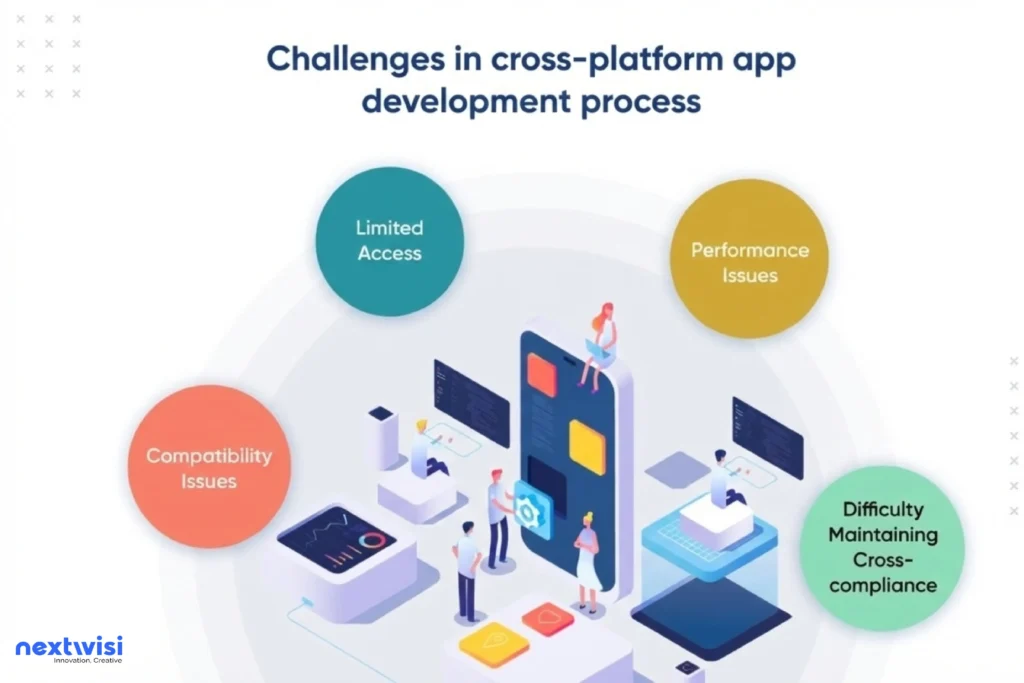
    • The different operating systems, screen sizes, and hardware configurations might pose compatibility problems that will need a considerable amount of testing in different environments as well as different devices.
    • Functional constraints may be caused by limited access to hardware-specific features, particularly when an application needs deep integrations through the OS.
    • This can be caused by performance bottlenecks when abstraction layers exist between native and non-native components and are especially pronounced in graphics intensive or real-time applications.
    • It may be challenging to keep up with the regular updates of operating systems, since structures will always have to adjust to be compatible and fixed.

    Though these are the challenges, they are very minimal compared with the long-term advantages of cross platform development.

    Advantages of Cross Platform Mobile App Development

    The popularity of cross-platform development has been increasing due to its apparent business and technical benefits.

    Major Benefits Include:

    • A cross platform mobile app development allows a business to exploit maximum audience reach by implementing the application on Android, iOS and web platform using a single application.
    • Lower cost of development and operation assists startups and enterprises to distribute budgets fairly in their efforts to avoid undermining the quality of applications or scalability.
    • Shortened development cycles enable organizations to introduce products at a faster pace, react to market dynamics, and be competitive in swiftly changing digital landscapes.
    • Maintenance is simplified such that updates, bug fixes, and improvements are not copied in the efforts to maintain two or more platforms.
    • Code reusability reduces duplication of development efforts, is time saving, resource saving and maintenance cost saving in the long run.
    • The continuous integration of the cloud offers portability, data synchronization and protection, inter-platform and inter-devices.
    • Similar UI and UX enhance familiarity, engagement, and satisfaction to the user no matter the operating system.

    Programming Languages and Cross Platform Frameworks

    Programming LanguageCross Platform Frameworks
    JavaScriptReact Native, Ionic, NativeScript
    DartFlutter
    C#Xamarin
    JavaCodename One
    PythonKivy, BeeWare

    Best Cross Platform Mobile App Development Frameworks in 2026

    1. Xamarin

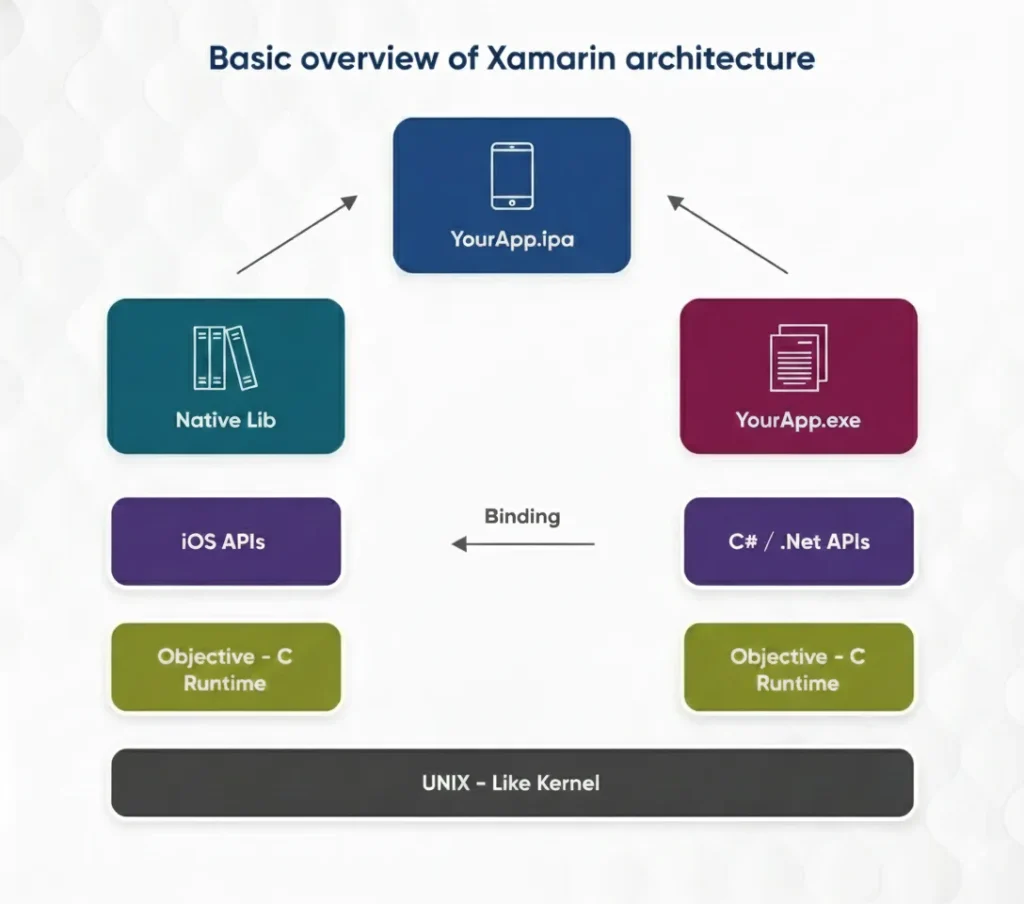
    Xamarin which is supported by Microsoft is written in C# and.NET, offering application development capability of enterprise scale, and with great code-sharing.

    cross platform mobile app development

    Pros of Xamarin:

    • Xamarin allows developers to reuse a large chunk of application code across platforms, shortening development time and allowing high performance and stability.
    • On the one hand, Xamarin is especially appropriate in large enterprises and in complex ecosystems of applications because of integration with Microsoft tools and cloud services.

    Cons of Xamarin:

    • Enterprise use The cost of licensing may be expensive and it is not suitable to start-ups or projects with very limited financial resources.
    • Native development might be necessary to provide an excellent user experience with applications of high UI or graphics.

    2. React Native

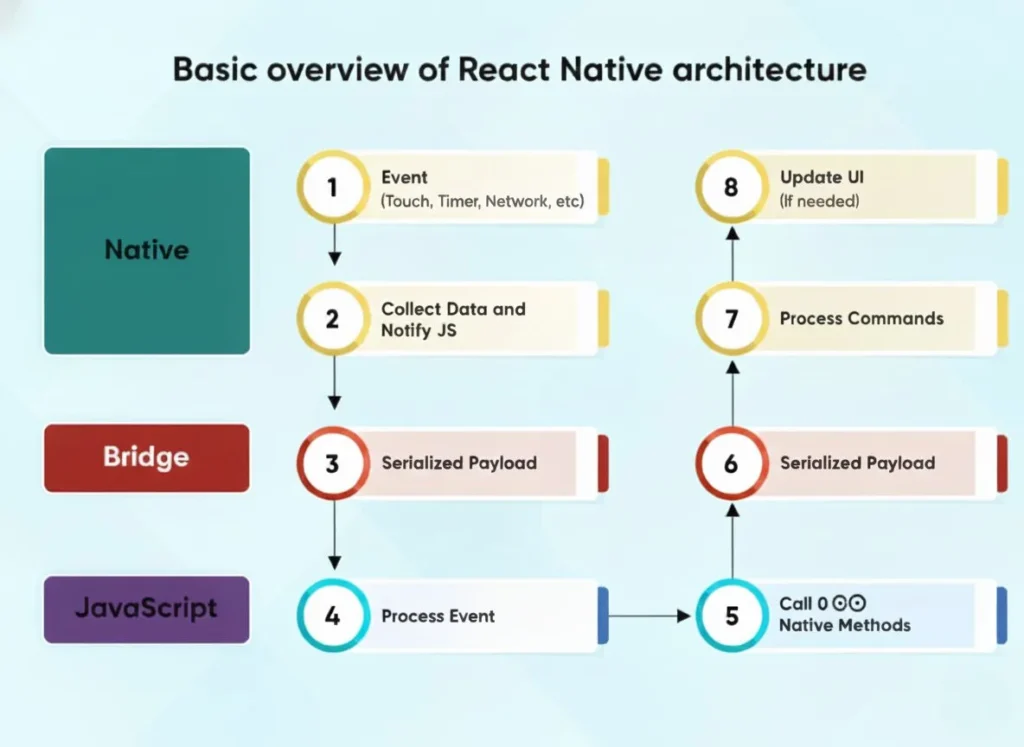
    React Native is an app development technology that is still popular because of its flexibility, JavaScript framework, and a strong developer community.

    cross platform mobile app development

    Pros of React Native:

    • React Native makes development faster and easier since developers can view changes in real-time with the use of hot reloading and save a lot of time during iteration.
    • Big open-source ecosystem offers wide range of libraries, plugins and community support in solving problems more quickly.

    Cons of React Native:

    • There are still some high-level features that cannot be implemented in software; this brings complexity to applications that need specialized hardware.
    • Depending on the Android devices and complicated user interfaces, debugging may be time consuming.

    3. Flutter

    Flutter has received substantial uptake because it has a widget-based design and has a consistent way of rendering its UI.

    Pros of Flutter:

    • Flutter is based on one rendering platform, which makes it uniform to design and provides smooth animations on all platforms without depending on native elements.
    • It is perfect in the case of MVP as it ensures that business ideas can be more rapidly validated with less cost of development.

    Cons of Flutter:

    • Flutter applications are also likely to have higher file sizes than native ones, which can affect the speed of downloading.
    • Lack of support on non-mobile platforms such as the Android TV and Apple TV is also a weakness.

    How to Choose the Right Cross Platform Framework

    The choice of the proper framework is related to the technical needs of your project, the time frame, and the long-term objectives.

    Important Factors to Consider:

    • The expertise of the development team is also essential, since its knowledge of certain frameworks directly affects its productivity and quality of use.
    • The requirement of the framework of learning curve, tooling, and maintenance should be aligned with the budget constraints and delivery timelines.
    • One of the areas that should be considered is the performance expectation and scalability requirements particularly of enterprise or data-intensive applications.

    Best Practices for Cross Platform Mobile App Development

    • Ensuring consistency of UI across platforms with predefined system of design enhances the usability and a foreseeable user experience.
    • Near-native responsiveness can be reached through optimization of application performance, by reducing the unneeded abstraction levels.
    • Clean, modular and testable code writing enhances maintainability and minimizes technical debt in the longer-term.
    • Thorough testing on devices, screen size, and operating systems will make sure there is reliability on the application before deployment.

    Future of Cross Platform Mobile App Development

    Emerging technologies and changing business demands are the forces behind the cross platform mobile app development in the future.

    Key Trends Shaping the Future:

    • The artificial intelligence will be used to improve personalization and automated testing and predictive analytics in cross-platform applications.
    • The integration of the Internet of Things will support the flow of communication between mobile applications and connected devices across the industries.
    • Low-code and no-code will provide a faster way to develop and enable solutions to cross-platforms to be used by non-technical people.
    • Cloud-native architecture will enhance security, scaling, and performance with lowering complexity of infrastructure.

    Conclusion

    Cross platform development has been seen to be more than just a cost-saving option , it has become a strategic advantage to contemporary business. As cross platform mobile app development frameworks such as Flutter, React Native and Xamarin mature at an alarming rate, cross platform development allows developers to launch faster, save money, and maintain uniform digital experiences.

    The selection of the appropriate framework will be based on the objectives of the business, technical needs and scaling purposes. By cooperating with an established cross-platform mobile application development firm, the informed decision-making will be guaranteed and make the venture a success in the long run.

  • Dynamic Element Web Development Definition Explained

    Dynamic Element Web Development Definition Explained

    In the modern digital society, sites should be not only the boards of constantly updated information. Move to dynamic element web development, a current technology that keeps the sites responsive, interactive, and flexible to the actions of the user. Instead of filling a whole page, the dynamic components refresh the components of a webpage according to the actual input, and this improves the user experience.

    This approach to web development is necessary in the development of websites in response to user action, data entry, or other external stimuli. Dynamic web elements such as interactive forms and real-time updates to content render websites alive and interactive as opposed to the case of traditional websites that are fixed and thus lacking in dynamism. This concept is important in the endeavor by developers, designers, and the owners of their websites to stay abreast of the fast-changing technologies.

    What is Dynamic Element Web Development?

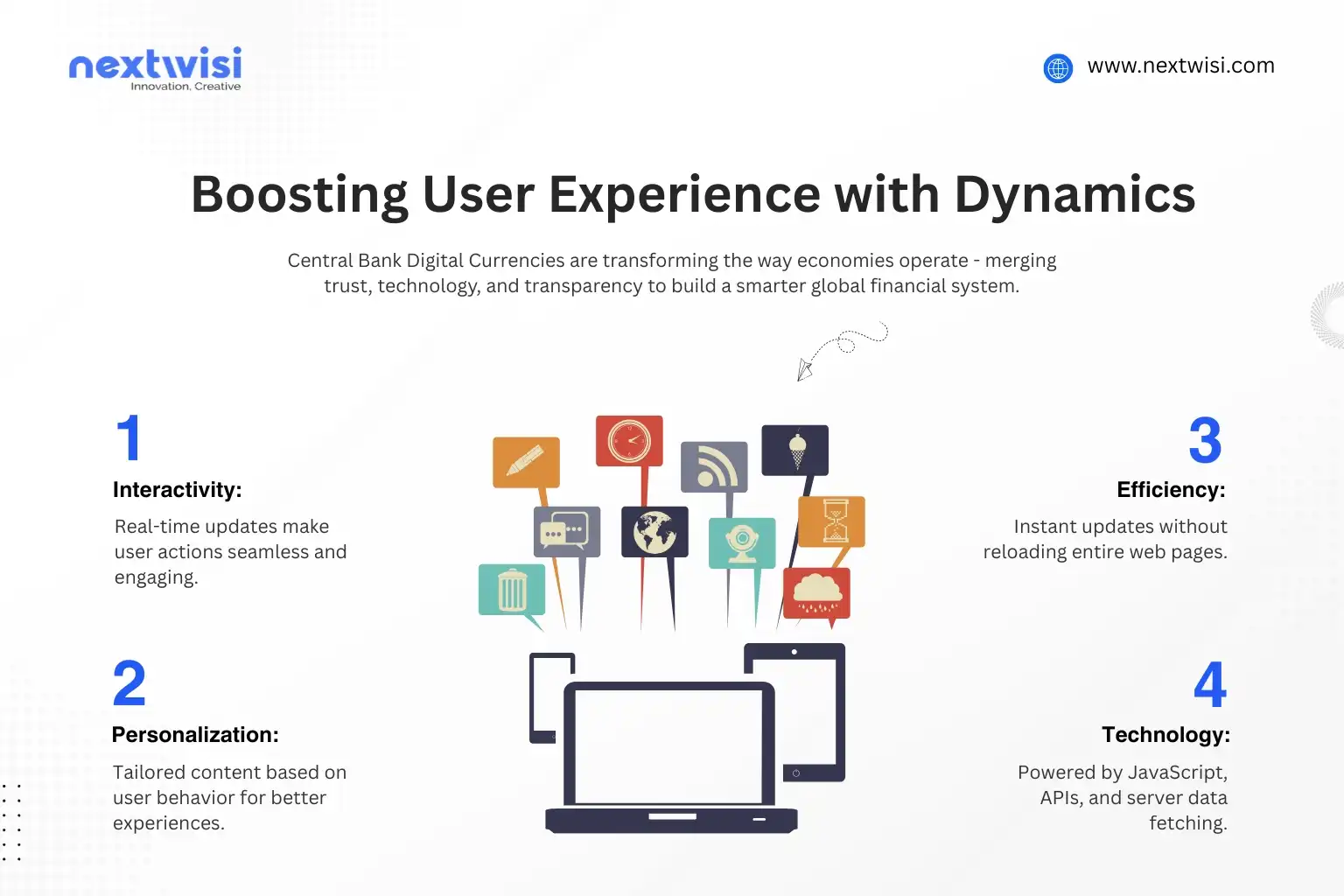
    Dynamic element web development can be described as the dynamic web elements that respond to user interaction or real-time information and update themselves. This method also does not require full page reloads, and since it can refresh individual portions of the site immediately, it does not break the browsing experience of the user.

    To illustrate, dropdown menus that swell up upon clicking, sliders that update pictures following user engagement, and live search boxes that present live answers are all run by dynamic items. These components are normally powered by JavaScript and a set of backend systems to retrieve or process data on demand.

    The Role of JavaScript in Dynamic Web Elements

    JavaScript is the framework when it comes to dynamic element web development. It allows web pages to be responsive to user actions so that interaction between them is smooth and interesting. JavaScript is very vital in managing dynamic behaviors, starting with basic activities such as form validation and more elaborate activities such as accessing data through servers.

    React and Vue.js JavaScript frameworks simplify creating an interactive interface by keeping the UI state updated when the user interacts with the application. These interactive aspects provide a closer experience by changing the content and graphics based on the user behaviors.

    How Dynamic Elements Enhance User Experience

    The inclusion of dynamic features in a website can significantly enhance the mode of interaction of a site. The fact that the content will update without the need to reload it completely also means that the visitor will be less prone to lag and delays, thus providing a smoother, faster experience when going through the site. As an example, in a case of filling out a form, a user does not have to wait long to see a success or error message, which will be immediate feedback.

    Also, there are dynamic features, which can be used to promote personalization, i.e., displaying customized content depending on user behavior or preferences. A dynamic feature can be used in an e-commerce site to showcase the appropriate product, real-time inventory, and even a location-based promotion, which will enhance the conversion page and customer satisfaction.

    Dynamic vs Static Web Content

    One big difference between the static and dynamic websites is the way the information is displayed and updated. The static content is fixed and does not indicate the dynamism of various contents that are displayed to different visitors until the developer modifies the code by hand. Dynamic content, on the other hand, is flexible and may vary with user interactions, data entry, or live events. That is why the user experiences of the dynamic sites are richer and more interactive as compared to the static sites.

    As an example, an online store can display varying products to various customers depending on their history or where they live. Dynamic web development plays an important part in web applications and mobile app development whereby the users require the real-time updates and the smooth interactions.

    Key Technologies Behind Dynamic Web Elements

    The modern websites operate a number of technologies that collaborate to drive moving elements. The most significant ones are:

    • JavaScript: The primary technology that enables one to interact with the elements of a webpage.
    • Backend systems: These servers handle user requests and do not respond, they send back data that has been updated.
    • APIs: APIs are a connection between the frontend and the backend, which allows the real-time data to be fetched without updating the page.
    • AJAX (Asynchronous JavaScript and XML): A method, which enables web pages to access data in an asynchronous manner without having to reload the entire web page.

    With these technologies blended together, dynamic elements will be able to engage with databases, external APIs, and cloud-based systems and provide personalized and engaging content.

    Impact on Web Application Development

    Dynamic element web development is a revolution to the web application development developers. It allows applications to refresh real-time content, making them more responsive. Dynamic elements are necessary, whether it is a social media site where new content is posted without having to reload the webpage or a finance dashboard that shows stock prices in real time.

    This is because it makes web applications quicker and more interactive and eventually leads to increased levels of user satisfaction and retention. The user wastes less time in waiting because of the reloading pages; this means that users require less time to have the content reloaded, and thus, interactions have been made to be faster, and the whole experience is enhanced.

    Mobile App Development and Dynamic Elements

    Dynamic elements are also significant not only in websites. They are actively deployed in the creation of mobile applications to create real-time updates and customized content depending on the user behavior. Be it an application that brings in new news or a communication application that informs us of new messages, dynamic displays make mobile applications more interactive and efficient.

    A responsive, real-time experience can be achieved with the help of these elements and lets the developers develop apps that can adapt to the needs of their users without issues.

    SEO Considerations for Dynamic Web Content

    Even though dynamic content has a few advantages, one must remember about SEO. The search engines must index the dynamic content properly in order to become visible in the search results. It may be possible to make it so that search engines can crawl dynamic content by using proper server-side rendering and by maintaining a clean structural design of the code.

    Moreover, the scripts can be optimized, a large number of requests can be minimized, and the caching techniques can be employed to enhance the performance of the websites, and, at the same time, the dynamism aspects should be fast and effective. The well-optimized websites with both SEO and performance can attract more visitors, and they will be ranked on the top of search results

    Future Trends in Dynamic Web Development

    Dynamic element web development is dynamic with the ever-changing technology. Additional improvements in real-time data retrieval, artificial intelligence-based personalization, and smarter web components can be expected. Websites and web applications are bound to become increasingly interactive and smart and react to user demands in real time.

    Also, the work of Progressive Web Apps (PWAs) and component-based architectures will enable developers to design highly interactive and scalable applications more easily. These trends are making sure that dynamic elements will remain the main factor in determining the future of web development.

    Conclusion: The Importance of Dynamic Web Development

    The dynamic element of web development is one of the key features of the web and mobile applications today. Developers can also provide an effective, interactive, and personal user experience by developing websites that reconfigure automatically as the user interacts with them. These are dynamic characteristics that are no longer a luxury but rather a requirement to create a speedy, responsive, and easy-to-use digital platform.

    When you go into the world of web application development and mobile app development, having an idea of what the dynamic elements play will assist you to remain on the curve of delivering the best user experience. As much as you are developing an ordinary website or an elaborate web-based application, the inclusion of dynamic elements makes sure that whatever you are developing will not only be user-friendly but also future-oriented.

    With the strengths of JavaScript, APIs, and real-time data, you will be able to work together to provide modern interactive web experiences that will keep your users entertained and happy.

  • Blockchain in Customer Service for Transparent, Secure, and Automated Support

    Blockchain in Customer Service for Transparent, Secure, and Automated Support

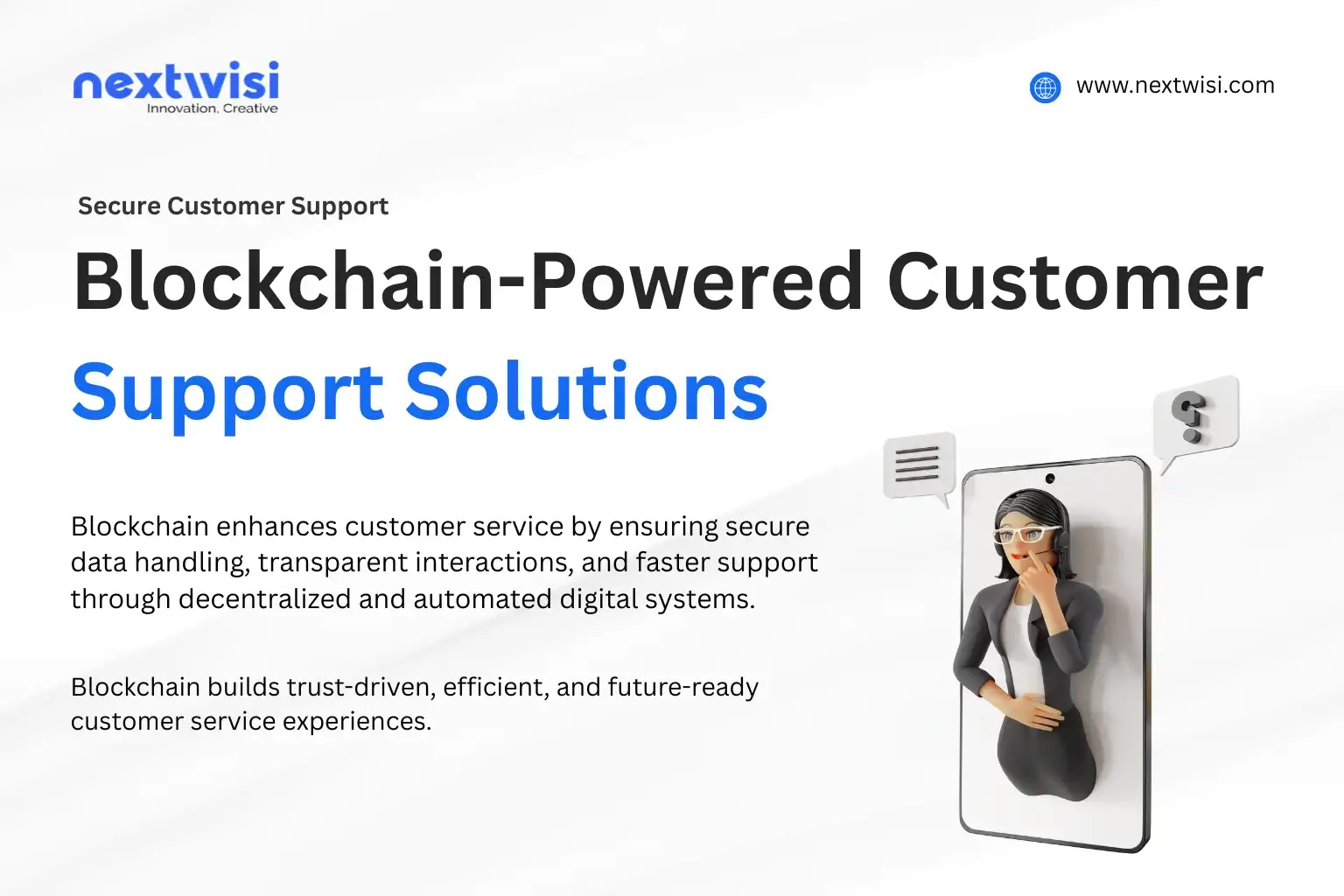
    The digital age is changing customer expectations at an elevated pace. The modern consumer is more responsive and requires quicker service, openness, and safety in the transmission of his/her personal information. Nevertheless, conventional customer service solutions are notorious for their inability to address fragmented information, slow response time, and the security risk. This is where the blockchain in customer service comes in as a potent answer.

    The blockchain technology brings the concepts of decentralization, unalterability, and transparency to the organizational customer support processes, which aid the construction of trust-based service ecosystems by the organization. Blockchain is transforming the nature of business-customer interaction by removing data silos and facilitating safe and automatic interactions. With digital trust emerging as a competitive edge, businesses in any industry are turning to blockchain-based models of customer service.

    Understanding Blockchain Technology

    Blockchain refers to a distributed ledger technology whereby transactions are recorded in a safe and unalterable manner in several nodes. In contrast to centralized databases, blockchain provides the ability to ensure data cannot be compromised without network consensus, which is very high reliability as a customer-facing system.

    When applied to customer service using blockchain, the technology can help organizations archive customer communication and service slips, as well as transaction records, in a clear and unalterable setting. The updates are time-stamped and verifiable, and this provides accountability in all customer touchpoints. The latter attributes precondition the fact that blockchain can be particularly appropriate in the service environments, where there is significant trust and data integrity.

    Why Traditional Customer Service Systems Fall Short

    Traditional customer care systems have been designed with isolated systems, hence unequal data distribution or unfounded data across departments. This disintegration causes recurrence of customer inquiries, increased time to resolve, and a lower level of satisfaction. Furthermore, central databases are very susceptible to cybercrimes and data intrusions.

    The second issue is that there is no transparency of complaint handling and resolving disputes. Customers also often have a sense of detachment from the service process, which kills trust. To overcome these inefficiencies, most organizations today resort to the services of a blockchain development company to create decentralized systems, which will bring together customer data and improve the transparency of services provided through all channels.

    How Blockchain Is Revolutionizing Customer Service

    Decentralized Customer Data Management

    Blockchain will allow one shared source of customer data, which will not be duplicated between departments. This decentralized design guarantees validity and reliability of data as well as providing customers with enhanced access to their personal data.

    Customer service with blockchain enables the organization to cut its reliance on various databases, ease service processes, and enhance responsiveness. This results in smooth interactions between customers and operation efficiency and data reliability for businesses.

    Enhanced Data Security and Privacy

    One of the top concerns of the customer service operations is data security. The graphic nature of blockchain architecture ensures the confidentiality of customer data against unauthorized access and manipulation. Records cannot be changed , thus fraudulent alterations are not possible at all.

    When combined with advanced cybersecurity solutions, blockchain-based customer service systems significantly reduce the risk of data breaches. This level of protection does not only make sure that there is regulatory compliance but also makes customers more confident about the digital service platforms.

    Smart Contracts for Automated Support

    Smart contracts are automatically executed contracts that automatically cause actions within a set of pre-established conditions. Smart contracts can use refunds, warranty claims, and service-level agreements in customer service.

    Through smart contract development, organizations can also remove the manual input, minimize processing latency, and deliver just results to customers. This automation does not only make delivering services more efficient but also keeps the transparency and accountability of the support lifecycle.

    Blockchain Use Cases in Customer Service

    Blockchain-Powered Ticketing Systems

    Ticket systems using blockchain also enable the customers to monitor their requests in real time. Each update, escalation, or resolution is logged on the blockchain, and it is completely visible.

    This will enhance the levels of accountability towards the support teams and minimize the number of conflicts associated with delays in services. Ticket management with blockchain in customer service can be more transparent, efficient, and customer-focused.

    Customer Identity Verification

    Secure customer service is an important element that involves identity verification. By using blockchain, decentralized identity systems can be created to enable customers to identify themselves without sharing sensitive information with the company repeatedly.

    This saves time with onboarding, avoids identity fraud, and promotes trust. Verification of identity secured is also enhanced in personalization with a high level of data privacy.

    Loyalty Programs and Rewards

    The blockchain is changing the conventional type of loyalty programs by introducing token-based rewards that are transparent and easily transferable. Customers are able to follow their reward in real time and redeem it freely.

    These loyalty systems based on blockchain enhance engagement, decrease fraud, and build better brand loyalty. This application is also a strong indicator of the increasing role of blockchain in customer service approaches.

    Combining AI and Blockchain in Customer Support

    This is where customer service automation opens up new opportunities due to the integration of artificial intelligence and blockchain. Chatbots powered by AI have the potential to run on blockchain networks with secure decision-making and verifiable interactions.

    When deployed through scalable cloud solutions, blockchain-enabled AI systems can handle high volumes of customer queries while maintaining data integrity. This combination delivers personalized, efficient, and trustworthy customer experiences across digital channels.

    Benefits of Blockchain in Customer Service

    • Blockchain enhances trust between customers, as the services are recorded in transparent service processes where all communication is verifiable and cannot be manipulated.
    • Decentralized data storage is an efficient operational practice in that it eradicates silos and allows quicker access to reality about customers across teams.
    • Automated workflows will save time to resolve, minimize the cost of services, and deliver a uniform customer experience across touchpoints.
    • Data security is also improved to ensure confidentiality of customer data and assist in meeting international data protection laws.

    Challenges of Implementing Blockchain in Customer Service

    Although it is beneficial, there are difficulties associated with the implementation of blockchain in customer service. Small and mid-sized organizations can be scared away by high initial costs of implementation and integration complexities. Scalability is also a problem in dealing with the high number of customer interactions.

    Also, the shortage of qualified specialists and regularized patterns can hinder adoption. Nevertheless, these challenges may be overcome in the long run when the appropriate strategy and technology partners are involved.

    Future of Blockchain in Customer Service

    The future of customer service is the decentralized, self-service platforms made through blockchain. With the development of Web3 technologies, the use of blockchain-based customer engagement models and CRM systems will become more popular among businesses.

    As the level of digital trust increases, blockchain in customer care will be instrumental in providing secure, transparent, and automated customer experiences. Early investing organizations will have the competitive advantage over customer-oriented innovation.

    Conclusion

    Modern customer service is also being redefined with the implementation of blockchain, as it allows the customer to be transparent, automated, and secure. Blockchain supports an ecosystem of trust and future-ready customer service through decentralized data management to support workflows of smart contracts. With the ever-growing digital requirements, the use of blockchain in customer service is shifting to being a strategic requirement and not a choice anymore.

    Nextwisi Solutions, a trusted provider of blockchain development services, helps businesses design and implement scalable, secure, and customized blockchain solutions for customer service transformation. With deep expertise in decentralized technologies, Nextwisi Solutions enables organizations to enhance customer trust, streamline support operations, and achieve long-term digital success.

  • How Generative AI in Automotive Is Shaping Future Vehicles

    How Generative AI in Automotive Is Shaping Future Vehicles

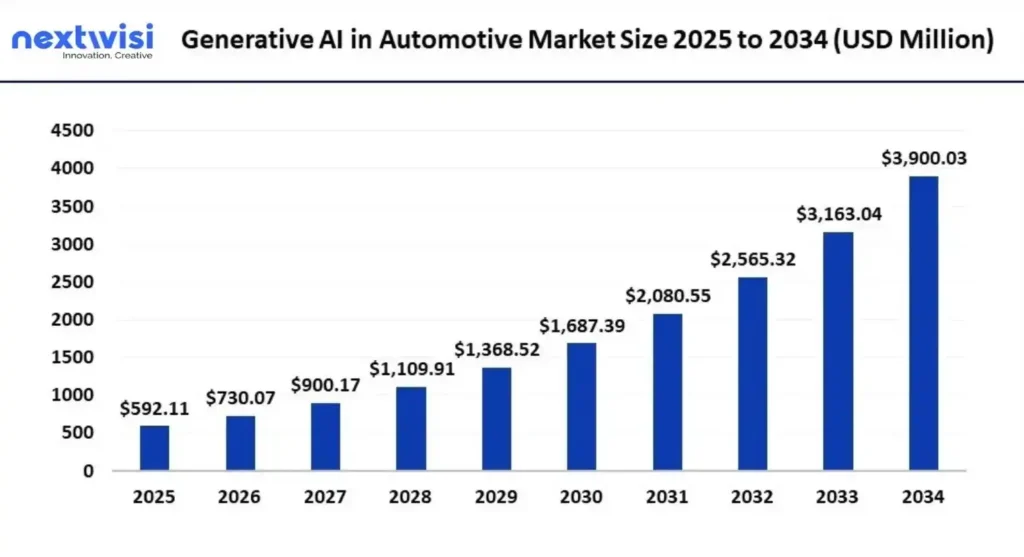
    The automotive sector is fast becoming dynamic, with the digital revolution transforming the way cars are designed, produced, and consumed. Conventional engineering approaches are failing to satisfy the increasing safety, sustainability, personalization, and automation requirements. Generative AI in the automotive industry has become a potent force in this change, as it allows manufacturers to access new intelligence, efficiency, and innovation.

    Generative AI enables automotive firms to move to a level of predictive and creative systems rather than the reactive ones. This technology is transforming the way vehicles are developed, smart manufacturing, and autonomous mobility through massive dataset analysis and development of optimized solutions. With the heightening competition, generative AI is emerging as a strategic base of future-proofed automotive ecosystems.

    Understanding Generative AI in Automotive Industry

    Generative AI in automotive is defined as the advanced artificial intelligence systems that are able to generate new designs, simulations, and knowledge using the available data. These types of models are used in the automotive industry to process information that comes in the form of sensor data of the vehicle, design parameters, road conditions, and user behavior to come up with intelligent output.

    Generative AI, unlike traditional automation systems, acts as a system that learns patterns and suggests optimal solutions. It allows automotive brands to innovate at an increased pace, cost less, and enhance product quality throughout the lifecycle of the vehicle. Generative AI is a core contributor to automotive digital transformation as cars continue to become more connected, intelligent, and digital.

    Smart Vehicle Design and Engineering Excellence

    One of the most demanding and important stages in the development of vehicles is their design. This is changed with the use of generative AI, which allows exploration of intelligent designs and optimization in a short period of time. Before the actual physical production, engineers are able to produce several design options, perform virtual tests, and optimize components.

    With generative AI, automotive designers are able to:

    • Fortune design cycles with engineering accuracy.
    • Maximize aerodynamics, weight, and materials.
    • Enhance safety performance by use of simulations at an early stage.
    • Patronize sustainable design and effective use of resources.

    This thinking will enable manufacturers to produce innovative vehicle designs that are quicker yet are as safe and of high quality.

    AI-Powered Prototyping and Virtual Simulation

    Conventional prototyping is time-consuming and resource-intensive, as are physical tests. Much of this process is substituted by high-fidelity virtual simulations generated by generative AI. With the help of digital testing, automotive companies are able to test the crash behavior, thermal performance, and driving dynamics in the real world.

    Generative AI allows manufacturers to find out defects at the very beginning and make effective design choices through sophisticated simulation. This does not only lower the cost of development but also guarantees that vehicles are able to match up to the regulatory and performance standards before they are allowed to be produced.

    Generative AI in Automotive

    Manufacturing Efficiency and Smart Production Systems

    General AI has a significant beneficial impact on automobile manufacturing in terms of streamlining the processes and reducing the number of operational interruptions. Systems that are driven by AI process production data to predict equipment failure, enhance assembly performance, or minimize waste.

    Generative AI is used in contemporary automotive manufacturing to:

    • Maintenance to avoid unforeseen downtimes.
    • Smart planning of maximum production.
    • Real-time anomaly detection in quality control.
    • Utilization, reduction of costs through optimization of material and energy wastes.

    These abilities assist the automakers in gaining stable production, enhanced dependability, and scaled production processes.

    Data Intelligence as the Backbone of Automotive Innovation

    The automotive industry thrives on the power of data and uses it to generate AI. Car technology creates massive volumes of data through cameras, sensors, GPS technology, and software in the car. This raw data is converted by generative AI into actionable intelligence, which enhances the performance, safety, and customer satisfaction.

    Through continuous learning with data, generative AI allows making predictive insights that sustain smarter vehicle behavior and more intelligent decision-making. This factual model enhances the base of related and smart automobiles.

    Autonomous Vehicles and Intelligent Mobility Solutions

    The autonomous and intelligent mobility systems are the future of transportation. Generative AI is essential in the development of self-driving technologies in the way it improves perception, decision-making, and learning functions. Driving and operating in complex traffic, unpredictable situations, and varying driving conditions are some of the challenges that autonomous vehicles are expected to deal with.

    Generative AI assists autonomous systems with the creation of synthetic training data, simulation of rare cases, and enhancement of the accuracy of the models. This results in safer navigation, increased obstacle detection, and more dependable driving performance. Consequently, autonomous mobility is more scalable and commercial.

    Personalized Customer Experiences in Modern Vehicles

    The customer demands are now moving to very personalized customer automotive services. Generative AI allows car manufacturers to customize the features in vehicles according to the drivers.

    Intelligent infotainment systems, adaptive navigation, and predictive maintenance warnings are just some of the ways generative AI contributes to user satisfaction at all touchpoints. One-on-one experiences are improving comfort as well as enhancing long-term customer loyalty and brand trust.

    Strengthening Security and Transparency in Automotive Systems

    As vehicles become more connected, ensuring secure data exchange is critical. In advanced automotive ecosystems, blockchain development supports transparent and tamper-resistant data sharing across vehicle networks, enhancing trust and accountability in connected mobility environments.

    Scalable Intelligence for Automotive Platforms

    The innovation in the automotive industry needs smart systems that may develop with the changing requirements. Strategic AI development enables automotive companies to deploy generative AI models where continuous learning, adaptation, and scaling are achieved on various platforms. This guarantees innovation in the long term, system reliability, and performance.

    Supporting Connected and Cloud-Enabled Vehicles

    The latest automobiles are based on the digital infrastructure to enable real-time updates, diagnostics, and analytics. Advanced cloud solutions provide the scalability required to integrate generative AI seamlessly into connected automotive ecosystems, enabling continuous improvement and remote intelligence deployment.

    Future Outlook: Generative AI as an Automotive Game Changer

    Generative AI is reinventing the automotive value chain, including concept development to after-sales services. Having both intelligence and creativity will enable the manufacturers to create responsibly and fulfill the market needs in accordance with the changing market dynamics. Automobile brands investing in generative AI today will be in a better position to drive the mobility revolution of tomorrow.

    Conclusion

    Generative AI is revolutionizing the automotive sector through intelligent designing, efficient production, automatic movement of people, and individualized consumer experiences. Its capability to create smart insights and optimized solutions would form the foundation of automotive innovation in the future. Through the adoption of generative AI, automotive businesses will be able to create safer and smarter vehicles and more connected cars and facilitate sustainable development in the increasingly competitive market.

  • How Blockchain Revolutionized the Gaming Industry

    How Blockchain Revolutionized the Gaming Industry

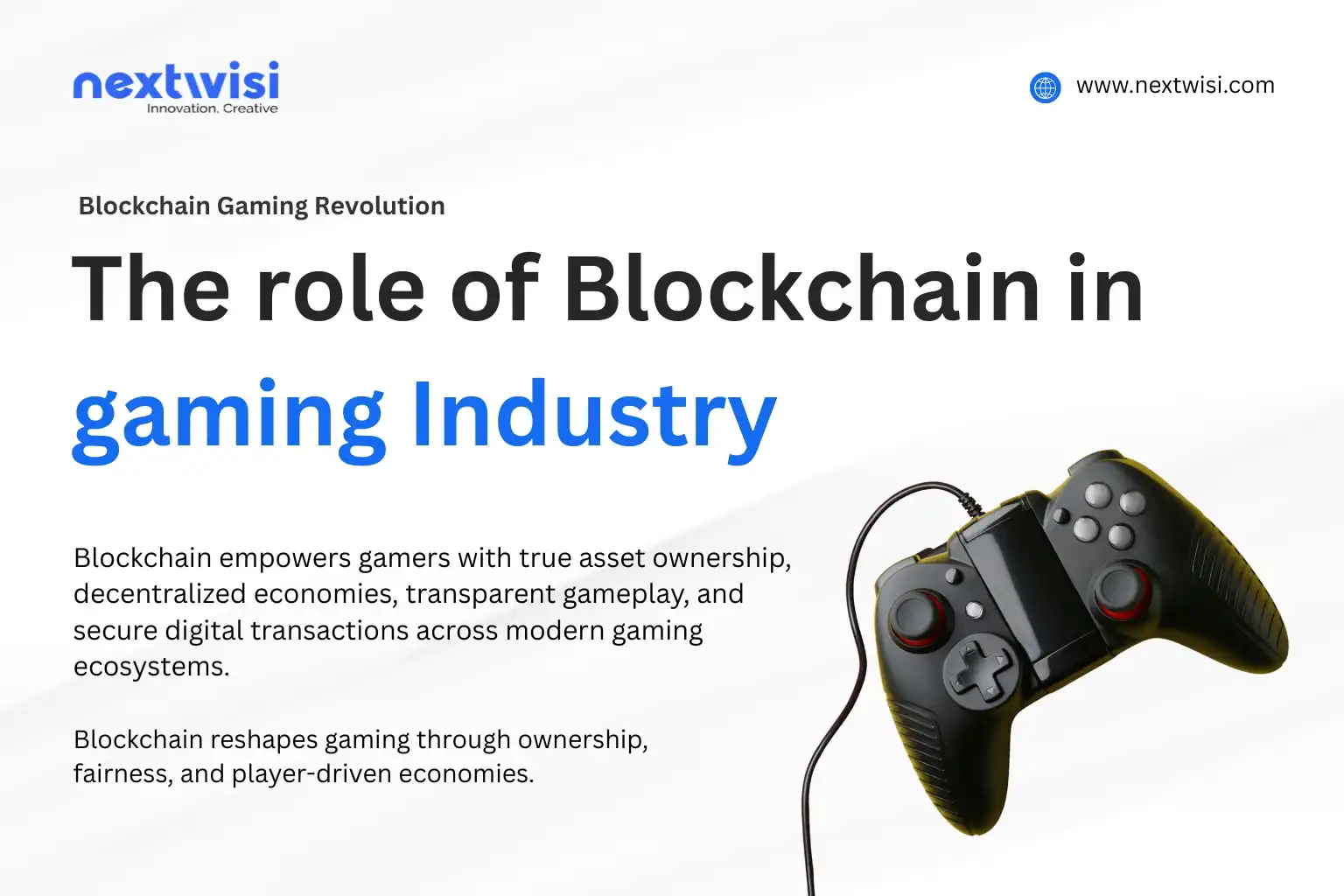
    The gaming industry has evolved from simple pixel-based entertainment into a multi-billion-dollar global ecosystem. Among all technological innovations, how blockchain revolutionized the gaming industry stands out as one of the most impactful shifts in recent years. Games that had been done earlier were more about graphics, narration, and gameplay. In the present time, blockchain has provided ownership, transparency, and real economic value to the gaming experiences.

    The use of blockchain technology has presented a decentralization aspect in which players do not rely on publishers to have control over their assets. Gamers are able to actually own their digital content and sell and buy it as they wish and even make a real income. This revolution has transformed gaming into a participant , developer and community-led open digital economy.

    The Traditional Gaming Industry: Centralized and Limited

    Prior to the introduction of blockchain, the gaming ecosystems were fully centralized. In-game items, user data, and in-game money were all controlled by game publishers. Players had put money and time into games, but in reality, their property is owned by the company and not the player.

    In case a game was shut down or an account was banned, all the progress was lost in a second. Moreover, the classic models of monetization were rather dependent on in-app purchases, loot boxes, and advertisements and did not provide a lot of value in return to players. Insufficient transparency on reward systems and shortage of assets also brought about a problem of trust in the gaming communities.

    How Blockchain Revolutionized the Gaming Industry

    Key Ways Blockchain Changed the Gaming Landscape

    A deeper understanding of how blockchain revolutionized the gaming industry comes from examining its core contributions to ownership, fairness, and economic participation.

    • NFTs allow players to store, sell, and transfer in-game items independently of the game publishers or centralized servers because of blockchain, which enables true ownership of in-game items.
    • Smart contracts automate gameplay rewards, asset trading, and transactions without unfairness, transparency, and trust that may come with a third-party intermediary.
    • Irreversible registers ensure that no item can be duplicated, fraudsters cannot act, or some unscrupulous can alter the records, and the integrity and preservation of digital gaming assets remain intact.
    • Decentralized marketplaces enable players to create their own prices, receive royalties, and take part in player economies outside the scope of one game.

    Digital Ownership: NFTs and Player Empowerment

    Digital ownership is one of the most powerful influences of blockchain in the gaming sector. Characters, skins, weapons, and virtual land are assets in blockchain-based games, and they exist in the form of NFTs. These resources are stored on blockchains that are decentralized but not on proprietary databases.

    This is a model of ownership that is permanent and free. Players are able to trade assets in external marketplaces, trade them between wallets, or store them as long-term investments. Ownership remains when the original game closes down, giving players tangible control and worth of what they have put into it.

    Play-to-Earn Gaming Models and Economic Inclusion

    Another major innovation explaining how blockchain revolutionized the gaming industry is the play-to-earn model. Instead of spending money without returns, players are rewarded for time, skill, and participation.

    Blockchain games use tokens and NFTs to reward the player for completing a quest, a battle, or a contribution to a community. These are tokens that are valued in the real world and can be traded in markets. An example of the convergence between gaming and finance is noted in several developing areas where play-to-earn gaming is a form of income.

    Player-Driven Economies and Decentralized Marketplaces

    Blockchain replaces the economies of publishers with decentralized economies of players. Asset value is determined by supply and demand rather than the artificial scarcity brought about by the developers.

    The assets may be easily purchased, sold, and exchanged among the players with the help of decentralized marketplaces running with the help of smart contracts. Creators and developers are also guaranteed to receive revenue whenever their assets are resold due to royalties set in smart contracts. This is a fair model that is beneficial to both studios and players and is transparent.

    Security, Transparency, and Fair Gameplay

    Security is another issue of concern in online gaming, and blockchain has a very beneficial impact on it. All the transactions are stored in an unalterable registry, and it is very hard to manipulate and commit fraud.

    Players are able to check reward systems, asset histories, and authenticity of transactions. There is minimization of cheating, duplication of items, and unfair advantage, thus fair competition grounds. Honesty fosters confidence and promotes long-time participation of players.

    Interoperability and Cross-Game Asset Utility

    Looking ahead, how blockchain revolutionized the gaming industry will become even more evident as technology matures. We can expect richer virtual worlds, sustainable digital economies, and deeper community governance.

    An example of this is a character skin or a digital weapon that can be compatible with several other games or virtual worlds. This cross-compatibility is in line with the emerging idea of the metaverse, in which games, social interactions, and internet-based trade become combined into single-use experiences.

    Role of Blockchain Development in Gaming Infrastructure

    The development of Web3 gaming depends on blockchain development to create decentralized architecture, smart contracts, NFT standards, and secure asset management systems.

    The development of the blockchain guarantees scalable networks, reward system transparency, and unrestricted data storage. It is the technical foundation of decentralized games, which make it possible to have trustless interactions and in-game economies that are sustainable.

    Enhancing Gameplay with Artificial Intelligence

    To further improve user experience, many blockchain games integrate ai development into their systems. AI enhances gameplay through intelligent NPCs, adaptive difficulty levels, and personalized content recommendations.

    AI can also be used to detect fraud, analyze player behavior, and optimize token economies. AI, together with blockchain, enhances smarter, immersive, and safe gaming experiences.

    Scalable Performance Through Cloud Infrastructure

    With the growth of blockchain gaming platforms all over the world, it is important to have a reliable cloud solution in terms of performance and scalability. Cloud infrastructure helps in real-time communication, low-latency gaming, and accessibility anywhere in the world.

    Ease of backup of data, disability recovery, and real-time updates without a loss of time are also made possible by cloud solutions. This makes it easy even with the high rate of increase in user bases.

    Challenges Facing Blockchain Gaming

    Blockchain gaming has limitations like high transaction costs, limited scalability, regulatory risks, and complicated processes to be introduced to the system, despite its novelty.

    Yet, technology such as Layer-2 scaling solutions, better wallets, and less cumbersome interfaces is finding quick solutions to these problems. Adoption will also be accelerated by education and improved user experience design.

    The Future of Blockchain in Gaming

    In the future, the revolution of the blockchain in the gaming industry will be even more apparent as technology becomes more mature. We have to look at richer virtual worlds, long-term digital economies, and more governance of the community.

    Blockchain gaming is becoming not only speculative but also worthy of entertainment, creativity, and economic empowerment. Gaming is not going to be play anymore but a part of a global digital economy as it is being adopted.

    Conclusion

    In conclusion, how blockchain revolutionized the gaming industry lies in its ability to shift control from publishers to players. Blockchain has transformed the meaning of gaming through digital ownership, play-to-earn economy, decentralized economy, increased security, and interoperability.

    Innovation is here to stay, and blockchain will be one of the driving powers of the future of interactive entertainment and virtual economies.

  • Blockchain in Banking: Transforming Financial Systems with Security, Speed, and Trust

    Blockchain in Banking: Transforming Financial Systems with Security, Speed, and Trust

    The banking sector is experiencing a significant digital transformation of the global financial ecosystem, and blockchain in banking is becoming one of the most impactful technologies that will influence the change. Globally, banks are considering decentralized ledger technology to lower operational expenses, enhance the security of the transactions, enhance compliance processes, and support near-real-time settlements.

    Being a decentralized and immutable registry, blockchain in the banking industry provides a transparent system under which financial transactions can be stored safely without the involvement of several intermediaries. JPMorgan, Goldman Sachs, and HSBC are some of the largest financial institutions already spending a lot of money on blockchain-based platforms to make cross-border payments, trade finance, and verify identities.

    Blockchain in banking continues to have technical, regulatory, and operational difficulties in spite of its increasing adoption. Mass implementation is still slowed down by scalability, privacy concerns, and integration with legacy systems. Nevertheless, the perspective in the long term cannot be neglected.

    Key Takeaways

    • Due to the automation of settlements and the minimization of intermediaries, blockchain in banking can help to reduce the transaction costs.
    • Unalterable registries enhance transparency, auditability, and reduction of fraud.
    • Other adoption barriers are regulatory uncertainty, scalability limits, and energy efficiency.
    • Hybrid banking models that involve blockchain and traditional models are on the rise.

    What Is Blockchain, and Why Does It Matter for Banking?

    Blockchain is a decentralized electronic register in which the records of transactions are exchanged on a system of participants. Blockchain in banking is extremely fraught with fraud and data manipulation since once the information is approved and inserted, it cannot be altered or removed.

    Blockchain in Banking

    Conventional banking systems use central databases, reconciliation, and other third parties. By comparison, blockchain in banking allows all institutions to have synchronized records, which leads to a decrease in disputes, delays, and overhead.

    Core Benefits of Blockchain in Banking

    Improved Operational Efficiency

    Automation is one of the largest benefits of the blockchain in the banking industry. Smart logic can be used to perform processes like payment verification, reconciliation, and compliance checks automatically. This reduces the level of manual work, reduces the level of errors, and increases the rate at which transactions are processed in departments.

    Stronger Fraud Prevention and Data Security

    Blockchain in banking provides an environment that is resistant to tampering due to cryptographic verification and irreversible records. The risk of fraud during payments, lending, and managing customer identity is also reduced to minimal because unauthorized data manipulation is almost impossible.

    Cost Reduction Across Banking Operations

    Blockchain in banking allows banks to reduce their operational costs by cutting the number of intermediaries in clearing, settlement, and cross-border payment activities. These efficiencies enable the financial institutions to provide higher speeds of services as they are able to remain profitable.

    Enabling Innovative Financial Products

    Smart contracts, which can be programmed, enable a bank to develop financial products that are automated, for example, rule-based loans, escrow services, and real-time settlement of trades. This scalability places blockchain in banking as the basis of the new generation of financial services.

    Blockchain Trilemma and Its Impact on Banking Adoption

    Although blockchain in banking offers effective benefits, it needs to solve the famous blockchain trilemma: decentralization, security, and scalability.

    Decentralization vs Scalability

    Greater decentralization involves more validators, thus slowing down the processing of transactions. Most banking platforms strike the right balance between decentralization and performance by implementing permissioned networks.

    Security vs Scalability

    Proper validation systems increase security at the cost of reducing the velocity of transactions. Security is also of paramount concern in banking use cases, although this may have a minor impact on throughput.

    Decentralization vs Security

    Distributed governance enhances resilience, yet slows down decision-making. Banks curb it through conglomerating blockchain models.

    Integration Challenges with Legacy Banking Systems

    The IT infrastructure of most banks is many decades old. The cost of adding blockchain to banking to the current core systems is costly, data standardization, and operational restructuring. The interoperability is a major challenge, especially when linking varied financial institutions.

    In this regard, several banks partner with a blockchain development company to develop tailored architectures appropriate to regulatory and operation needs and with minimum disruption.

    Regulatory, Compliance, and Privacy Concerns

    One of the largest obstacles to blockchain banking adoption is regulatory uncertainty. The laws governing compliance in different regions are different, and financial institutions should make sure that they comply with the laws governing data protection, reporting regulations, and audit specifications.

    Privacy is another concern. On the one hand, blockchain networks are safe; on the other hand, their transparency can contradict the requirements of data confidentiality. This has made banks prefer permissioned networks and privacy-enhancing technologies.

    Real-World Banking Blockchain Initiatives

    JPMorgan Kinexys

    Kinexys offers settlement of assets, foreign exchange, and payment over the cross-border using distributed ledger technology. It shows the potential that blockchain in the banking industry can facilitate high-volume institutional business.

    Fnality International

    This interbanking association is aimed at enhancing interbank settlements with fiat token representations. Regulatory approvals are one of the major challenges.

    Project Agora

    Project Agora is a transparent trade finance system, which is built on enterprise ledger platforms and minimizes fraud by tokenizing trade documents.

    Canton Network

    Its design is oriented towards institutional assets, and the privacy-oriented network demonstrates how blockchain in the banking sector can be used to balance confidentiality with auditability.

    Role of Cloud Infrastructure in Blockchain Banking

    Banking platforms need to be extremely scalable and flexible. Today, many institutions are implementing blockchain in the banking system with secure cloud solutions that will allow them to scale up and have disaster recovery and upgrade the system easily without sacrificing data security.

    AI-Powered Automation in Blockchain Banking

    Ecosystems of the blockchain are getting stronger with advanced analytics and automation. Some banks are exploring ai agent development to monitor transactions, detect anomalies, and automate compliance workflows within blockchain networks.

    On the same note, ledger information, risk prediction, liquidity management, and customer personalization are some of the areas that are under analysis using AI/ML development in blockchain-enabled banking systems.

    Future Role of Banks in a Blockchain-Driven Ecosystem

    With the development of peer-to-peer systems, blockchain in banking will hardly make traditional banks go. Rather, banks will become trust providers, facilitators of compliance, custodians of digital identities, and integrators of systems between the decentralized and traditional financial infrastructure.

    Blockchain Beyond Banking

    Outside of banking, blockchain is being used in supply chain management, healthcare data security, real estate records, and digital identity systems. The latter use cases also confirm the credibility and flexibility of distributed ledger technology.

    Conclusion

    Banking blockchain is transforming financial institutions to conduct and handle transactions, compliance, and customer trust. Although there are still technical and regulatory risks, banks are becoming more open to new hybrid models of combining innovation in blockchain with established financial experience.

    With adoption maturity, companies such as Nextwisi Solutions are playing a major role in facilitating this change. Nextwisi is a full-service blockchain development company that assists banks in creating secure, scalable, and compliant blockchain solutions to match the financial operations of the real world.

  • Top 5 Blockchain Technology Trends 2026 You Need to Know

    Top 5 Blockchain Technology Trends 2026 You Need to Know

    The blockchain technology trends 2026 are leaving the hypothetical hype behind. What was previously linked with the cryptocurrency is currently turning into a necessary infrastructure of various industries, including finance and healthcare, supply chain management, etc. Decentralized systems are being utilized to improve security, transparency, and efficiency by businesses. In the approaching year 2030, these trends are important in order to remain competitive within a digitized ecosystem.

    This article focuses on the best blockchain technology trends 2026, the application of the technology in practice, and how firms are using it to provide solutions to real-life challenges.

    Growth of the Blockchain Market

    The market growth is huge and serves as the support of the blockchain technology trends 2026. In contrast to the earlier hypes, the current hype is stable and enterprise-based. Recent studies suggest that the global blockchain market will increase by a compound annual growth rate (CAGR) of more than 85% in the year 2024 to 2030. This is driven by the need to have secure, transparent systems in the finance, logistics, energy, and healthcare sectors.

    Blockchain Technology Trends 2026

    The U.S. is in the lead with regulatory assistance and investment based on innovations; meanwhile, the fastest-growing sector is Asia-Pacific, with countries such as China, Japan, and India establishing blockchain in trade and in the services sector. Europe is also lagging behind, and rules such as MiCA make cross-border adoption easier.

    With the expansion of blockchain technology as a niche application to infrastructure, business organizations should adapt to these changes to remain competitive.

    Top 5 best blockchain development trends 2026

    1. Modular Blockchain Architectures

    One of the trends of blockchain technology in 2026 will be the emergence of modular blockchain architecture. Modular blockchains provide a separation of functions between execution, consensus, and data availability, unlike more traditional monolithic chains. This enables developers to design custom networks that can be used in particular scenarios and save on expenses and improve efficiency.

    As an example, Celestia has introduced a modular mainnet of data availability where rollups can be scaled without physically executing a layer 1. On the same note, Polygon 2.0 will adopt zero-knowledge (ZK) technology to allow multichain transactions. Modular architectures can now give startups the ability to run fast, compliant networks with specialized finance, identity, and logistics features.

    2. Zero-Knowledge Proofs at Scale

    Blockchain privacy and scalability are changing with zero-knowledge proofs (ZKPs). They enable one to verify information without exposing the underlying information, which is essential in controlled industries. ZK rollups are already being used in high volumes by layer 2 networks, including zkSync Era and Starknet.

    Polygon zkEVM adds Ethereum support to ZKPs, and companies such as Visa have experimented with ZK-based auto-payments, which would preserve privacy and compliance at the same time. These systems are also being considered by governments as a way of safe, anonymous online voting.

    Through the implementation of ZKPs, businesses can not only enjoy privacy but also enjoy speed in transactions and less overhead in infrastructure.

    3. Real-World Asset Tokenization

    One of the most physical trends of blockchain technology in 2026 is tokenization of real-world assets (RWA). Fractional ownership, liquidity, and visibility of transaction Whether of bonds or real estate, blockchain can make commodities.

    BlackRock has created a tokenized US treasury holdings fund, the BUIDL Fund, and has raised $240M, and an HSBC trading platform tokenized gold has been launched. Even energy markets are going blockchain, with sites such as SunContract permitting peer-to-peer electricity trading.

    Transforming the physical and financial world into digital tokens, blockchain connects the traditional markets to the decentralized infrastructure, releasing the value in the trillions and transforming the investment paradigm.

    4. Blockchain for Digital Identity and Compliance

    The issue of digital identity is growing more crucial. Identity solutions on blockchain allow safe, verified, and self-sovereign credentials. Businesses and governments are investing in such systems to simplify the verification process and achieve regulatory needs.

    The EBSI program of the EU allows cross-border credential verification, Worldcoin provides proof-of-personhood with biometrics, and Polygon ID uses ZKPs to provide private credentials. Identity solutions based on blockchain are not only needed in the fintech KYC processes but also in e-government, academic identity validation, and healthcare compliance.

    A solid identity structure will bolster trust, mitigate fraud, and establish the foundation of scalable digital services.

    5. Blockchain as Infrastructure for AI

    One of the most exciting blockchain technology trends of 2026 is using blockchain as the backbone for AI agent development. With the widespread use of AI, the issue of data provenance, the transparency of models, and trust become significant. The answer to this problem should be blockchain, as it offers decentralized and verifiable data, transactions, and AI behavior records.

    Such projects as Ocean Protocol permit the use of safe data exchange in the process of AI training, Fetch.ai incorporates autonomous agents with on-chain coordination, and Bittensor provides AI models to coordinate in decentralized systems. Such integrations enable businesses to implement AI models more effectively, without causing accountability and transparency to automated systems.

    In parallel, enterprises are exploring cloud solutions that integrate blockchain to handle large-scale data, enabling decentralized compute and seamless collaboration across geographies.

    Blockchain Technology Trends 2026

    Blockchain Trends Across Industries

    Financial Services

    Blockchain remains conquered by financial institutions. Blockchain is changing payments, remittances, and management of digital assets with stablecoins, such as the USDC, and CBDCs, such as the Digital Yuan in China. Banks and fintech firms are moving towards the adoption of blockchain in the future to improve the effort in streamlining operations and become more secure.

    Healthcare

    Blockchain boosts the security of patient data and improves the billing process and pharmaceutical supply chain integrity. The growth of the global blockchain healthcare market is expected to be booming up to 2030 due to the compliance with GDPR and interoperability of electronic health records (EHRs).

    Retail and Supply Chain

    In retail industries , the retailers are employing blockchain in order to guarantee transparency, prevent counterfeiting, and build customer confidence. Fashion brands such as Gucci are moving to blockchain payments, and logistics providers are using tokenized tracking systems to streamline their businesses.

    Media and Entertainment

    Blockchain also fights piracy, guarantees the distribution of content, and ensures equitable payment to creators. In 2026, platforms that delve into media services based on blockchain are becoming common.

    Education

    Blockchain protects educational history, authenticates qualifications, and lessens the amount of administration. Lifelong learning certificates can now be stored in a decentralized ledger, which is immutable and accessible on platforms.

    Overcoming Adoption Challenges

    While blockchain technology trends for 2026 are promising, adoption faces challenges:

    • Legacy systems: Integration needs modular thinking and API-based integration.
    • Extended development cycles: Agile development and targeted pilot projects are useful to provide initial value.
    • Regulatory ambiguity: Regulatory frameworks such as MiCA and GDPR inform the secure enforcement.
    • ROI expectations: Pay attention to operational efficiency and transparency and not short-term returns.

    AI and Machine Learning Integration

    Beyond infrastructure, AI/ML development combined with blockchain enables predictive analytics, automated decision-making, and the execution of contracts. Stakeholders in the enterprise may use blockchain-authenticated data in robust AI training to promote transparency and trust in models.

    With AI and decentralized systems, businesses achieve competitive advantages in efficiency, risks, and regulatory compliance.

    Final Thoughts

    The trends in blockchain technology in 2026 are transforming not only the financial industry but also the supply chain and healthcare industries, among others. What used to be a speculative infrastructure has turned into enterprise-critical infrastructure. Firms that embrace these technologies at an early stage are able to save money, increase transparency, and create stronger digital ecosystems.

    Nextwisi Solutions provides end-to-end blockchain development solutions, such as smart contracts, decentralized applications, and tokenizing assets, to businesses interested in using such trends. By collaborating with one of the reliable providers, you also make sure that your organization is on the frontline and is maximizing the potential of blockchain technology trends in 2026.