Category: Blockchain Technology

Explore in-depth blogs on blockchain technology, crypto innovations, Web3 solutions, and how decentralization is shaping digital trust.

  • Secure Blockchain Private Key QR Code Guide

    Secure Blockchain Private Key QR Code Guide

    Introduction

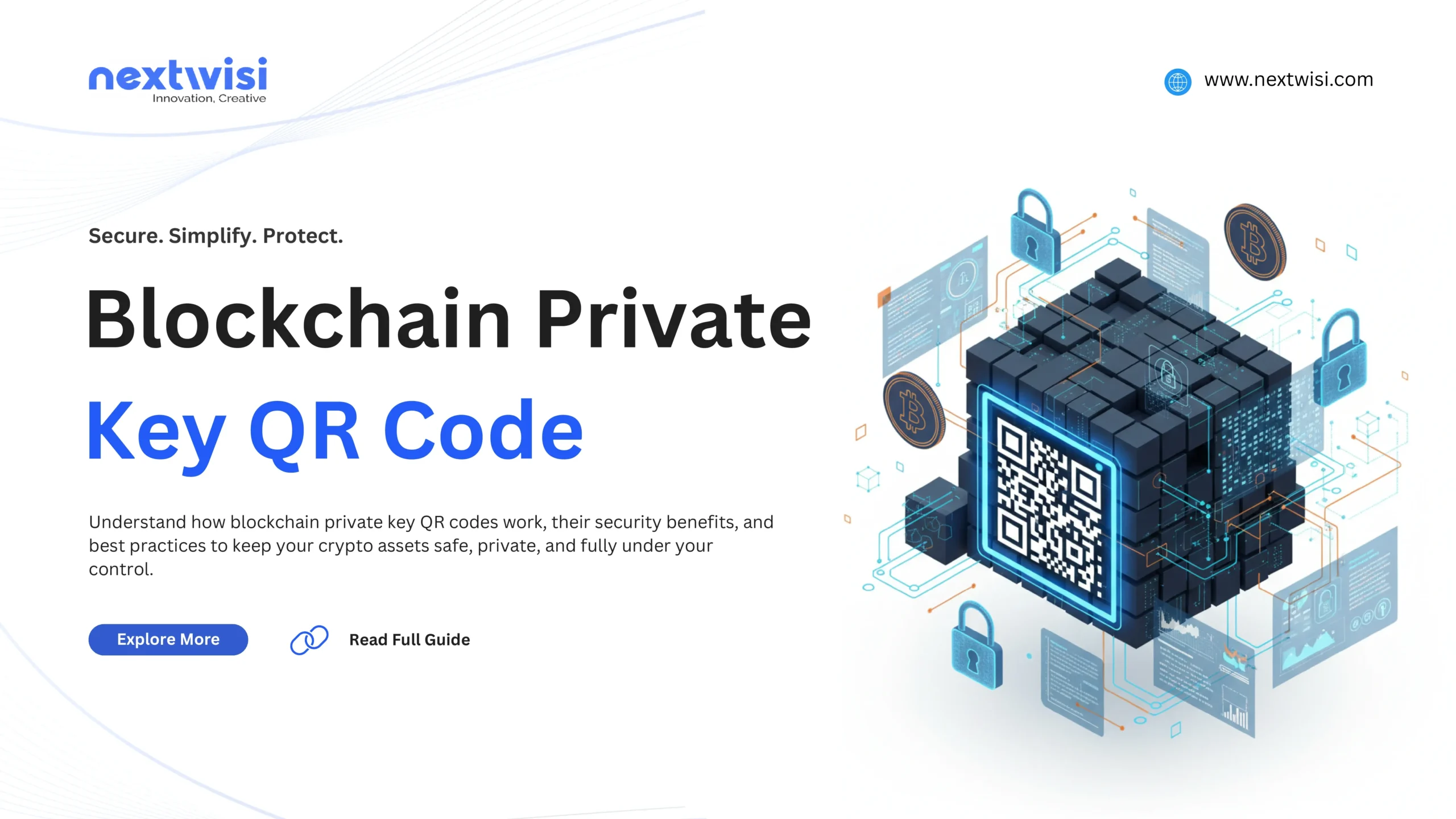
    A Blockchain private key QR Code is a type of specialized scannable code, which stores an encrypted alphanumeric code, which is used to access and manage cryptocurrency assets on the blockchain. It is a graphical version of your digital key, which allows you to conduct secure digital transactions without having to type in long and difficult keys. This causes the operations of blockchain to be quicker, safer, and more convenient and assists its users to keep control over their digital possessions and minimizes the risk of making an error or being exposed to threats.

    The Blockchain private key QR code is generated by blockchain wallets, which makes it easier to handle crypto transactions because they can be conducted immediately. It allows sending or receiving funds in a short amount of time, and the integrity of the private key and its privacy are preserved. Being used responsibly, this QR code will be one of the most convenient and safe tools of crypto users. Nonetheless, improper storage or misuse may result in the possible exposure of data or even the loss of funds forever; hence, the importance of safe handling.

    Wallets utilize sophisticated cryptography algorithms to encode private keys into scannable formats to create a blockchain private key QR code. The algorithms make sure that the data contained in the code is not accessible to the unauthorized users. This QR code is a safe way to store or conduct transactions in blockchain after it is created, as long as it is stored offline or in secure online locations. This reduces the possible vulnerability and as well as provides easy access in case of need.

    The value of the blockchain private key QR code is that it balances between the convenience and the security. In its absence, users would have to type long alphanumeric keys manually, a task that is subject to human error and phishing. Board access Time and again users can authenticate and execute blockchain transactions in seconds using QR-based access. Nevertheless, like any blockchain tool, its safe usage is determined by its security storage, scanning, and control by the owner.

    Best Practices for Using Blockchain Private Key QR Codes Safely

    The practice of handling the ownership of private keys is among the most important in the ownership of cryptocurrencies. The simplicity of the blockchain private key QR Code is also accompanied by the presence of some risks when poorly handled. The users are required to adhere to the strict policies of the generation, storage and use of these codes to ensure that they are safe. Effective security practices could reduce the possible risks such as hacking, theft, and loss of money and ensure complete ownership of digital resources.

    1. Keep Your Blockchain Private Key QR Code Secure

    You should always have a safe physical or digital location where your QR code can be kept. It should not be saved on the drives or on the internet under shared folders. Restrict the use of your QR code, and do not allow any other person to look at it and copy it. Keep files that have passwords or encrypted storage devices to ensure that files are not accessed by the wrong people. You should handle it with the same care as your bank password or financial documents as you can lose everything permanently once it is compromised.

    2. Use Cold Storage Wallets for Added Protection

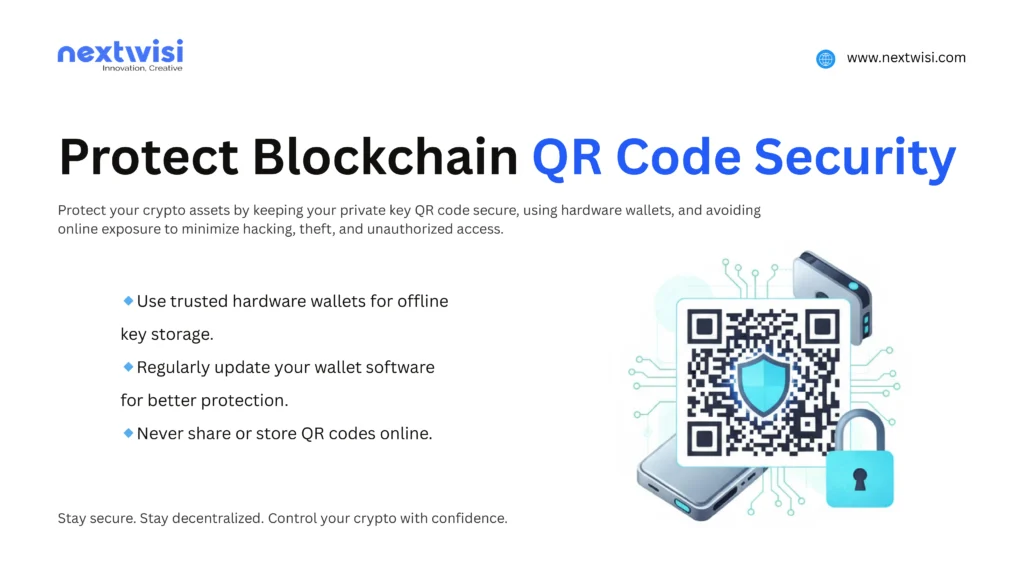
    Hardware wallets are cold storage devices that store your blockchain private key QR Code offline. This significantly limits the exposure to cyber threat or malware attacks. Do not have these wallets connected to the internet unless making a transaction. Also update their firmware regularly in order to fix any vulnerabilities. Used in conjunction with offline storage, this gives a very safe and dependable means of ensuring that you keep your private keys out of the reach of hackers or data leaks.

    3. Double-Check the QR Code Before Scanning

    Always ensure that a given QR code is authentic before scanning it. Make sure that it was made by your wallet provider and not disturbed or changed. False codes may result in the theft of funds/data. Use verified sources only and keep the code secure by use of wallet verifying software. This is an extra step that will ensure that no unauthorized access is possible and also may assist you in ensuring that you are dealing with your original private key data.

    4. Create Secure Backups of Your Private Key QR Code

    It is always advisable to maintain numerous encrypted copies of your Blockchain Private Key QR Code in secure locations, like hard drives or physical safes. Sharing the cloud or online environments should be avoided. Copy insurance backup to excellent encryption and verify every now and then to make sure it is readable. Secure backups will guarantee that you have access to your digital assets even when your data is corrupt or lost or your computer damages.

    Risks Associated with Blockchain Private Key QR Code

    Although Blockchain Private Key QR Codes are convenient, they may also be some of the weak links in case they are not handled correctly. The knowledge of the risks related to them allows the users to make reasonable choices related to storage, usage, and general blockchain security control.

    1. Risk of Hacking and Theft

    Any stolen or hacked Blockchain Private Key QR Code provides hackers with complete access to your money. Stolen assets cannot be recovered because the transactions made in the blockchain are not reversible. To avoid this, encrypted local storage, two-factor authentication and regular malware scanning should be used. Do not post your QR code on the clouds or social sites. The surest way of protecting it is to keep it completely offline.

    2. Risk of Human Error and Data Mismanagement

    Making errors due to manually working with private keys or QR codes is possible, including scanning or losing them. The slightest mistake can lead to loss of funds permanently. To prevent this, make sure to read each of the QR codes twice before use, be careful on the destination addresses, and use hardware based wallets to ensure this. Always do your routines and confirm your transactions using provided wallet verifiable systems.

    3. Risk of Unauthorized Exposure and Sharing

    When you provide your Blockchain Private Key QR Code to unauthorized access, it may be permanently violated. Never disclose your code to anybody even to test or seek support. In case of technical assistance, it is recommended to provide only public addresses and not keys and QR codes. Also, do not show them in screen-shots or printed content. You can be compromised even by a brief exposure to provide the attackers with sufficient information to replicate your key and steal your resources.

    How to Protect Yourself from Blockchain Private Key QR Code Risks

    Blockchain Private Key QR Code

    The proactive and layered defense approach is the optimal approach to securing your Blockchain Private Key QR Code. Trying to avoid the unauthorized access can be done with the help of healthy hardware, secure environments, and constant maintenance of the software to improve your crypto security posture.

    1. Use a Hardware Wallet for Ultimate Security

    Hardware wallet visually separates the personal keysof the internet, providing physical security to your QR codes. Such devices as Ledger or Trezor offer a secure storage with encrypted keys. It is always advisable to initialize hardware wallets on offline and secure systems and save recovery phrases in different systems. You should regularly duplicate your QR codes and firmware to ensure that they are available in the long run. The devices are the most secure in the defense of blockchain assets against both digital and physical risks.

    2. Regularly Update Wallet Software and Security Tools

    Older wallet applications can contain their vulnerable segments which can be used by hackers. Never fail to update to the newest releases of the trusted sources of wallets. Newer versions may consist of enhanced encryption, virus protection, and enhanced QR code processing. Allow automatic automatic updating (where possible) and observe official channels in case of security announcements. Regular updates will keep the system as safe as possible, as well as avoiding the possibility of exploiting the established weaknesses.

    3. Keep Private Key QR Codes Completely Offline

    To minimize chances of hacking, it will be a good idea to store your Blockchain Private Key QR Code offline. Use paper wallets, hardware drives or secure USB devices that are stored in safes. Do not post your QR code on any internet-based device. Keep offline storage of backup data and periodically check its status. Offline storage means complete control and avoidance of exposure to online phishing, malware or ransomware attacks.

    Key Takeaways

    • Use your Blockchain Private Key QR Code as a password on the Internet – keep it safe and do not share it.
    • Keep your private keys safe on cold or hardware wallets in order to prevent online attacks and unauthorized access.
    • It is always important to ensure that QR codes are checked before scanning to avoid misguidance or fraud activities.
    • Also have several encrypted offline backups so that you can always have access to your assets.
    • Always update your wallet and security tools to ensure that they are up to date security standards.

    Frequently Asked Questions (FAQs)

    1. What is a Blockchain Private Key QR Code and how does it work?

    Your encrypted private key is encoded into a scannable graphic by a Blockchain Private Key QR Code. On a scan conducted on an approved wallet, it opens your cash and gives you access to your funds with ease. The process minimizes the chance of human error and enables quicker authentication of the transaction whilst preserving cryptographic security.

    2. How does a Blockchain Private Key QR Code enhance transaction security?

    These QR codes do not require manual input as they encode the private keys in the secure cryptographic formats. This reduces vulnerability to phishing and keylogging attacks. The QR code is a secure way to connect blockchain wallet with the user without exposing raw private information.

    3. What are the main advantages of using a QR code for private keys?

    A Blockchain Private Key QR Code has the advantage of being easily accessible, more precise, and efficient. It makes the management of digital assets easier, minimizes typing mistakes, and offers the user a more secure way of approving blockchain transactions than manual entries.

    4. How can I keep my Blockchain Private Key QR Code private and secure?

    Always keep it in offline encrypted drives or hardware wallet. Do not post it to the internet-connected devices and cloud services. Always check your storage and access all third parties only to achieve confidentiality.

    5. Can Blockchain Private Key QR Codes be used across different wallets or assets?

    Yes. The majority of blockchain wallets have the opportunity to import and export the QR code and, thus, maintain the number of different currencies effectively. Nevertheless, compatibility should always be checked prior scanning or importation to avoid misfunction or loss of assets.

  • Blockchain in Fantasy Sports Apps for Fair Gameplay

    Blockchain in Fantasy Sports Apps for Fair Gameplay

    Discover how blockchain in fantasy sports apps ensures fairness, faster transactions, and trusted digital gameplay for every user.

    Introducing a New Age of Fantasy Sports

    Fantasy sports app have become a major ecosystem with multibillion-dollar consequences and have come out of small community games. The virtual teams are now created by millions of users, real-time leagues are being competed in, and tangible rewards are being earned. However, the old fantasy platforms continue to experience late payments, internal security issues, and lack of trust. All these issues are based on the idea of centralized control, meaning that a single company processes all data, scores, and finances.

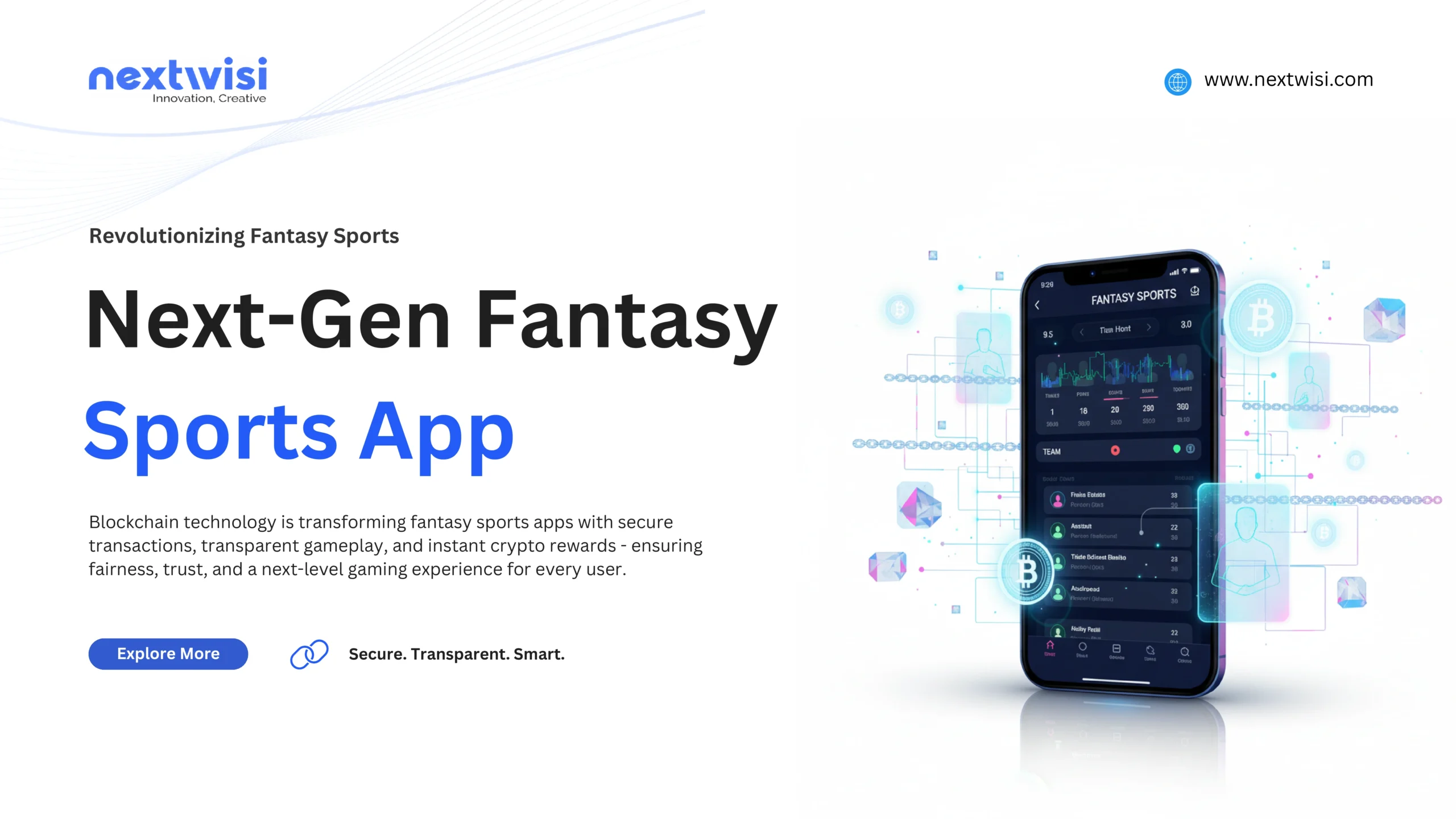
    Integrating blockchain in fantasy sports app development will bring forth transparency and decentralization. All transactions and regulations are stored in an unalterable digital registry, minimize the possibility of manipulation, and can be automatically paid in smart contracts. To players, it signifies certain results and instant access to wins; to developers, it signifies increased confidence and scalability. This assortment of security, mechanization, and transparency is establishing a fresh worldwide pattern of just and compensating fantasy gaming.

    The role of Blockchain in Fantasy Sports

    Blockchain is a decentralized web of interconnecting nodes, which contain the same replicas of a digital registry. Every transaction that can be documented in this ledger is authenticated by consensus, and it is practically impossible to modify or forge it. The technology is changing the way data, rewards, and user interactions are managed in fantasy sports app.

    In conventional apps, match results, leaderboards, and transactions are controlled by administrators, usually through closed systems. Conversely, blockchain stores all such data in an open manner to allow players to self-audit results. Smart contracts are self-executing code segments that make sure that rules related to contests are automatically enforced without human intervention. The results are processed and the rewards transferred immediately after a game is over. Such non-liquidity removes any chance of prejudice, enhances equity, and gives the user a hundred percent trust that all activities in the app are governed by the same checked guideline.

    Challenges Facing Traditional Fantasy Sports Platforms

    It is crucial to note that prior to the realization of the advantages of blockchain, it is crucial to understand the unabated problems in the existing fantasy programs.

    Lack of Transparency: The majority of available platforms have undercover algorithms to compute scores and payments. Players cannot be assured of fair or manipulated outcomes, and it breeds doubts and mistrust that is detrimental to user retention.

    Slow and Costly Payments: Traditional systems rely on banks or pay processors. It not only increases transaction costs but can also take days to withdraw, which is annoying to the users who want fast digital payouts.

    Data Breaches and Privacy Risk: Sensitive data is stored in centralized servers, including emails, payment data, and KYC data. Even one security breach will result in the loss of thousands of users and the credibility of the platform in a few hours.

    Fake Users and Bots: The use of automated accounts prevails in the competitions and in the distortion of standings. Authentic participants are disadvantaged, and platforms are not well-known. It is almost impossible to solve these systemic problems in centralized models – and so blockchain is the logical next step of fairness and security.

    How Blockchain Overcomes These Challenges

    The decentralized nature of blockchain specifically eliminates the weaknesses of traditional fantasy platforms that had existed.

    Decentralization and Fair Play: Blockchain does not require a central authority, but it disperses control throughout the network. All the rules and winners of the contests are recorded on-chain right in the open. Smart contracts are used to automatically impose the rules in such a way that the administrators or any other parties cannot alter the outcomes when a contest is underway.

    Transparent and Instant Transactions: The peer-to-peer transaction model means that blockchain allows direct payouts to the players and the platform. Gambling payouts are automatically given immediately without being manually verified, and a transaction history is available forever to verify. This eliminates the secret expenses and develops robust financial trust.

    Increased Security and Privacy: All the data blocks are encrypted and connected to the one before, and thus manipulation cannot be done easily without authorization. Identity solutions based on blockchain may anonymize user data and minimize exposures in the event of a breach.

    Authentication and Anti-Bot Protection: Digital identity certificates by blockchain would guarantee the use of legitimate players. Checks produced by AI and cryptographic evidence ensure that no fake accounts are detected, and platforms have a level playing field and integrity.

    NFTs and Digital Asset Ownership in Fantasy Sports App

    Non-fungible tokens (NFTs) have established a brand-new ownership concept in fantasy sports apps. These are distinct digital tokens that enable the player to have collectible cards, team logos, or even virtual likenesses of actual players.

    True Ownership and Tradeable Assets: NFTs can be stored in the crypto wallet of the player, unlike centralized collectibles, which are stored on company servers. The blockchain records ownership, which ensures authenticity and no duplication. These assets are tradeable, sellable, or rentable by players in secondary markets, meaning that they generate new sources of revenue and forms of engagement.

    Play-to-Earn (P2E) Integration: Blockchain also allows the creation of dynamic economic models that allow players to earn tokens or cryptocurrency according to their performance. One of the users who wins a contest is automatically rewarded with tokenized reinforcements, which can be traded or invested back. This form of play-to-earn approach keeps players interested and transforms gaming abilities into real income streams, which increases retention and loyalty.

    How to create a Blockchain-Based Fantasy Sports App

    Fantasy Sports App

    A multi-stage approach entailed in the development of a successful fantasy platform using blockchain should be careful.

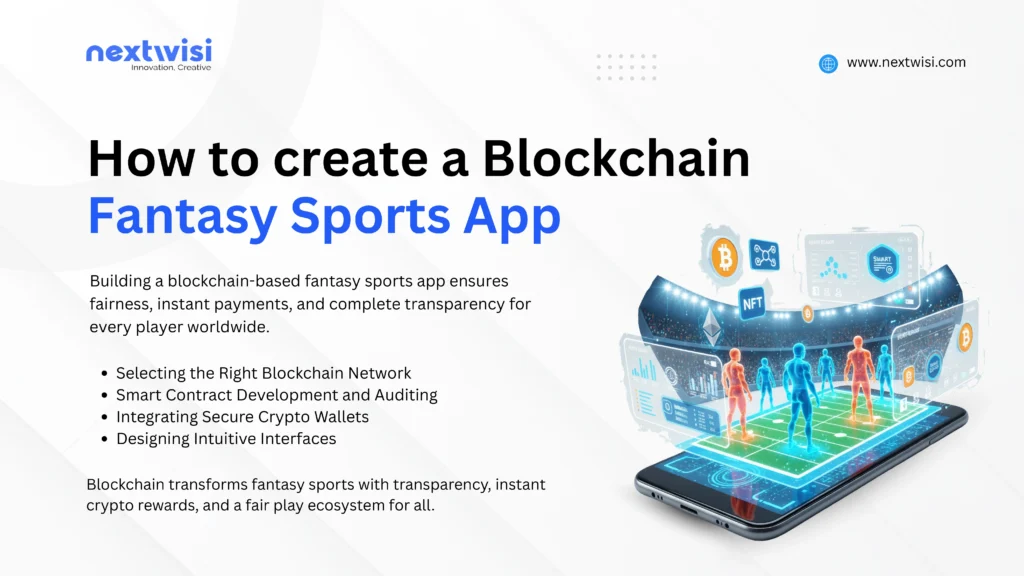
    Selecting the Right Blockchain Network: The various chains have their benefits. Ethernet works with high-level smart contracts and NFTs, Polygon has lower transaction fees and faster charges, and Solana allows real-time updates, which are suitable in sporting events. The correct selection of a network influences scalability and cost of users.

    Smart Contract Development and Auditing: Smart contracts dictate all the contest registration and scoring and even distribution of prizes. These have to be coded accurately, and careful auditing has to be done by cybersecurity professionals to remove bugs or loopholes that may be used by bad actors.

    Integrating Secure Crypto Wallets: Players can store tokens and win through wallets like MetaMask, Trust Wallet, or Coinbase Wallet. A wallet experience without any friction is needed to allow mainstream users to transact without understanding how to use blockchain.

    Designing Intuitive Interfaces: The most sophisticated blockchain systems should still be easy to use. A homelike interface based on clean navigation, responsive dashboards, and clear reward summaries ensures that the technical complexity is hidden behind the attractive visuals and smooth functionality.

    The Future of Fantasy Sports App with Blockchain

    Blockchain and fantasy sports App are only starting to intersect, and their direction leads to the creation of a completely decentralized entertainment system. On-chain rewards will be real-time, with future platforms connecting with real-world sports events and allowing them to trigger real-world sports events.

    Players will be involved in community-managed frameworks in the form of Decentralized Autonomous Organizations (DAOs), whereby users vote as a block on the type of contest or the type of charges. NFTs and player tokens will be able to flow freely into and out of ecosystems to create a borderless sports economy, with interoperability between blockchains.

    With a change in regulations and mainstream adoption, it will likely see an explosion of hybrid designs that involve fiat and crypto to make onboarding easier. Eventually, blockchain will transform fantasy sports app to provably fair ecosystems where all players, developers, and sponsors will act under transparent and verifiable conditions.

    Conclusion

    The application of blockchain in fantasy sports app development represents more than a technological upgrade but a revolution of the ways in which fairness and ownership, as well as interaction, are characterized. Blockchain will remove manipulation, speed up the exchange, and bring transparency to every action, and NFTs and smart contracts are unrestricted in their opportunities to gain profit and innovation.

    Businesses require a stable technology partner in order to bring these breakthroughs into reality. Nextwisi Solutions is an IT firm that focuses on blockchain development, mobile application development, AI agent development, cloud solutions, etc. Nextwisi Solutions has creative, scalable, and trusted fantasy sports platforms, which are developed by skilled iOS and blockchain developers.

    Regardless of whether you are releasing a new fantasy sports app based on blockchain or are renovating an existing app, Nextwisi deliver’s end-to-end solutions, including concept development to launch, to ensure that your brand sets itself apart as the next digital revolution in the field of fantasy gaming.

  • Slippage Tolerance: What Slippage Should I Use for Dexscreener New Coins?

    Slippage Tolerance: What Slippage Should I Use for Dexscreener New Coins?

    Trading of new coins on a decentralized exchange (DEX) is a good profit-making undertaking, yet it has its challenges. Slippage tolerance is one of the most critical items towards successful trades. When you are inquiring, “What slippage should I use for the Dexscreener new coin?” this guide will furnish you with a comprehensive and practical solution to guide you to open your trades effectively with minimum risks involved.

    How to comprehend slippage tolerance in DEX Trading

    Slippage tolerance is the percentage of price change that the trader is prepared to accept at the time of making a trade on a DEX. Exchanges such as Dexscreener are decentralized, so it is possible that over a short period of time between the time you submit an order and its execution, prices may increase or decrease rapidly. Adjusting a correct slippage tolerance, which will make your transaction complete without any significant losses caused by the rapid variations of prices.

    Slippage is even more imperative when trading new coins on Dexscreener since such tokens are usually poorly liquid and can frequently undergo substantial and abrupt fluctuations in prices. The appropriate slippage tolerance may help to avoid unsuccessful transactions and, at the same time, not to pay too high prices than planned.

    Why Slippage Matters for Dexscreener New Coins

    Slippage may directly affect the results of your trades, particularly with new coins that are released. New tokens tend to be less active on the market and be vulnerable to price manipulation or sudden spikes. Failure to control the slippery situation may subject you to lost trades, increased expenditures, or some unforeseen losses. The traders should be cautious of slippage so as to enter into a trade in a manner that it is executed effectively, and at the same time they will be in control of the risks they might face.

    Further, the price can move to a very different point of bigger trades when low liquidity occurs. The ability to trade in volatile conditions successfully, even with a slippage tolerance set, is necessary in Dexscreener new coin trading.

    Factors to Consider When Setting Slippage Tolerance

    1. Market Liquidity

    A trading pair has a high degree of liquidity that will affect slippage. When the coins are highly liquid and buy and sell orders are numerous, the slippage can be tolerated with a lower limit, usually 0.5 to 1%. Conversely, low liquidity coins are more tolerant of slippage and sometimes can be as high as 5 percent to guarantee that your trade goes off correctly. Trading volume and order book depth should always be checked before trading on a new coin.

    2. Trade Size

    Slippage is also dependent on the size of your trade. Greater trades on low liquidity tokens have a higher probability of shifting the market price and thus, increased slippage. When this happens, then it would be wise to place a higher tolerance so that your entire order can be filled. Smaller trades, on the other hand, can typically be traded with minimal slippage, meaning you can put a lower tolerance in place.

    3. Market Volatility

    New coins are usually sensitive, and the price may vary wildly within a short time. Caught unawares may be the sudden price movements triggered by news events, social media hype, or sudden changes in trading activity. In such periods, you can raise your slippage tolerance a bit to ensure that you still have the ability to trade without the needless cancellations and be able to handle the unforeseen losses.

    4. Start Conservatively and Adjust Gradually

    In case you are not sure of the right slippage to apply to a new coin, you can be conservative with 1 percent toleration or 2 percent. Check the outcomes of your trade execution, and you can slow down the slippage progressively when the orders are frequently failing. This approach would strike a balance between safety and efficiency and minimize the possibility of paying a lot of money in the turbulent environment.

    5. Utilize DEX Tools and Alerts

    The majority of DEXs have analytics, price alerts, and slippage adjustment features that allow traders to make informed choices. The tools give you a view of recent price movements, liquidity, and possible risks to allow you to establish a slippage tolerance that would be in line with market conditions. Trading with the help of these resources can make you more successful.

    The liquidity of the token, its trading volume, and market volatility are very important factors in determining the best slippage that new coins can have on Dexcreener.

    High Liquidity Coins: In the case of coins with high liquidity, the tolerance of slippage of 0.5%-1% is usually appropriate since the trade can be completed without a big price variation or delay.

    Moderate Liquidity Coins: Moderate liquidity coins should have a slippage of 1-2% to ensure smooth execution of the trades and control any possible price fluctuations.

    Low Liquidity Coins: When dealing with low liquidity tokens, a slippage tolerance of between 2% and 5% will be appropriate to ensure that trades are successful even in times when the market is extremely volatile.

    These are not rigid rules but general guidelines. Set trade size, market activity, and risk tolerance.

    How to Minimize Slippage in Dexscreener New Coin Trading

    Slippage Tolerance: What Slippage Should I Use for Dexscreener New Coins?

    Although it is not possible to avoid slippage, it is possible to minimize its effect by applying tactical strategies and trade planning.

    Trade in High Liquidity Intervals: Trades should be made at the most active time of the day when the trading volume is high and, therefore, the prices remain stable and there is less major slippage.

    Limit Orders Use Limit Orders: Limit orders have you set the price, exactly, at which you will be willing to buy or sell at, and they reduce excessive slippage but may slow down execution.

    Trade in Small portions: Big trades can be split into smaller amounts to reduce this effect on the market price to minimize slippage of low liquidity tokens.

    Stay on top of market news: Knowing about announcements, or tokens appearing or disappearing, or social media buzz can get you to adjust the tolerance to slippage in time to prevent being caught by abrupt price fluctuations.

    Use high-tech DEX features: More sophisticated DEX systems, such as Dexscreener, use slippage optimization, real-time price tracking, and order tracking features to make trading more efficient and more precise.

    Slipping can be controlled better by using these strategies and will provide a smoother trade and reduce the losses when trading new coins on Dexscreener.

    The Role of DEX Development in Slippage Management

    Development firms that are professional DEX developers can assist in the eventual development of a decentralized exchange that is designed to manage slippage very well. They come up with order matching algorithms, liquidity pool management, and dynamic slippage configuration so that the trades could be done at reasonable prices with the least loss. The next-generation trading platforms may also provide alerts, analytics, and the automatization of adjustments to allow the traders to establish the right slippage tolerance of the new coins.

    In the case when you do not know what slippage you should use in Dexscreener for a new coin, select a platform supported by a professional DEX development company, and then it will be more convenient to trading with a minimal number of risks of executing trades.

    Best Practices for Setting Slippage on New Coins

    Examine Token Liquidity: It is always prudent to have a look at the trading volume, depth of the order book, and recent market action before deciding on the slippage tolerance when it comes to any new coin.

    Start with Conservative Settings: This is where you should start with a smaller slippage tolerance between 1-2 percent and increase progressively depending on the success and execution of your trades.

    Adjust for Trade Size: When using large trades on low liquidity coins, the slippage tolerance might need to be adjusted as well, to get your whole order filled.

    Keep Track of Price Movement: By noticing sudden price movements, market indicators, and general price volatility in the market constantly, you will be able to adjust your slippage tolerance efficiently whenever trading.

    Use Platform Tools: Take full advantage of Dexscreener analytics, alerts, real-time price tracking, and other platform tools to optimize slippage for safer trades.

    However, when you adhere to these practices, it will be possible to trade in new coins more effectively and reduce the risks and unanticipated losses, which may occur in the market under the influence of sudden fluctuations in the market.

    Conclusion

    The ability to learn and control the tolerance to slippage is entirely paramount to the successful trading of the new coins within the Dexscreener and the minimization of the losses that are unneeded. Traders may also maximize the trade execution and avoid failed trades and ensure unforeseen price changes by ensuring they carefully answer the question, “What slippage should I use for Dexscreener new coin?”

    Traders can selectively reduce slippage tolerance by trading in relation to such variables as liquidity, size of trade, and volatility in the market, using the available platform tools. Appropriate slippage management guarantees the trading of new coins is going to be a more predictable and more enjoyable experience, possibly profitable, within the high-paced decentralized exchange space.

    Read Another Post – Why Slippage Control Matters for Decentralized Exchange Traders?

  • How Hashing in Blockchain Secures Data and Technology

    How Hashing in Blockchain Secures Data and Technology

    Blockchain technology has transformed the nature of information storage, sharing, and security in the digital transaction world. The main component of this innovation is a robust process called hashing in blockchain. It is the magic potion that makes all the information on the blockchain safe, inviolable, and inaccessible.
    However, what makes blockchain hashing secure? Let us take a look at this, one step at a time.

    What is hashing in Blockchain?

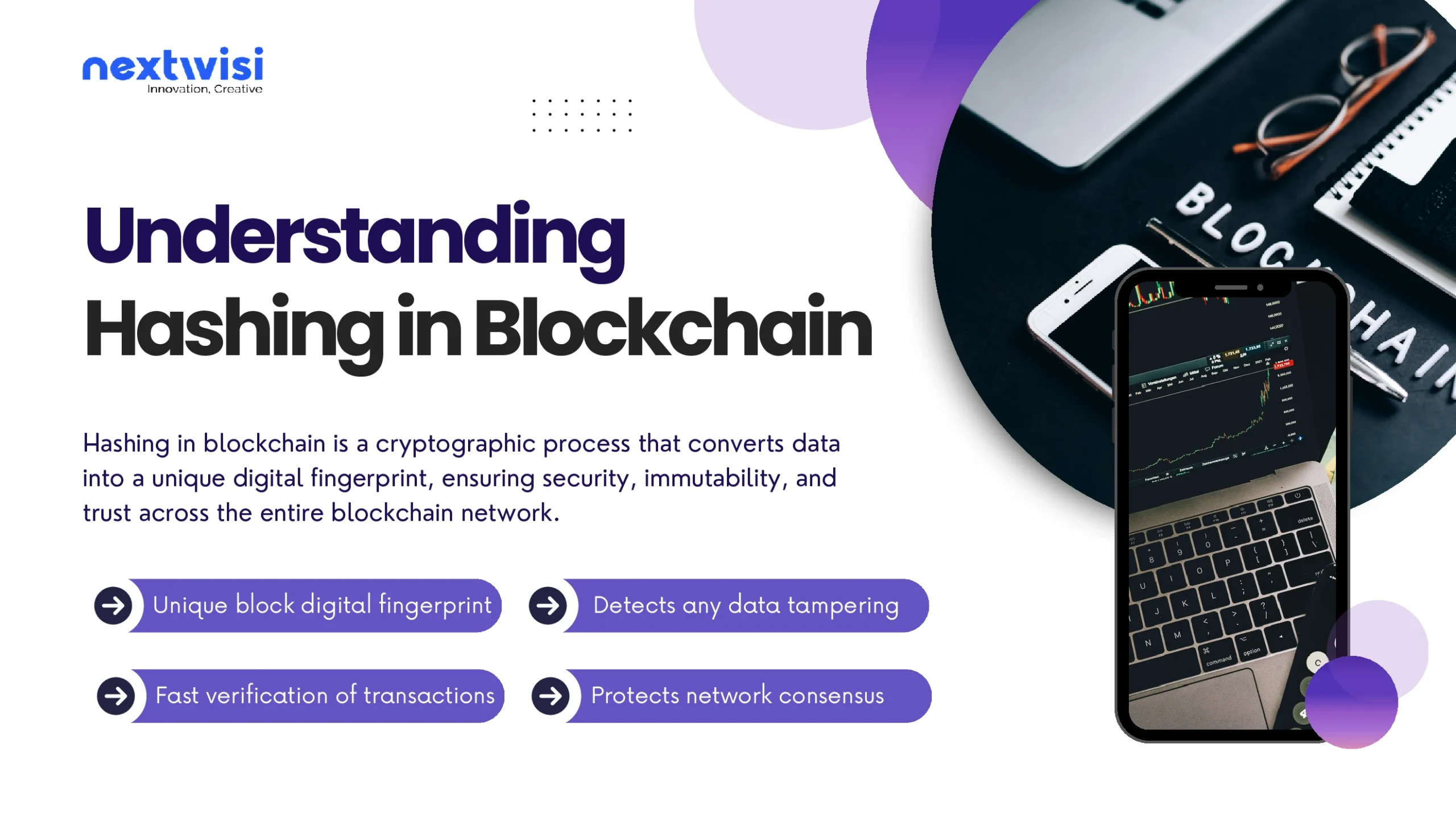
    Hashing in Blockchain is a cryptography process that transforms any input to a fixed-length value of characters. Regardless of the input size, the output, referred to as a hash value, is always of the same length. As an illustration, in the hash function of Bitcoin, which is known as SHA-256, the result is a 256-bit number.

    With hashing, it is no longer possible to reverse-engineer or decode the original information. Any little alteration in the input data leaves a totally different hash. Such a special feature can be used to secure data integrity and avoid manipulation in blockchain systems.

    It works as a digital fingerprint on data, every block has its hash, and it is easy to notice any unauthorized modification immediately.

    How Does Hashing in Blockchain Work?

    To have a vision on the way hashing in blockchain is carried out, we can take the example of a chain where each block has three important elements, namely data, timestamp, and the hash of the last block. The hash is used to create an indivisible link between one block and the other.

    In case one attempts to alter any information in a block, the hash is automatically altered. The connection to the subsequent block is thus disrupted, and it alerts the network that it has been tampered with. It is almost impossible to change or manipulate information without being detected because each block is checked by thousands of nodes.

    This design makes blockchain immutable, which means once a transaction is stored in it, it cannot be altered or erased, which is one of the reasons why the blockchain is trusted on an international level.

    Key Properties of a Hash Function in Blockchain

    Blockchain security depends on hash functions. The integrity, immutability, and efficiency of data is guaranteed by their properties. Let us discuss the key features that render them dependable to blockchain networks

    1. Deterministic Nature:

    A hash method is deterministic; that is, the identical input will keep on giving the identical output hash. This guarantees that every node within the blockchain network is able to independently authenticate information and ensure all distributed ledgers are consistent.

    2. Fast Computation:

    The use of hash functions is computed quickly. They enable quick conversion of transactions into hash values to facilitate the adequate validation of the block, the fast addition of new blocks, and easy functioning throughout the blockchain network.

    3. Avalanche Effect:

    A single alteration in input data, whether it is a single character, causes a totally different output in terms of the hash. This attribute inhibits the occurrence of unnoticed manipulation and puts an instant check on the manipulation of data.

    4. Irreversibility:

    Blockchain hashing is a one-way cryptography. From a hash of the initial input, it is computationally infeasible to obtain the input, and this ensures sensitive data protection and preserves blockchain data confidentiality.

    5. Collision Resistance:

    Collision resistance means that there are no two different inputs that have an identical hash value. The property ensures that each block is unique and thus will not allow malicious intentions to duplicate or manipulate blockchain records.

    Hashing algorithms that are common in blockchain

    Blockchain networks use several cryptographic hashing algorithms to ensure the security and immutability and to verify the authenticity of the transaction. The algorithms each have their optimization to certain network purposes and needs.

    1. SHA-256 (Secure Hash Algorithm 256 bits):

    The Bitcoin blockchain is based on SHA-256. It produces a fixed 256-bit hash, which has outstanding capability to resist a brute-force attack, collision risk, and tampering, making transactions in Bitcoin transactions self-sovereign.

    2. Keccak-256 (Used in Ethereum):

    Smart contracts and transactions are secured with the help of Ethereum by the Keccak-256 algorithm, a version of SHA-3. It is efficient and consistent with its strong hashing algorithm and protection against unauthorized manipulation of data.

    3. Scrypt Algorithm:

    In cryptos such as Litecoin, the use of scrypt is used. It is created to be memory-intensive and avoids the dominance of ASIC, and a secure and decentralized network structure gives mining equal opportunities to the participants and a safe and decentralized network.

    4. RIPEMD-160:

    RIPEMD-160 is also commonly employed together with the SHA-based hash to enhance the security in the generation of public keys. It provides another checkpoint, which enhances the security of wallets and eliminates possible cryptographic weaknesses of blockchain networks.

    5. BLAKE2:

    BLAKE2 is a contemporary hashing algorithm that is known to be fast and flexible and has a high collision resistance. It is commonly used in new blockchain applications, and it allows high-performance verification without sacrificing security or efficiency.

    Role of Hashing in Blockchain Security

    The aspect of hashing in blockchain is critical in ensuring trust, transparency, and protection throughout the full distributed network. It makes sure that the data, transactions, and blocks are valid, verifiable, and untampered. We will deal with its most important blockchain security functions.

    1. Data Integrity:

    Hashing ensures that once the information is saved on the blockchain, it cannot be changed. Any modification of the initial data instantly modifies its hash, revealing the efforts to change it and ensuring the full integrity of the blockchain ledger.

    2. Block Linking:

    The blocks in the blockchain have a hash of the preceding block, which brings them together chronologically. This dependency is such that there cannot be any unauthorized changes done without destroying the entire chain structure.

    3. Digital Signatures:

    In blockchain, hashing is used with digital signatures in order to prove authenticity and ownership. It makes sure that transactions are only authorized by legitimate users and this increases the level of trust and removes fraudulent or unauthorized activities in the network.

    4. Consensus Verification:

    In consensus mechanisms like proof of work or proof of stake, hashing assists nodes to check the validity of blocks. This ensures that only validated, reliable data is added and hence fairness and transparency throughout the blockchain system.

    5. Security Against Attacks:

    In blockchain, hashing also eliminates bad behaviors such as double-spending or replay attacks, as it is computationally infeasible to alter past transactions. Such a high rate of security makes the whole blockchain ecosystem not open to manipulation.

    Importance of Hashing in Consensus Mechanisms

    The use of hashing in blockchain is essential to the consensus mechanism known as Proof of Work (PoW) and Proof of Stake (PoS).To guarantee the integrity of the distributed ledger and that a transaction is valid, both consensus methods rely on the use of hashing in blockchain.

    In Proof of Work, miners are competing against each other to solve complex mathematical puzzles conducting hash calculations. The miner who finds the right hash is the first one to append to the chain, and is rewarded. This is done so as to promote fairness, transparency and network security.

    Validators in Proof of Stake verify transactions with some hash-based algorithms in accordance with the quantity of tokens they possess. This minimizes the energy spending and ensures that the blockchain integrity is preserved.

    In the absence of hashing, consensus mechanisms could not be used to secure transactions and the blockchain could be easily manipulated.

    How Hashing Ensures Immutability in Blockchain

    The immutability is one of the pillars of blockchain as the data that is already stored cannot be changed or deleted. This is achieved through hashing in blockchain which connects one block to the others with the help of their respective hash values.

    When just one character in the transaction data is changed, the hash will be completely different, and the connection between the blocks is broken. This sends out a warning to all the nodes in the network and the tampering is revealed instantly.

    The difficulty in this is that all the blocks are distributed among several nodes worldwide, and a hacker may find it very difficult to modify all the copies simultaneously. That is the reason why blockchain data is immutable and trustworthy.

    Real-World Applications of Hashing in Blockchain

    Hashing in Blockchain

    Finally, hashing in blockchain is the main process that ensures that the whole blockchain system is secure, transparent, and immutable. Hashing is what makes the network trustful since it is used to connect blocks and authenticate transactions as well as to block unauthorized access.

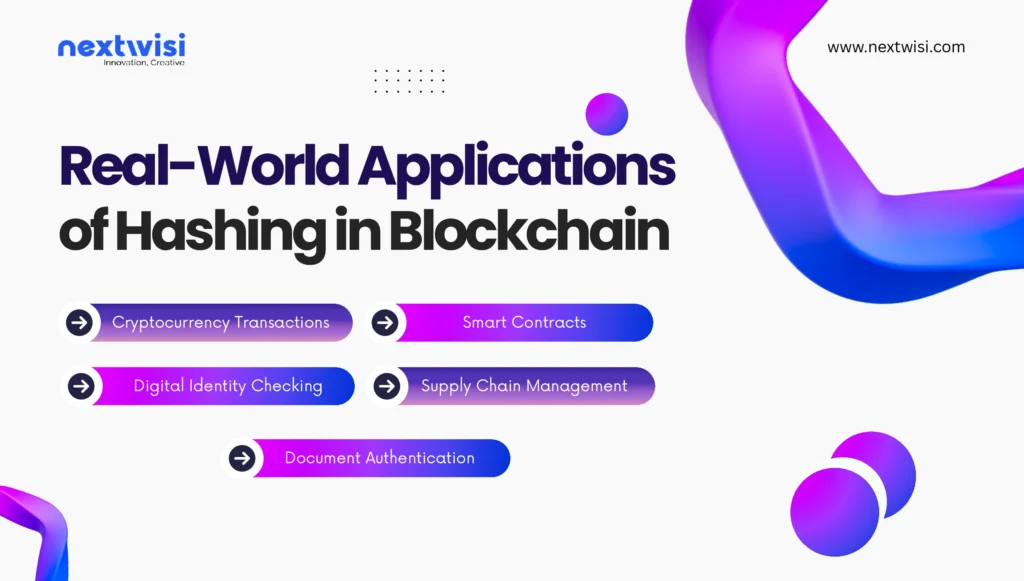
    1. Cryptocurrency Transactions:

    In cryptocurrencies, such as Bitcoin, Ethereum, and Litecoin, hashing safely secures all transactions through the formation of a unique cryptographic signature. After verification, the transactions are digitally trusted as they cannot be edited, copied or removed to the blockchain.

    2. Smart Contracts:

    Smart contracts can be run to the letter provided that hashing is enabled on blockchain platforms like Ethereum. It secures the code and the data of transactions in a contract, and no one can modify, alter, or manipulate the terms and conditions once they are deployed.

    3. Digital Identity Checking:

    Hashing enables blockchain systems to secure the identity of users because they only save encrypted identities rather than personal data. This enhances privacy, removes data breach and allows people the ultimate authority over their online credentials and authentication.

    4. Supply Chain Management:

    Hashing in blockchain is applied to enterprises in tracking and certifying each stage in the process of making a product -manufacturing to delivery. Product authenticity and traceability is assured by computing a hash on each transaction and verifying both the business and the customer.

    5. Document Authentication:

    Companies save hashes of documents on blockchain rather than upload documents. Subsequently, such hashes are applied to verify that the document has not been corrupted so that it authentic, transparent and entirely resistant to document fraud.

    Future of Hashing in Blockchain

    With the development of blockchain technology, hashing shall remain as the mainstay of this technology. The development in the future can result in quantum-resistant hash functions that can resist the follow-up attacks on computation.

    In addition, the faster and more efficient hash algorithms will be developed, providing transaction speed, energy efficiency, and scalability to guarantee that blockchain will remain the most valid data security solution.

    The combination of AI and blockchain can also result in more intelligent and flexible hashing that identifies suspicious actions automatically, an additional point of security in the digital systems.

    Conclusion

    To sum up, the hash of the blockchain is the fundamental component that renders the whole blockchain system safe, transparent, and unaltered. Hashing is what makes the network trustworthy, as it is used to connect blocks and verify transactions and also to ensure that the network cannot be hacked by unauthorized individuals.

    With the use of powerful cryptography functions such as SHA-256 and Keccak-256, blockchain has been used to ensure data integrity has been secured at all levels. With a broader advancement in technology, hashing will continue to be the silent security guard of blockchain that promises decentralized trust and freedom on the digital front.

    Through the collaboration with Nextwisi Solutions, business organizations can utilize blockchain and cryptography technologies in the development of safe, future-evident digital frameworks that can spearhead creativity and development.

  • Why Slippage Control Matters for Decentralized Exchange Traders?

    Why Slippage Control Matters for Decentralized Exchange Traders?

    Get to know why slippage control is important to DEX traders and how it makes trades predictable, saves on money, and makes exchanges more profitable on decentralized exchanges.

    Introduction to Slippage Control in DEX Trading

    The results of the trade can be greatly influenced by small price changes in the rapidly developing environment of the Decentralized Exchange (DEX) trading. This variance, which is also referred to as slippage, occurs when the anticipated trade execution price is not the same as the actual one. Unmanaged slippage may add to the trade cost, lower profitability, and user confidence.

    Slippage Control and Slippage Protection are thus important elements of a stable decentralised trading platform. In the case of a professional DEX Development Company, such as Nextwisi Solutions, the incorporation of vigorous slippage management will entail fair, foreseeable, and efficient trades on a blockchain based exchange.

    What is Slippage Control and Why It Happens

    Slippage Control is where there is a fluctuation in market conditions between the moment a trade is placed and executed. In decentralized exchanges, it may occur as a result of market volatility, lack of market liquidity, or latency in trading by smart contract.

    Whereas market orders will be filled immediately at the most optimum price, they are prone to greater slippage. Limit order and slippage tolerance can be used to ensure that the execution of trades does not occur at unfavorable prices providing a trader with a greater level of control.

    Types of Slippage Control in Decentralized Exchanges

    1. Slippage Tolerance Settings

    This is one of the main aspects of DEX Slippage Control, which gives traders the opportunity to determine the percentage of price variation they would accept. In case market price exceeds the established limit, it is automatically canceled and the traders are not expected to lose money.

    2. Limit Orders & Advanced Order Types

    Limit orders, in contrast to market orders, guarantee that every trade is completed at a specified price or at a better price. Advanced order types of stop-limit and trailing orders are available on many exchanges to further decrease the risk of execution.

    3. Price Impact Calculators

    Such aids assist the traders in determining the way their trades are likely to shape the market prior to trading. Knowing the effect of size on a trade allows the user to modify their orders to improve the results and reduce price slippage.

    4. Dynamic Slippage Algorithms

    In the modern DEXs, dynamic slippage algorithms are used to analyze the market real-time conditions. This guarantees that trades are made as close to the desired price as possible which enhances the overall predicted trading experience.

    Why Slippage Control Matters for DEX Traders

    Traders can get more or less than they wanted without good slipperiness control, particularly on volatile markets or with low liquidity trading pairs.

    Slippage Protection guarantees traders with constant and fair trading experience and gives traders confidence in their trading and they are able to manage the cost of trading. Knowing the reasons why slippage control matters in the context of DEX traders is essential to everyone involved with decentralized finance.

    Key Factors Affecting Slippage Control

    1. Market Liquidity and Volatility: Slippage is significantly controlled by market liquidity and volatility. When liquidity is reduced or abrupt price fluctuation happens, the chance of slippage is high. The price deviations tend to increase when traders are operating in volatile conditions because of a lack of order matching.

    2. Trade Size: The magnitude of a trade will directly affect the degree of slippage. With the low-liquidity market, larger trades tend to shift the market price more significantly. To reduce this, merchants may subdivide large orders into smaller ones so that they may have an easier time executing them.

    3. Order Type: Slippage can also be affected by the kind of an order that is placed. Market orders are also carried out immediately at the best price which might not necessarily be the estimated price. Conversely, limit orders provide traders with control over the execution prices and this can reduce the risk of slippage.

    4. Time of Trade: Timing is significant to slip managing. Making trades in low-volume hours can result in slippery performance as fewer people are trading. During the busiest times, it is good to trade and have high liquidity and stability of prices.

    5. Liquidity Pool Stability: The liquidity pool stability is essential in the slippage control in the decentralized exchanges. Stable pools stabilize the prices and enable the trades to transpire effectively. Properly run pools reduce volatility hence giving the trader a more flowing and predictable trading experience.

    Slippage Control

    How to Reduce Slippage in DEX Trading

    1. Set Optimal Slippage Tolerance

    The first thing is to reduce slippage in DEX trading by establishing the appropriate tolerance. The traders are advised to select a level that can strike an equilibrium between trade execution and price accuracy. When it is too tough, the trades are lost, when very generous, the losses are more. This is in a bid to reach a compromise that will guarantee good and accurate trades.

    2. Trade During High Liquidity Periods

    During high-liquidity trading, the trading is done to reduce the slippage. When there are many buyers and sellers the orders are executed quicker and at constant prices. Trading volume decreases the price nodes and volatility and enhances the evaluation rates. A clever step towards a steady performance is tracking the high trading times.

    3. Use Smart Order Types

    Limit orders and other intelligent types of orders are used by traders to manipulate prices. Limit order ensures that you do not get executed at undesirable prices. This is suitable in unstable markets and minimizes undesirable slippage. It assists traders to hold on to their intended planned strategy with confidence.

    4. Analyze Price Impact Before Execution

    Calculate the effect on prices of any trade before making a trade. Price impact calculators, among others, determine the possible slippage before the order can be executed. This knowledge will enable you to set order size or timing to reduce risk. When you know the effect of the price, your capital is not affected by the sudden changes in the market.

    5. Optimize Liquidity Management

    In the DEX development, stable liquidity pools are vital in order to minimize slippage. Balanced pool prevents excess reserves of tokens to facilitate easy trading and reduce volatility. Effective liquidity management facilitates implementation and brings about predictable trading environments. It helps the traders as well as the developers to have more predictable market performance.

    Implementing Slippage Protection in DEX Development

    In the case of DEX development company nextwisi solutions, both technical and user-interface levels should be incorporated with slippage protection.

    Core Features:

    1. Adjustable Slippage Tolerance : This option allows setting a maximum price deviation that a user can tolerate to accept a trade. Traders can adjust their toleration to achieve a balance between speed and precision of the price so that they avoid the undesired losses when dealing with the volatile market environment.

    2. Price Impact Calculators : The calculators are used to estimate the impact of a trade to market prices prior to the execution of a trade. This information can be used by traders to change their order size or timing and thereby reduce slippage enabling them to make better trade decisions.

    3. Easy User Interface : There is a clear user interface, which shows the estimates of slippage and possible price fluctuations clearly before trade confirmation. This makes traders see everything and be assured of what is going on in their orders, enhancing the trading process.

    4. Dynamic Adaptive Algorithms : Real time dynamic algorithmic alterations enable trading specifications to be altered. These algorithms behind factor analysis of price fluctuations and liquidity make sure that in the case of extreme volatility, trades can be executed effectively.

    5. Liquidity Pool Optimization : In the decentralized exchanges, liquidity pools need to be optimized in order to have the same price. Effective pools minimize volatility so that buy and sell orders are matched effectively.

    6. Real-Time Market Analysis : Analysis of the market in real-time ensures that the trends and prices are tracked. Through this data, trades are done at correct prices reducing the cost which is not visible.

    Conclusion

    Good slippage management is not merely a feature–it is the foundation of a sound DEX trading. Nextwisi Solutions provides users a safe, predictable and profitable trading environment by combining slippery protection, limit orders, dynamic algorithms, and liquidity management.

    By comprehending the significance of slippage tolerance in DEX, developers and traders can optimize the strategies of decentralised trading and minimize the avoidable risks and trading expenses.

  • Where Do Chinese Create Mme Coins ?- Full Guide to Meme Coin Creation

    Where Do Chinese Create Mme Coins ?- Full Guide to Meme Coin Creation

    Learn about Where Do Chinese Create Mme Coins? and the emergence of meme coins, how they are made and find out where the Chinese mint meme coins in the current crypto economy of the world.

    What is a Meme Coin?

    Meme coins are a form of cryptocurrency whose popularity is primarily due to internet trends, pop culture, or viral jokes, and not technical advancement. Meme coins are flourishing on social hype, community participation, and online trendiness, unlike more conventional cryptocurrencies such as Bitcoin, which are using technology or utility to drive their growth.

    Among the most notorious examples are Dogecoin and Shiba Inu, which began as a joke but soon became famous among people globally due to the quality of their online communities and successful social media advertising.

    Meme coins are heavily dependent on social media usage, particularly Twitter, Reddit, Telegram, and in China, WeChat and Bilibili, where communities share memes, discuss trends, and hype up the token. The more viral the content, the higher the likelihood that the value of a coin will improve.

    The most important meme coin features:

    1. Pop Culture or Meme-Based Origin: Meme coins are based on the idea of viral jokes, internet culture, or trends.

    2. Community-Driven: Meme coin success will be determined by active and ardent online communities.

    3. Nature of Speculation: The coins that are considered as memes are not typically of great use, and thus the coins are highly speculative.

    4. Social Media Effect: They are led to grow with the support of social media, viral posts, and influencer recommendations.

    The meme coins have been on the increase in recent years due to several reasons:

    1. Social Media Power: Tweets/posts by celebrity figures such as Elon Musk cause a huge price spurt.

    2. Low Barrier to Entry: Meme coins tend to have very low prices, and this is the way in which new owners are attracted to risk their fortunes.

    3. Involved Communities: Meme coins are based on communities building memes, hosting events, and promoting the coin on the internet.

    4. Celebrity Endorsements: Tweets by celebrities who talk about a coin usually enhance its popularity.

    5. FOMO (Fear of Missing Out): The hype of the meme coins may result in a frenzy around it, hoping to get the next big thing.

    Chinese Create Meme Coins Where?

    China is a rapidly expanding cryptocurrency community despite the heavy governmental regulations. A large number of Chinese developers are working on meme coins, frequently with both local and global blockchain.

    1. Ethereum (ERC-20 Tokens):
    Ethereum is popular with the global community, even in China, for creating meme coins due to its powerful smart contract features.

    2. Binance Smart Chain (BEP-20 Tokens):
    Chinese developers prefer Binance Smart Chain due to the low cost and rapid transactions. A large number of meme coins that are aimed at foreign audiences are created on this platform.

    3. Solana and Polygon:
    Other developers prefer more fast blockchains such as Solana or Polygon with low transaction fees and more speed.

    4. Private or Offshore Platforms:
    Some developers make meme coins in offshore exchanges or decentralized platforms to avoid the regulatory restrictions of China because of its cryptocurrency restrictions.

    Chinese developers do not consider technical development only but also creative marketing and the global community building in order to viralize their meme coins.

    How to Create a Meme Coin ?

    To produce a meme coin, one needs to plan, be tech-savvy, and do strategic marketing. Here’s how you can start:

    1. Identify Your Meme Coin Idea

    Although meme coins are entertaining and funny, it is necessary to have a clear vision. Ask yourself:

    • What is the meme or trend that the coin is going to be patterned after?
    • So what is unique about your coin?
    • Is the coin simply a fun toy, or do we intend it to be used in real-world applications?

    A clear idea becomes an attraction to the supporters and serves to create a faithful community.

    2. Select a Blockchain Platform

    It is important to select the appropriate blockchain:

    • Ethereum: well supported and secure, best with ERC-20 tokens.
    • Binance Smart Chain: has fast transactions and low rates, and is popular with Chinese developers.
    • Solana / Polygon: Ideal when speed and low-cost transactions are required of projects.

    3. Develop the Token

    The process of token development consists of the creation of a smart contract to establish the rules and supply of the token and the ways of its transfer.

    • Unless you are a developer, then you can pay a professional meme coin development company and be assured of a bug-free and secure contract.
    • Carry out security audits in order to curb hacks or vulnerabilities.

    4. Launch and Market the Meme Coin

    To be successful with meme coins, it needs marketing:

    • Community Building: Reach out to users at Telegram, Discord, and Reddit, as well as Chinese platforms such as WeChat and Bilibili.
    • Influencer Collaboration: You can use crypto influencers to market your coin to people around the world.
    • Viral Campaigns: Design attractive memes, giveaways, and content to share the word.
    • Exchange Listings: Trading on a decentralized exchange (DEX) and centralized exchange (CEX) enhances availability.

    5. Maintain Momentum

    Developing a meme coin is not enough. Sustaining growth is key:

    • Active Engagement: Maintain engagement with communities by way of contests, memes, and updates.
    • Transparency: Publish updates on the development of shares and roadmaps to gain trust and loyalty.
    • Future Improvements: Add functionality such as staking, NFTs, or collaborations to keep the interest.

    Advantages of Meme Coin Development

    • Low Technical Barrier: Easy to develop as compared to more complex blockchain projects.
    • Potential of Viral Marketing: Meme coins will expand fast with the support of the community.
    • High Return Potential: Viral meme coins could offer enormous returns even though they are speculative.

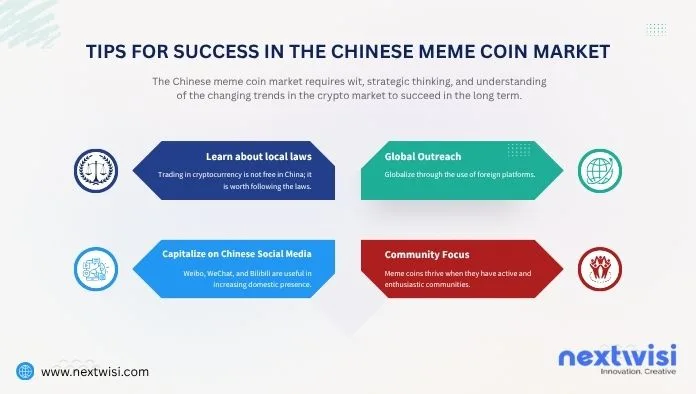
    Tips for Success in the Chinese Meme Coin Market

    Tips for Success in the Chinese Meme Coin Market


    1. Learn about local laws: Trading in cryptocurrency is not free in China; it is worth following the laws.

    2. Capitalize on Chinese Social Media: Weibo, WeChat, and Bilibili are useful in increasing domestic presence.

    3. Global Outreach: Globalize through the use of foreign platforms.

    4. Community Focus: Meme coins thrive when they have active and enthusiastic communities.

    How a Meme Coin Development Company Can Help

    It can be facilitated by cooperating with a professional meme coin development company:

    • The development of tokens and smart contracts.
    • Hack prevention security audits.
    • Community and marketing strategies.
    • International exchange listing guidance.

    Most Chinese developers work together with other international companies to introduce meme coins that are internationally compliant but still reach the local market.

    Start Your Meme Coin Journey!

    Meme coins are a blend of fun, community, and speculation. The answer to the question about the creation of meme coins in China has shown the increasing role of China in the crypto sphere in the world.

    Anyone can make a meme coin with adequate planning, a concept, effective marketing, and the backing of the community. Collaboration with the professionals guarantees the successful and safe launch. Meme coins are living up to their name, remaking the cryptocurrency world whether it is having fun, community, or potential profits.