Category: Cloud Solutions

Discover expert insights on cloud migration and solutions, covering strategy, performance, scalability, and secure digital transformation.

  • Cloud Migration Consulting Services Explained: Benefits, Process, and Business Use Cases

    Cloud Migration Consulting Services Explained: Benefits, Process, and Business Use Cases

    The modern-day business environment is characterized by speed, scalability, and reliability as a measure of success. Conventional on-premise infrastructure tends to cause bottlenecking when companies expand, add new digital services, or venture into new markets. The high maintenance costs, lack of flexibility, and performance problems are forcing organizations to seek alternative solutions. The increase in demand has rendered cloud migration consulting services an important segment of contemporary IT strategy.

    Cloud migration is not merely a technical transformation. It is a business transformation that has an effect on business operations, security, customer experience, and business growth over the long term. Unless properly planned by experts, cloud adoption may result in downtime, security threats, and cost surprises. This is the reason why companies are turning to professional consulting more so as to have a comfortable and well-organized migration process.

    What Are Cloud Migration Consulting Services?

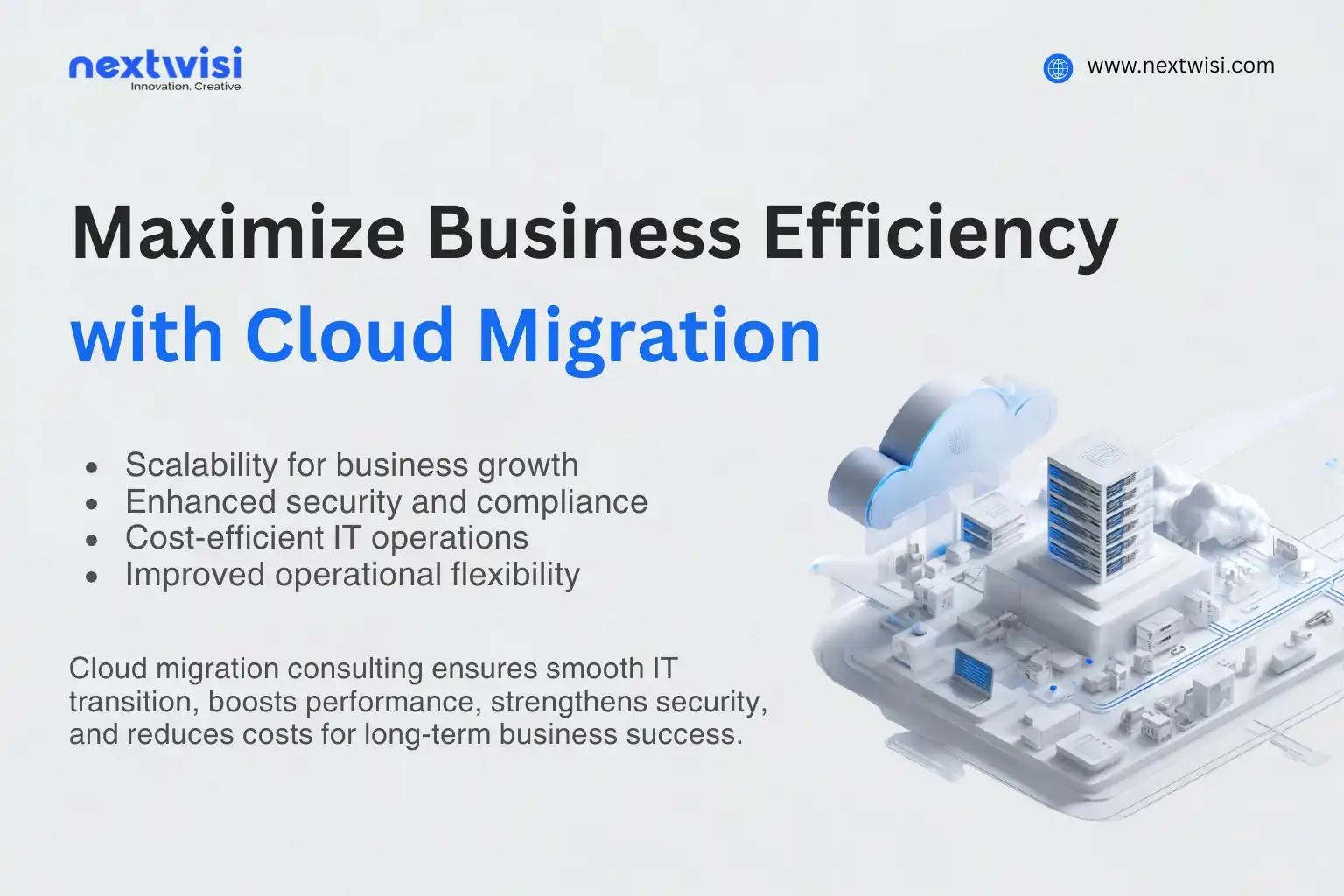
    Cloud migration consulting services are dedicated services that aid the organizations to transfer applications, data, and workloads of their homes and on-premise settings to cloud platforms in a dependable and secure way. Such services include evaluation, planning, the migration process, and optimization after migration , as part of the process of making sure that the use of clouds is in line with business goals.

    Consultants do not use a generic approach but instead perform a study of the current IT ecosystem. They determine the dependencies, performance requirements, and security needs and propose the most appropriate cloud model and migration strategy. This strategy mitigates the operational risk and makes sure that cloud investments can bring quantifiable business value.

    Why Cloud Migration Has Become Essential for Businesses

    With the increasing pace of digital transformation, companies require IT systems that are able to quickly adapt to change. Older infrastructure is usually limiting innovation and making operations more complex. On the other hand, cloud environments are flexible, scalable, and cost-effective.

    Organizations are as well under pressure to accommodate remote working, data security, and compliance requirements. Through highly skilled cloud migration consulting, companies are able to transition their IT infrastructure without disrupting their operations, as well as to modernize their IT infrastructure.

    Cloud Deployment Models Explained

    Selecting an appropriate cloud deployment model is among the significant aspects of the migration process. Consultants assist companies in choosing a model depending on the workload, security, and scaling-out strategies.

    The public cloud environments are the perfect choice in case of an organization that wants to be cost-effective and be able to scale quickly. Businesses with sensitive information and those that need to be tightly restricted are fond of private cloud solutions. Multi-cloud and hybrid models also provide flexibility and safety in balance in which organizations can strategically allocate workloads.

    Cloud Migration Strategies Used by Consultants

    Migration tactics vary with different applications. The appropriate choice of the strategy can guarantee low disruption and long-term performance.

    Ordinary migration strategies are:

    • Re-hosting applications with fewer changes in a shorter period to adopt the cloud faster.
    • Rebuilding applications that are not highly optimized to enhance efficiency.
    • Refactoring applications to enable full scalability using cloud-native applications.

    Successful cloud migration consulting services involve the use of a structured strategy, which assists businesses in avoiding unnecessary work and performance problems.

    Cloud Migration Step-by-Step Process

    This can be achieved by having a clear migration process that guarantees predictable results and minimized risk during the transition.

    It typically begins with a sophisticated cloud preparedness examination. The consultants examine the infrastructure, applications, and data dependencies to find out the possible risks and compatibility problems. On the basis of this analysis,, a migration roadmap is developed, which establishes timelines, tools, and responsibilities.

    Under the migration stage, applications and data are transferred in stages in a controlled fashion to reduce downtimes. Encryption, identity management, and compliance policies are security controls that are used to safeguard confidential information. Once migrated, the systems are made performant, cost-effective, and scalable.

    Key Business Benefits of Cloud Migration Consulting Services

    Engaging seasoned consultants is more than just an undertaking to modernize infrastructure. Companies are able to achieve flexibility in operations, enhanced performance, and enhanced security.

    Major benefits include:

    • Scalability on demand and supports the growth of business without the limitations of the hardware.
    • Realized cost efficiency in IT through matching the cloud usage to the real requirements of the business.
    • Better security posture using industry-best practices.

    The benefits of cloud migration consulting services do not make them one-time projects but a long-term investment.

    Industry-Wise Use Cases of Cloud Migration

    Migration to the cloud is a popular trend in a variety of industries with diverse objectives and difficulties. Big organizations rely on cloud solutions to modernize their old systems and help in digital transformation. The medical institutions use safe cloud computing systems to store valuable patient information and address regulatory standards.

    Cloud infrastructure is used by e-commerce businesses to manage traffic peaks and enhance customer experience. Cloud migration is an option that financial institutions depend on to increase the level of data analytics, security, and operational effectiveness. In both instances, the cloud migration consulting services will make sure that the migration is in compliance with the industry rules and performance requirements.

    Importance of Post-Migration Cloud Management

    The process of migrating clouds is not terminated by the migration of workloads. It is important to have constant monitoring and optimization to control cost and maintain performance. Cloud environments have a tendency of becoming inefficient in the long run, unless they are well managed.

    Continuous services like monitoring, performance tuning, and cloud hosting management make businesses stable and reliable. The services guarantee the efficient utilization of cloud resources and accommodate changes in business demands.

    Choosing the Right Cloud Migration Consulting Partner

    The effectiveness of cloud migration highly relies on the experience of the consulting partner. Organizations need to find a provider that has a successful history of experience, an established migration process, and effective post-migration support.

    Such firms as Nextwisi Solutions are oriented to customized cloud strategies, which make security, scalability, and operational efficiency a top priority. This is because their consulting-based model enables companies to circumvent the typical challenges of migration and succeed in the long run.

    Common Challenges in Cloud Migration

    Cloud migration may prove to be problematic without proper management despite the planning.

    Nobody can tell with certainty, but some of the challenges may comprise:

    • The migration process that impacts business.
    • Incompatibility with old applications.
    • Risks of security and compliance.
    • Unexpected cloud costs

    A professional cloud migration consulting service would resolve these issues by doing it in phases, performing ongoing testing, and actively optimizing it.

    Future of Cloud Migration Consulting

    The cloud technologies remain upgrading, which even increases the significance of expert consulting. Enterprises are moving towards hybrid and multi-cloud approaches in order to achieve the balances of flexibility and control. The future of cloud migration is being developed in the form of cloud-native development, automation, and sophisticated cost governance.

    Companies that strategize properly using the appropriate consulting strategy can better cope with these changes and be competitive.

    Conclusion

    Cloud migration is a business move with far-reaching consequences on all aspects of a business. Through proper cloud migration consulting services, organizations have an opportunity to modernize infrastructure, enhance security, and have sustainable scalability.

    A guided approach to consulting is used to achieve the highest value of cloud investments, regardless of the planning, execution, optimization, or cloud hosting & management. Reliable partners such as Nextwisi Solutions unite businesses to prepare a successful cloud migration and ensure their long-term digital transformation and operational efficiency.

  • Top AI Cloud Business Management Platform Tools

    Top AI Cloud Business Management Platform Tools

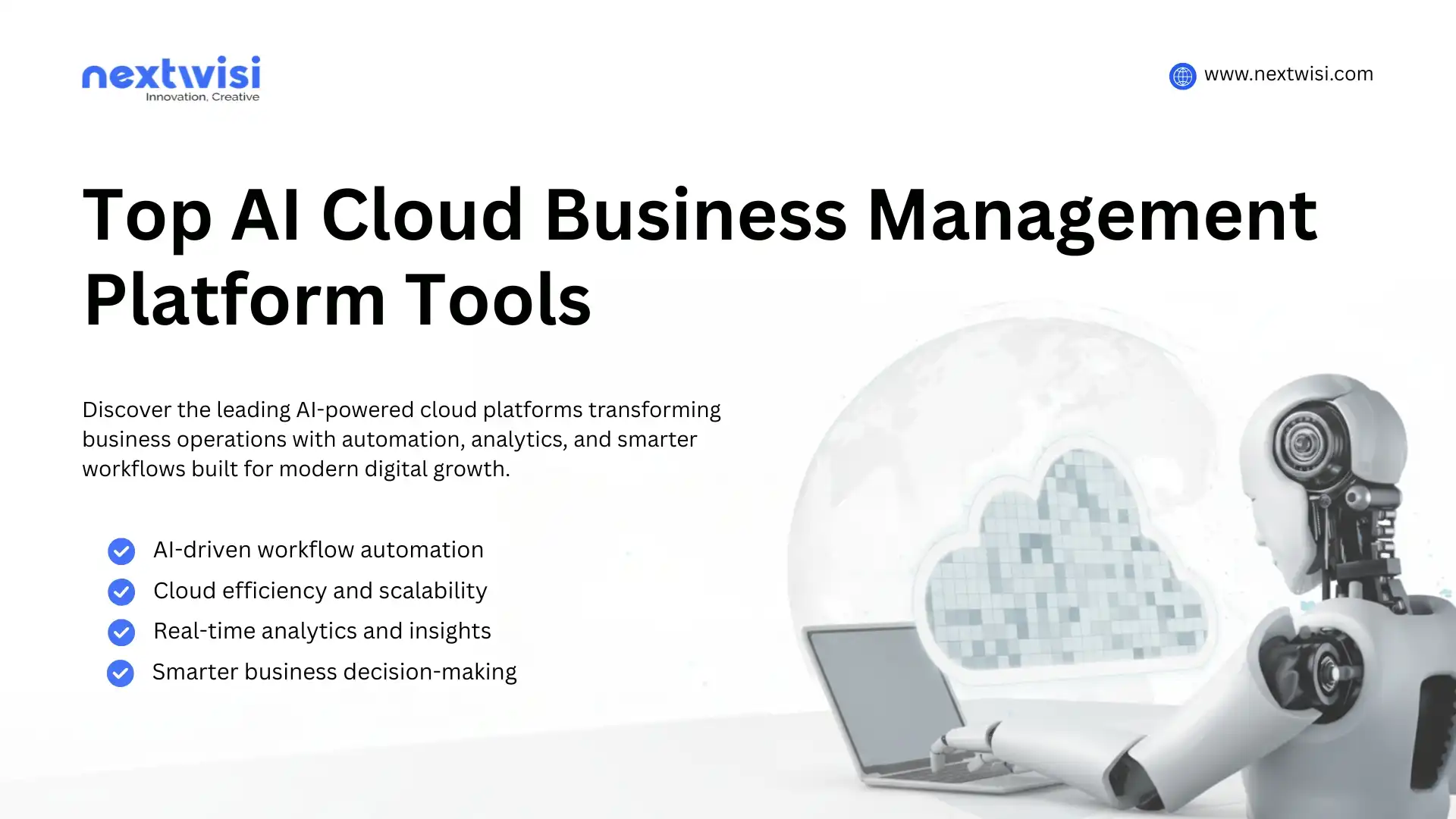
    Top AI cloud business management platform tools are changing the nature of how businesses conduct business,cloud data management, workflow automation, and quicker results-driven decisions. As organizations swiftly migrate to digital ecosystems, AI-enhanced cloud systems can offer the necessary functions of efficiency, accuracy, and cost-saving. Having a combination of AI automation, cloud-based scalability, predictive analytics, and business intelligence, these solutions can make organizations smarter and faster.

    Understanding Top AI Cloud Business Management Platform Tools

    Top AI cloud business management platform tools are modern cloud computing systems, which apply AI algorithms, machine learning models, and real-time analytics to centralize, optimize, and automate business processes. Such systems combine fundamental areas of functionality such as project management, finance, HR, CRM, data processing, and workflow design into a single environment. These tools make companies less reliant on manual labor, remove inefficiencies in the operation of business, and establish smooth digital infrastructure as businesses grow increasingly data-driven.

    These systems use predictive analytics, AI-based automation, cloud workflows, and intelligent dashboards to provide leaders with the ability to exercise control over day to day processes. This will guarantee enhanced visibility and coordination in teams and enhance decision-making amongst departments.

    Key Features of Top AI Cloud Business Management Platform Tools

    1. AI-Driven Workflow Automation

    AI automation also saves on human work since platforms can identify patterns, learn actions, and automatically act. It supports the repetitive processes such as approval, data entry, notification, and routing of processes. This enhances productivity and minimizes human error where the organization has a uniform standard in all the working processes.

    2. Real-Time Data Analytics & Insights

    Real-time analytics provide leaders with real-time access to key business metrics. AI analytics systems do not wait till the end of the day to provide reports on the performance but monitor it continuously and provide intelligence in the form of smart dashboards. This assists the businesses in early detection of problems, identification of opportunities, and taking of sound action on the basis of reliable and updated information.

    3. Cloud-Based Scalability & Flexibility

    Scalable cloud infrastructure is one of the greatest advantages of AI cloud platforms. These are automatically scalable storage, processing, and integration elements, requiring no hardware expansion as a company expands. This renders cloud-based AI tools to be applicable to both startups and big companies.

    4. Predictive Intelligence & Forecasting

    Predictive intelligence is used to analyze previous information of the business to predict the pattern, resources required, and threats to operation. It aids the leaders to foresee the problems that may occur ahead and strategize beforehand. Predictive intelligence is very crucial in long-term planning, such as financial forecasting and customer demand trends, among others.

    5. Centralized Data Management & Unified Dashboards

    There is usually a problem of fragmented inter-departmental data in businesses. The AI cloud systems address this by having centralized data hubs, which link HR, sales, finance, operations, and marketing into a single platform. The unified dashboards will give a holistic perception of the performance of the organization, and therefore, can make decisions based on the data.

    6. Automated Cloud Security & Threat Monitoring

    This is because AI-enhanced cloud solutions include security features, such as anomaly detection, real-time alerts, encryption, and intelligent access controls. These guarantee that confidential business data is not compromised by cyberattack, and yet at the same time, the data standards of the world are not violated.

    Benefits of Using Top AI Cloud Business Management Platform Tools


    1. Lower Operational Costs

    Businesses saved a lot of money in operation costs by automating manual repetitive processes, reducing manual errors, and streamlining operations. The AI cloud technology will reduce the waste of resources and will optimize the processes, turning cost reduction in the long term into a natural process.

    2. Enhanced Productivity & Workflow Efficiency

    The work of the teams with AI taking care of routine tasks can be more oriented toward innovation, strategy, and servicing clients. This enhances productivity and accelerates the delivery of projects. Intelligent workflow management also provides that there are no delays or bottlenecks in the flow of tasks.

    3. Data-Driven Decision-Making

    Leaders can make informed decisions with the help of real-time analytics, forecasting tools, and intelligent dashboards. These insights generate clarity in operations, and organizations use such insights to align their strategies to the right data trends.

    4. Automated Integration Across Business Functions

    The AI cloud solutions are compatible with the CRM systems, ERP software, HR platforms, and financial management tools. This enables the flow of information through the departments to be efficiently passed and minimizes silos.

    5. Superior Customer Experience

    Through AI wisdom, customized engagement, and automated customer care, companies provide more efficient and quicker customer care. This increases the level of satisfaction and relationships as well as retaining customers.

    6. Scalable & Future-Ready Growth

    AI cloud systems expand as the business expands. It can grow to new markets, or scale-up to 200 employees: AI cloud platforms adapt on their own- giving it the power to grow in the long run without scaling constraints.

    Top AI Cloud Business Management Platform Tools

    1. Monday.com Work OS

    Monday.com offers an effective set of automation of tasks, artificial intelligence-assisted project management, and real-time monitoring of workflows. The teams have the ability to introduce their own workflow, automate it, and track progress using advanced dashboards. It is the best in businesses that are interested in efficiently optimizing their operations and in the centralization of their carrying out activities using a single user-friendly cloud-based system.

    2. Zoho One

    Zoho One has more than 45 integrated cloud applications in CRM, sales, HR, finance, analytics, and marketing. The AI assistant named Zia provides recommendations, automation and insights on the platform. Zoho is also popular with its affordability and high level of integration as it is one of the most attractive options among small and mid-sized companies looking to find an intelligent all-in-one cloud technology.

    3. Salesforce AI Cloud

    Salesforce AI Cloud is a combination of CRM perfection and AI-powered insights, personalized recommendations, and automated processes. It assists businesses to control their customer communications, sales activities and marketing initiatives in addition to forecasting customer reactions using a sophisticated analytics. Its large-scale scalability is appropriate in large organizations.

    4. Oracle Cloud Applications

    Oracle is a developer of AI-based ERP, financial management, HR solutions, and data analytics. It helps to sustain big business ventures through its unreliable cloud platform and AI-based capabilities. Predictive intelligence is used by Oracle to make better decisions and increase operational visibility in between departments.

    5. Microsoft Dynamics 365

    Dynamics 365 is a cloud-based platform that combines CRM, ERP, automation, and AI insights. It offers smart business insights, predictive forecasting and real time communication. The site is suitable to businesses that want to work on automation on enterprise and meaningful integration with Microsoft products.

    When Should Businesses Use These Tools?

    1. During organizational scaling or expansion

    Expanding companies have complicated management problems. The AI cloud platforms make the execution of large-scale operations simpler as it automatizes operations and centralizes data and enhances communication among various departments.

    2. When handling massive data volumes

    AI analytics are needed to provide precise insights to businesses that work with large data sets. AI cloud-based systems are able to work with real-time data and provide vivid visualization and minimize the necessity of manual analysis of data.

    3. When manual processes slow performance

    When spreadsheets or traditional tools are significant to the operations, it results in delays and error. These old processes are automated by AI cloud systems and develop a faster and more trustworthy structure of workflows.

    4. When customer satisfaction needs improvement

    Artificial intelligence can assist companies to provide customized services, quicker feedback and enhanced customer recognition-enhancing service quality.

    Conclusion

    Top AI cloud business management platform tools will give an opportunity to automate business operations, streamline business workflows, and make smarter decisions with the help of real-time analytics and smart automation. More than a collection of cloud scalability, predictive insights, AI-based workflows, and centralized dashboards, these platforms enable firms to create a digital ecosystem ready to embrace the future.

    The use of these advanced AI cloud tools can be of great benefit to organizations, which would like to modernize their operations and to experience long term digital growth. And to businesses that want to implement AI-related matters at the highest level, and need integration or the creation of specific AI-cloud solutions, Nextwisi Solutions offers professional assistance, along with the development of various approaches that would improve the efficiency and minimize operational frictions and speed up the process of digitalization.

    By having access to the right AI cloud platform, as well as the right technology partner such as Nextwisi Solutions businesses can achieve new, higher levels of productivity, agility and competitive advantage.

  • Cloud Migration Strategy: Building a Smarter Path to the Cloud

    Cloud Migration Strategy: Building a Smarter Path to the Cloud

    With the increase in digital transformation in industries, the traditional systems and legacy infrastructure are becoming harder to administer and combine with modern software environments. Compliance, security, or logistical barriers continue to inhibit the migration of many organizations to the cloud. Nevertheless, when it is done in the right way, cloud migration can transform the way your business operates, scales, and innovates.

    What is Cloud Migration?

    Cloud migration involves transferring digital assets, i.e., applications, databases, and services, from off-premises infrastructure to the cloud or across cloud platforms. This is aimed at improving the scalability, flexibility, and performance, as well as operational costs.

    A clear cloud migration strategy would see that this complicated process occurs in a smooth and secure fashion, and it is in line with your business goals. A data-first approach will enable you to preserve data integrity, optimize infrastructure, and implement the approach to match the unique requirements of your organization.

    It is appropriate to first have a review of the best practices to prepare a successful transition before discussing the most prominent cloud migration strategy.

    The 7 Best Practices of Cloud Migration

    Movement of workloads to cloud is not merely a technical undertaking it is a strategic project. By adhering to these cloud migration strategy best practices, one can prevent disruption and it will make the process smooth.

    1. Set Clear and Realistic Goals

    Determine the image of success before commencing migration. Your objectives are to improve the performance of your systems, increase their security, decrease costs, etc., and clearly set objectives help you to make the decisions. Be honest about deadlines – large migrations can be divided into small, manageable steps, and this can be more successful.

    2. Design Architecture Aligned with Business Objectives

    Design a cloud environment that will support both the present and the future objectives. The migration of clouds and integration with other solutions, such as data warehousing or analytics platforms, in most cases is more insightful in terms of performance and scalability. Engage a cloud architect to plot the appropriate architecture of your firm.

    3. Build a Cross-Functional Team

    Effective migrations demand cooperation. Add IT specialists, developers, data engineers, and major business stakeholders. The presence of the executive-level participation assists in making sure that the priorities of the whole organization can be matched and that the implementation processes can be unproblematic.

    4. Evaluate a Multicloud Approach

    A multicloud approach, or multiple cloud vendors, can be a good way to achieve flexibility, minimize vendor lock-in, and increase security.
    Consider multicloud if:

    • You do not want to completely rely on a single cloud provider.
    • You require specific equipment from various vendors.
    • You deal with controlled information that needs to be of a certain recalcitrance.

    5. Cleanse and Organize Data Before Migration

    Migration success is directly related to the data quality. Audit, clean, and organize all datasets- eliminate duplicates, correct the errors, and standardize formats. Organized and precise information reduces the problem of migration and provides the flawless work of your cloud environment at the very beginning of the process.

    6. Leverage Low-Code or No-Code Platforms

    In the migration process, it is not rare that temporary throwaway code is needed. With a low-code integration platform, such as iPaaS, it is possible to reduce manual code, speed up integration, and reduce post-migration technical debt. It simplifies the procedures and allows developers to work on strategic activities as opposed to momentary, one-time coding work.

    7. Optimize Data Management with iPaaS

    The Integration Platform as a Service (iPaaS) brings together data processes in the cloud system and on-premise. It is simple to do backup, sync, and monitor and ensures a steady flow of data, minimizes errors, enhances efficiency of operations, and provides ease of integration between applications within a cloud migration setup.

    cloud migration strategy

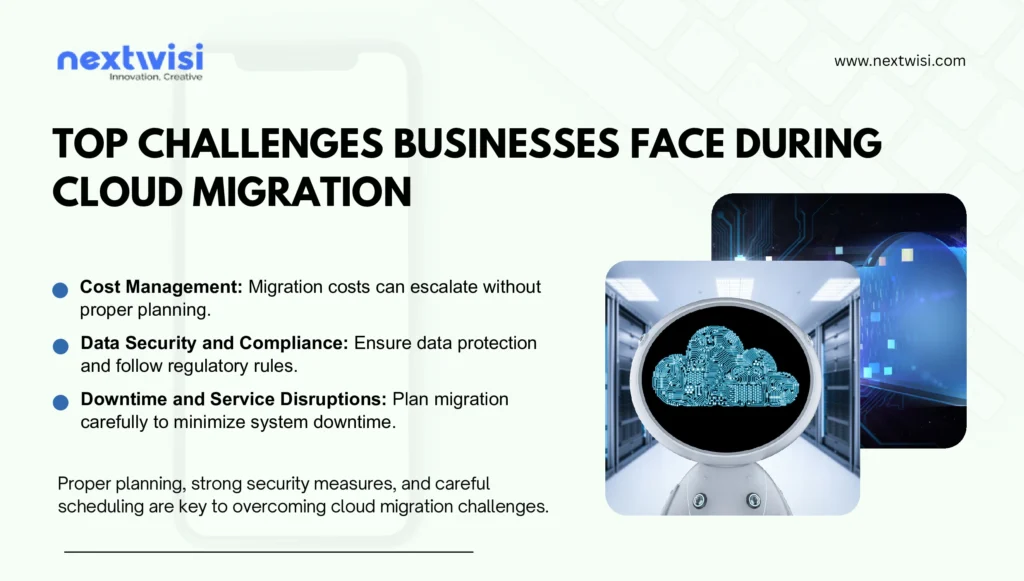
    Common Challenges of Cloud Migration

    Even with a strong cloud migration strategy, organizations may face several challenges.

    1. Cost Management

    Migration costs may easily become out of control without proper planning. Pay-as-you-go systems can result in unforeseeable costs. To ensure that you are in control of your budget, it can be helpful to create a detailed cost model and keep track of how it is being used.

    2. Data Security and Compliance

    Security and privacy of data are the biggest concerns. It is important to be sure that you follow industry-related rules (GDPR or HIPAA) and use effective encryption, access controls, and threat detection tools in your cloud environment.

    3. Downtime and Service Disruptions

    Migration can have a temporary impact on the availability of the systems. Tests, automated migration tools, and scheduling of downtime when there is less traffic can be used to mitigate disruption and minimize chances of transfer failures.

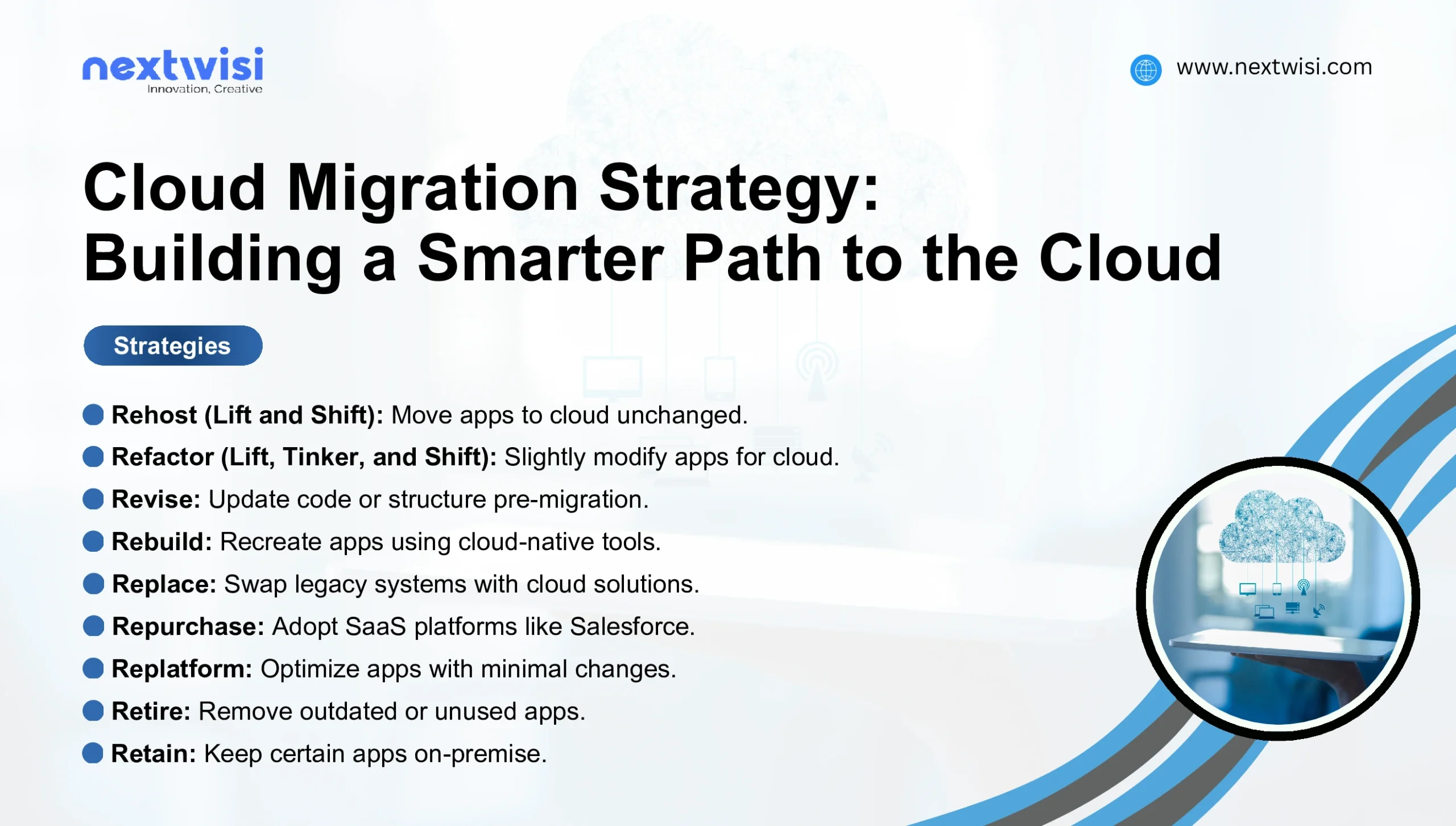
    9 Cloud Migration Strategies

    Organizations take various strategies based on resources, maturity of clouds, and business requirements. The strategies presented below outline successful techniques of an effective cloud migration strategy.

    1. Rehost (Lift and Shift)

    Rehosting relocates the current applications to the cloud with a few modifications. This low-cost, quick methodology is best suited to new cloud environment organizations and is a platform of many cloud migration strategy.

    2. Refactor (Lift, Tinker, and Shift)

    Refactoring gives minimal optimizations prior to migration to take advantage of cloud-native features. It improves performance and efficiency but does not entirely redesign applications, so it is an expedient and universally used measure in any large-scale cloud migration strategy.

    3. Revise

    The revise approach repurposes application code and architecture to make use of cloud-native services, including microservices, containers, and auto-scaling, to the fullest. It achieves maximum performance, scalability, and long-term advantages, which are ideal in support of highly developed cloud migration strategies.

    4. Rebuild

    Rebuilding is a re-creation of applications in the cloud. This method is time -consuming, however, it provides the best in the market of modern, scalable systems that can keep pace with your business growth and is a key component in a progressive cloud migration strategy.

    5. Replace

    Substituting old systems with ready-to-use cloud applications makes it easier to deploy and will cut back on the maintenance cost. Although customization is not allowed, the approach is effective in streamlining operations and can be incorporated into larger enterprise-wide plans of cloud migration strategies to realize efficiency in the long term.

    6. Repurchase

    SaaS adoption, or the repurchase strategy, involves dispensing old software and equipment with cloud-based systems. The use of an in-house tool as a substitute of Salesforce or HubSpot can fast-track implementation and reinforce any properly thought-out cloud migration strategy.

    7. Replatform

    Replatforming involves minor refinements like database or operating system upgrades to improve performance without changing the architecture. This is one of the strategies that are typically integrated with an enterprise-based, practical, and performance-oriented cloud migration strategy.

    8. Retire

    In the course of evaluation, obsolete or unnecessary systems may be phased out in order to cut down on the complexity and cost of operation. Unemployed components enhance efficiency and aid organizations in adopting a leaner and superior cloud migration strategy.

    9. Retain

    The applications are sometimes kept on-premises temporarily because of compliance, cost, or technical constraints. With a careful and measured approach to a wider cloud migration strategy, it is prudent to keep some systems to be implemented in phases to ease the transition to the cloud as the environment is conducive.

    Conclusion

    Migration to the cloud is not only a matter of data changing location, but it is a matter of reinventing business itself in the digital world. Defining clear objectives, adhering to best practices, and choosing the appropriate cloud migration strategy will help organizations to reduce risks, manage costs, and maximize performance in the cloud.

    Nextwisi Solutions is a company that offers end-to-end cloud migration services to enterprises to facilitate a smooth migration to the modern infrastructure. Our team develops and implements tailored cloud solutions to improve scalability, build security, and promote continuous innovation. We also make sure that your cloud transformation is both efficient and smooth, regardless of whether you are rehosting, refactoring, or rebuilding, and future-ready.