Category: Cybersecurity

Discover expert insights on cybersecurity, risk management, and digital defense to protect data and strengthen online security systems.

  • Agentic AI in Cybersecurity: Pindrop and Anonybit

    Agentic AI in Cybersecurity: Pindrop and Anonybit

    Table of Contents

    Artificial Intelligence is evolving fast. But we are now entering a new phase Agentic AI Pindrop Anonybit.

    Unlike traditional AI systems that wait for commands, Agentic AI systems act independently, make decisions in real time, and execute tasks autonomously.

    In cybersecurity and digital identity, this shift is revolutionary.

    Two companies leading this transformation are:

    • Pindrop
    • Anonybit

    This blog explores how Agentic AI works, why it matters in 2026, and how Pindrop and Anonybit are building autonomous security infrastructures.

    What is Agentic AI : Pindrop Anonybit?

    Agentic AI refers to AI systems designed to function as autonomous agents.

    Instead of simple automation, Agentic AI systems:

    • Understand context
    • Set goals
    • Make decisions
    • Take actions
    • Continuously learn from outcomes

    In cybersecurity, this means AI doesn’t just detect threats it responds instantly without waiting for human approval.

    This is critical in today’s world of AI-generated fraud and deepfake attacks.

    Why Agentic AI is Critical in Cybersecurity

    Cybercriminals now use:

    • AI voice cloning
    • Deepfake video scams
    • Synthetic identities
    • Automated fraud bots

    Traditional security systems are reactive and rule-based.

    Agentic AI is:

    • Proactive
    • Self-improving
    • Adaptive
    • Autonomous

    When milliseconds matter, human-led systems are too slow.

    Agentic AI fills that gap.

    Pindrop: Agentic AI for Voice Security

    About Pindrop

    Pindrop specializes in voice authentication and fraud detection for enterprises, especially financial institutions and call centers.

    Official website:
    https://www.pindrop.com

    Pindrop focuses on:

    • Voice biometrics
    • Fraud detection
    • Deepfake voice identification
    • Contact center security

    How Pindrop Uses Agentic AI

    Pindrop’s AI systems function like autonomous fraud investigators.

    Here’s how:

    1. Real-Time Voice Analysis

    Every call is analyzed in milliseconds. The system examines:

    • Acoustic fingerprints
    • Background noise
    • Frequency irregularities
    • Voice consistency

    2. Deepfake Detection

    With the rise of generative AI tools, voice cloning is becoming common. Pindrop’s models detect synthetic artifacts invisible to human ears.

    3. Autonomous Risk Scoring

    Instead of alerting humans first, the AI:

    • Assigns fraud risk scores
    • Triggers step-up authentication
    • Blocks suspicious transactions

    This is Agentic AI in action : autonomous decision-making.

    Real-World Example

    Imagine a bank call center.

    A fraudster uses AI-generated voice cloning to mimic a customer.

    Pindrop’s Agentic AI:

    • Detects subtle inconsistencies
    • Flags synthetic speech
    • Automatically prevents account access

    No manual review required.

    Damage prevented instantly.

    Anonybit: Agentic AI for Decentralized Biometric Identity
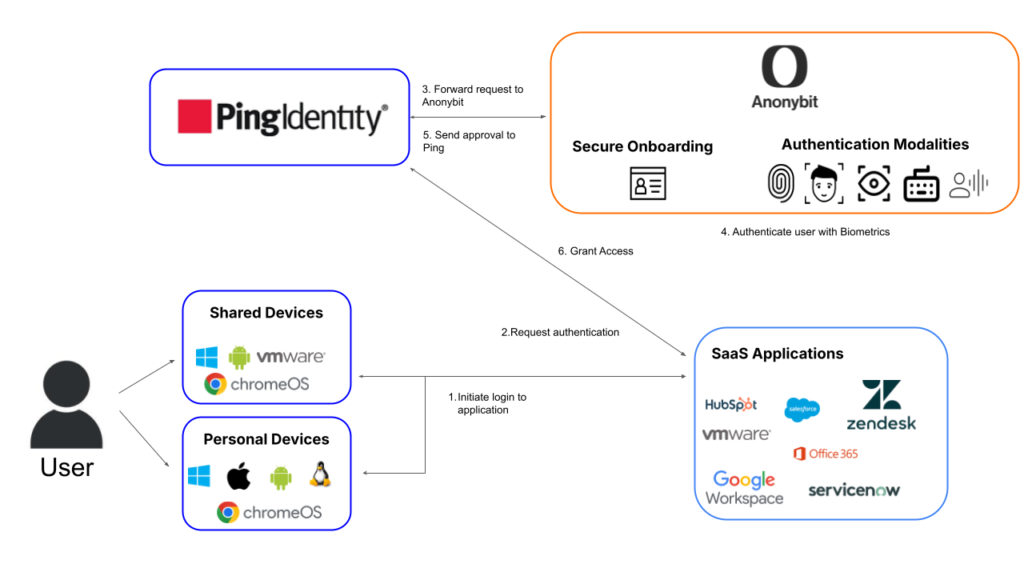
    Agentic AI Pindrop Anonybit cybersecurity voice authentication and biometric security system

    About Anonybit

    Anonybit is pioneering decentralized biometric authentication.

    Official website:
    https://www.anonybit.io

    Anonybit focuses on:

    • Passwordless authentication
    • Decentralized biometrics
    • Privacy-first architecture
    • Zero-knowledge identity systems

    The Problem with Traditional Biometrics

    Most systems store biometric data in centralized databases.

    If breached:

    • Fingerprints are compromised forever
    • Facial data cannot be reset
    • Voice prints become liabilities

    Centralized biometric storage is a high-value target for hackers.

    How Anonybit Uses Agentic AI

    Anonybit combines decentralized infrastructure with intelligent AI agents.

    1. Biometric Fragmentation

    Instead of storing full biometric templates:

    • Data is split into encrypted fragments
    • Distributed across nodes
    • Reconstructed only during authentication

    2. Continuous Authentication

    Agentic AI monitors user behavior dynamically:

    • Device patterns
    • Interaction style
    • Biometric consistency

    If anomalies appear, the system autonomously increases verification requirements.

    3. No Single Point of Failure

    Because data is decentralized:

    • A breach in one node reveals nothing
    • Identity theft risk drops significantly

    This is next-generation AI-driven identity security.

    Agentic AI vs Traditional AI in Security

    FeatureTraditional AIAgentic AI
    Decision MakingRule-basedAutonomous
    SpeedDelayedInstant
    AdaptabilityLimitedContinuous learning
    Fraud ResponseManual escalationAutomatic action
    Risk PreventionReactiveProactive

    Agentic AI doesn’t just detect problems — it resolves them in real time.

    Why This Matters in 2026

    We are entering an era where:

    • Deepfake scams are scalable
    • Voice cloning tools are publicly accessible
    • Identity fraud is AI-powered

    Organizations need AI defenders that:

    • Think independently
    • Act instantly
    • Adapt continuously

    Companies like Pindrop and Anonybit are building that future.

    The Future of Agentic AI in Identity & Security

    Over the next few years, expect:

    • Multi-modal biometric authentication (voice + face + behavior)
    • AI agents negotiating risk thresholds dynamically
    • Fully autonomous zero-trust frameworks
    • Self-healing cybersecurity systems

    Agentic AI will become foundational to digital infrastructure.

    Frequently Asked Questions (FAQ)

    What is Agentic AI?

    Agentic AI refers to AI systems that can independently make decisions and take actions without constant human guidance.

    How does Pindrop detect deepfake voices?

    Pindrop analyzes acoustic anomalies and synthetic artifacts in voice signals using advanced AI models.

    What makes Anonybit different?

    Anonybit decentralizes biometric data, eliminating centralized storage risks and improving privacy protection.

    Is Agentic AI better than traditional AI?

    Yes. Agentic AI provides autonomous, proactive, and adaptive defense mechanisms.

    Can Agentic AI prevent identity fraud?

    It significantly reduces fraud risk by detecting anomalies and responding instantly.

    Final Thoughts

    Agentic AI represents the next evolution of artificial intelligence.

    In cybersecurity and digital identity, autonomy is not a luxury. it is a necessity.

    With:

    • Pindrop securing voice ecosystems
    • Anonybit decentralizing biometric authentication

    We are moving toward a future where AI doesn’t just assist it protects.

    As fraudsters use AI to attack, enterprises must use Agentic AI to defend.

    The battle of intelligence has begun and autonomous systems are leading the way.
  • AI in Cybersecurity: Five General Types of Cybersecurity Explained

    AI in Cybersecurity: Five General Types of Cybersecurity Explained

    The digital transformation has brought immense opportunities, and at the same time, it has offered advanced cyber threats, which are constantly on the rise. Organizations are currently dependent on strong protection systems that address all the areas of digital infrastructure. The five general types of cybersecurity can help to develop the integrated system of defense that would safeguard networks, applications, data, cloud environments, and endpoints. Due to the novelty of ways in which cybercriminals can attack, AI in cybersecurity has become an essential element in offering automated, intelligent, and predictive protection of all digital layers.

    What Is AI in Cybersecurity?

    AI in cybersecurity is a type of intelligent system that obtains knowledge through data and identifies patterns and threats and responds to risks, not depending on immediate human input. Such systems are based on technologies like behavioral analytics, anomaly detection, and machine learning-based classification models, which enable them to detect suspicious behavior much faster than conventional security tools.

    Companies handling sensitive online processes usually use the opportunities of such technologies as blockchain development, which allows data transactions with tamper resistance to enhance transparency and trust. A much more resilient and secure digital ecosystem is created when applied to all five types of cybersecurity when it is combined with AI.

    Why AI Matters in Modern Cybersecurity

    The necessity to develop AI appeared due to the increasing complexity of cyberattacks and their increasing automation level and the need to have security systems that can analyze the trends in large quantities within an amazingly fast time. Old-fashioned security technologies are not smart enough to identify unidentified or sophisticated attacks, but AI has the ability to identify hidden abnormalities that a human or outdated technologies often fail to notice.

    Key Benefits of AI in Cybersecurity

    • AI plays a major role in terms of response time as it is capable of analyzing millions of data points in a few seconds and detecting threats much sooner than any manual monitoring system would.
    • Human error is reduced by AI as it will provide a data-driven security decision that is not based on subjective judgments or random judgment decisions.
    • Repetitive security processes are automated by the AI, which enables cybersecurity experts to concentrate on intricate strategic processes rather than use time on repetitive processes or manual threat scanning.
    • The AI is constantly taught about past attack patterns in order to offer better forecasts and stop fresh cyberattacks before they disrupt the system of organizations.

    Due to such developments, AI is now deeply embedded into all the five general types of cybersecurity to provide smarter and more powerful security.

    There are Five General Types of cybersecurity. 

    1. Network Security

    Network security helps an organization protect inner networks against unauthorized access, data theft, mischief, or malicious use. It contains firewalls, intrusion detection systems, VPNs, and monitoring tools, but the current network is in need of much more sophisticated protection because the attack vectors and the complexity of networks are constantly being upgraded.

    AI helps to increase network security, as it constantly examines real-time traffic and detects abnormal dynamics, which indicate the possible attack or suspicious activity of users. Monitoring systems powered by AI can detect malicious behavior much faster than a human and prevent malicious connections automatically before they can do any harm to the network, which is why network security is a necessary layer in the Five General Types of Cybersecurity.

    AI Enhancements in Network Security

    • AI conducts behavioral analysis of traffic, which detects unusual patterns of data movements, which usually point to concealed cyberattacks or unwarranted access attempts.
    • The intrusion detection systems powered by AI continuously analyze the network signals based on machine learning algorithms that are trained to detect cyber threats that have never been seen before.
    • Monitoring tools based on AI have been used to isolate suspicious IP addresses automatically, having learned the historical patterns of attacks using large amounts of network logs.

    2. Information Security 

    The digital assets that are safeguarded by information security include documents, databases, personal information, and financial data, as well as secret business records. It aims at providing confidentiality, integrity, and data availability at every phase- storage, transmission, and access.

    AI can help increase the level of InfoSec by monitoring the abnormal behavior of data, automatically categorizing sensitive data, and recognizing unauthorized access attempts to confidential resources. Smart data-security frameworks are frequently developed by companies with the solutions that AI/ML development teams develop to increase encryption strength, automatism in data protection, and elimination of internal or external data breaches.

    AI Enhancements in Information Security

    • Automatically, AI identifies abnormal data access patterns to halt internal abuse or unauthorized data downloading efforts through organizational systems.
    • The AI sorts sensitive files into categories according to content, and this makes sure that the appropriate level of protection is given to sensitive files without the need to manually sort the files.
    • AI tracks the flow of data in real time to identify unusual activity that can be a result of an early-on ransomware or data exfiltration attack.

    3. Application Security

    Application security secures the software app against vulnerability attacks, coding errors, malware injections, API abuse, and data manipulation attacks. Applications are often the target of cybercriminals since they are vulnerable to sensitive information and access to backend systems.

    To enhance the security of applications, AI is used to scan code in the development phase, test the application behavior, and detect the suspicious patterns in the running process. Millions of code lines can be analyzed by the AI tools, which have the ability to identify vulnerabilities that a human developer may overlook.

    AI Enhancements in Application Security

    • AI scanners analyze application codebases where vulnerabilities are detected that may enable attackers to gain access to the system without permission.
    • AI will monitor real-time application usage in order to detect malicious activity or data atypically that may have been exploited internally or externally.
    • AI identifies and prevents suspicious API patterns of use, which often indicate bot attacks, credential stuffing, or the use of scripts, automatically.

    4. Cloud Security

    Cloud security is used to secure applications, data, and services based on cloud platforms like AWS, Google Cloud, and Azure. The complexity of cloud solutions is increasing as organizations move to cloud solutions, and this has created challenges such as identity management, misconfigurations, and unauthorized access risks.

    To enhance security in the cloud environment, AI is used to analyze logs, identify suspicious cloud activities, prevent misconfigurations, and track identity activities to enhance protection in various environments.

    AI Enhancements in Cloud Security

    • AI identifies malformed storage buckets or cloud configurations that frequently result in incidents of data leakage in cloud-based infrastructure automatically.
    • AI assesses user behavior on the cloud access points to detect suspicious login behavior with location-based irregularities or device-based irregularities.
    • AI can process massive logs of cloud activity in real-time to identify any underlying threat that would otherwise go unnoticed by conventional security monitoring systems.

    5. Endpoint Security

    The endpoint security defends individual user devices, like laptops, phones, tablets, servers, and IoT devices. Endpoints are common targets due to their direct connection to the networks, and the sites may not have sufficient security measures.

    AI helps to improve endpoint security through EDR (Endpoint Detection and Response) systems that monitor the activities of devices, identify any malware patterns, and prevent any threats before they can propagate across the network.

    AI Enhancements in Endpoint Security

    • AI monitors the activity of the devices to detect early signs of ransomware, spyware, and embedded malware infections fast and precisely.
    • AI automatically segregates the infected devices from the rest of the network to avoid contamination and ensure as little damage as possible is done to the entire system.
    • AI is used to determine the possible vulnerability of endpoints by examining the history of attacks across the millions of devices in the world.

    Conclusion

    The future of cybersecurity is being defined by AI, which introduces intelligence, automation, and predictive capabilities, which are not possible in traditional systems. The awareness of the five general types of cybersecurity, which are network, information, application, cloud, and endpoint security, assists organizations in coming up with better protection strategies. With the ongoing development of cyber threats, AI-based defense systems will play a crucial role in protecting safe, secure, and reliable digital operations in the global arena.