Category: Web Application

Explore insights on web applications, covering development trends, frameworks, security, and innovations driving the modern digital experience.

  • Dynamic Element Web Development Definition Explained

    Dynamic Element Web Development Definition Explained

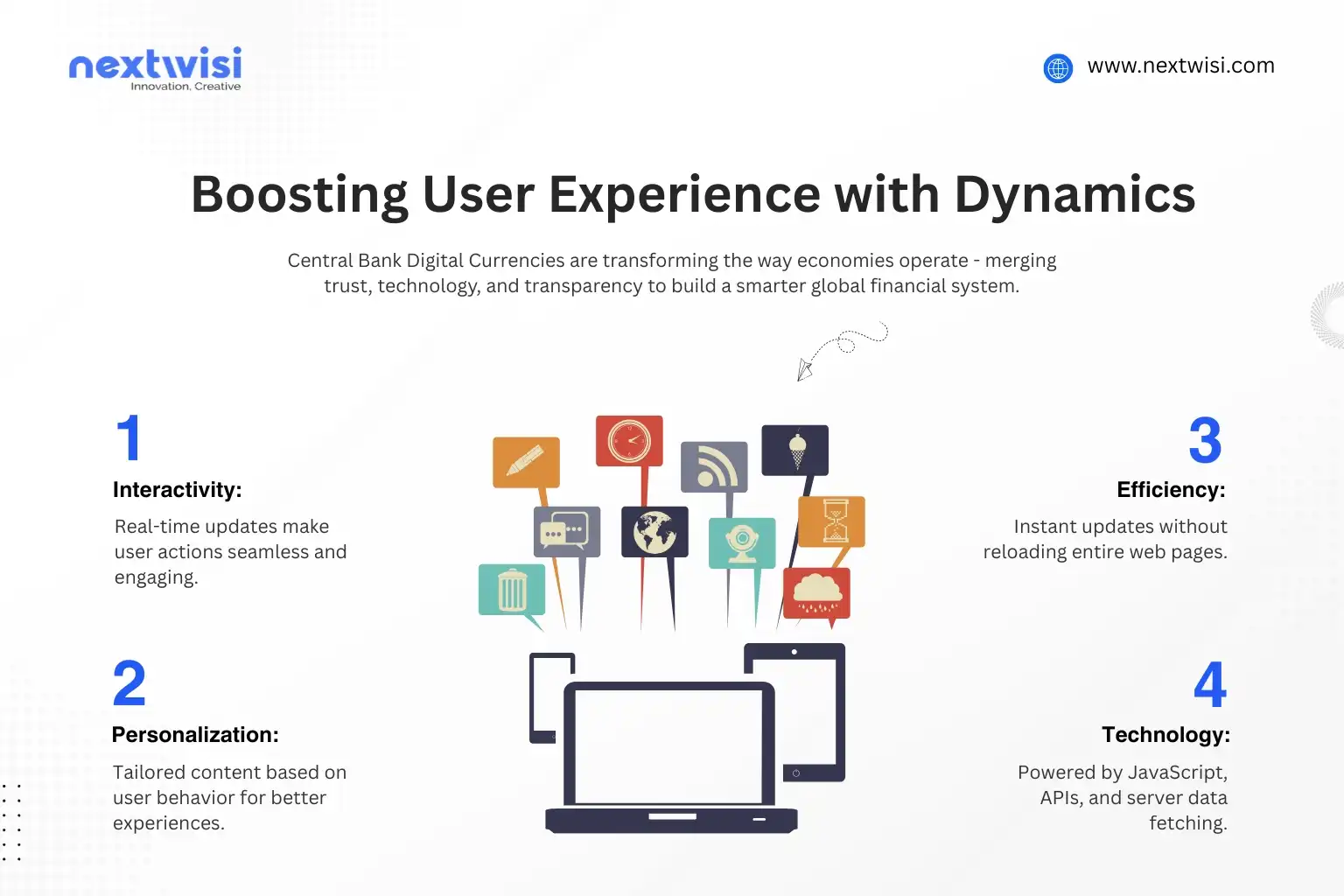
    In the modern digital society, sites should be not only the boards of constantly updated information. Move to dynamic element web development, a current technology that keeps the sites responsive, interactive, and flexible to the actions of the user. Instead of filling a whole page, the dynamic components refresh the components of a webpage according to the actual input, and this improves the user experience.

    This approach to web development is necessary in the development of websites in response to user action, data entry, or other external stimuli. Dynamic web elements such as interactive forms and real-time updates to content render websites alive and interactive as opposed to the case of traditional websites that are fixed and thus lacking in dynamism. This concept is important in the endeavor by developers, designers, and the owners of their websites to stay abreast of the fast-changing technologies.

    What is Dynamic Element Web Development?

    Dynamic element web development can be described as the dynamic web elements that respond to user interaction or real-time information and update themselves. This method also does not require full page reloads, and since it can refresh individual portions of the site immediately, it does not break the browsing experience of the user.

    To illustrate, dropdown menus that swell up upon clicking, sliders that update pictures following user engagement, and live search boxes that present live answers are all run by dynamic items. These components are normally powered by JavaScript and a set of backend systems to retrieve or process data on demand.

    The Role of JavaScript in Dynamic Web Elements

    JavaScript is the framework when it comes to dynamic element web development. It allows web pages to be responsive to user actions so that interaction between them is smooth and interesting. JavaScript is very vital in managing dynamic behaviors, starting with basic activities such as form validation and more elaborate activities such as accessing data through servers.

    React and Vue.js JavaScript frameworks simplify creating an interactive interface by keeping the UI state updated when the user interacts with the application. These interactive aspects provide a closer experience by changing the content and graphics based on the user behaviors.

    How Dynamic Elements Enhance User Experience

    The inclusion of dynamic features in a website can significantly enhance the mode of interaction of a site. The fact that the content will update without the need to reload it completely also means that the visitor will be less prone to lag and delays, thus providing a smoother, faster experience when going through the site. As an example, in a case of filling out a form, a user does not have to wait long to see a success or error message, which will be immediate feedback.

    Also, there are dynamic features, which can be used to promote personalization, i.e., displaying customized content depending on user behavior or preferences. A dynamic feature can be used in an e-commerce site to showcase the appropriate product, real-time inventory, and even a location-based promotion, which will enhance the conversion page and customer satisfaction.

    Dynamic vs Static Web Content

    One big difference between the static and dynamic websites is the way the information is displayed and updated. The static content is fixed and does not indicate the dynamism of various contents that are displayed to different visitors until the developer modifies the code by hand. Dynamic content, on the other hand, is flexible and may vary with user interactions, data entry, or live events. That is why the user experiences of the dynamic sites are richer and more interactive as compared to the static sites.

    As an example, an online store can display varying products to various customers depending on their history or where they live. Dynamic web development plays an important part in web applications and mobile app development whereby the users require the real-time updates and the smooth interactions.

    Key Technologies Behind Dynamic Web Elements

    The modern websites operate a number of technologies that collaborate to drive moving elements. The most significant ones are:

    • JavaScript: The primary technology that enables one to interact with the elements of a webpage.
    • Backend systems: These servers handle user requests and do not respond, they send back data that has been updated.
    • APIs: APIs are a connection between the frontend and the backend, which allows the real-time data to be fetched without updating the page.
    • AJAX (Asynchronous JavaScript and XML): A method, which enables web pages to access data in an asynchronous manner without having to reload the entire web page.

    With these technologies blended together, dynamic elements will be able to engage with databases, external APIs, and cloud-based systems and provide personalized and engaging content.

    Impact on Web Application Development

    Dynamic element web development is a revolution to the web application development developers. It allows applications to refresh real-time content, making them more responsive. Dynamic elements are necessary, whether it is a social media site where new content is posted without having to reload the webpage or a finance dashboard that shows stock prices in real time.

    This is because it makes web applications quicker and more interactive and eventually leads to increased levels of user satisfaction and retention. The user wastes less time in waiting because of the reloading pages; this means that users require less time to have the content reloaded, and thus, interactions have been made to be faster, and the whole experience is enhanced.

    Mobile App Development and Dynamic Elements

    Dynamic elements are also significant not only in websites. They are actively deployed in the creation of mobile applications to create real-time updates and customized content depending on the user behavior. Be it an application that brings in new news or a communication application that informs us of new messages, dynamic displays make mobile applications more interactive and efficient.

    A responsive, real-time experience can be achieved with the help of these elements and lets the developers develop apps that can adapt to the needs of their users without issues.

    SEO Considerations for Dynamic Web Content

    Even though dynamic content has a few advantages, one must remember about SEO. The search engines must index the dynamic content properly in order to become visible in the search results. It may be possible to make it so that search engines can crawl dynamic content by using proper server-side rendering and by maintaining a clean structural design of the code.

    Moreover, the scripts can be optimized, a large number of requests can be minimized, and the caching techniques can be employed to enhance the performance of the websites, and, at the same time, the dynamism aspects should be fast and effective. The well-optimized websites with both SEO and performance can attract more visitors, and they will be ranked on the top of search results

    Future Trends in Dynamic Web Development

    Dynamic element web development is dynamic with the ever-changing technology. Additional improvements in real-time data retrieval, artificial intelligence-based personalization, and smarter web components can be expected. Websites and web applications are bound to become increasingly interactive and smart and react to user demands in real time.

    Also, the work of Progressive Web Apps (PWAs) and component-based architectures will enable developers to design highly interactive and scalable applications more easily. These trends are making sure that dynamic elements will remain the main factor in determining the future of web development.

    Conclusion: The Importance of Dynamic Web Development

    The dynamic element of web development is one of the key features of the web and mobile applications today. Developers can also provide an effective, interactive, and personal user experience by developing websites that reconfigure automatically as the user interacts with them. These are dynamic characteristics that are no longer a luxury but rather a requirement to create a speedy, responsive, and easy-to-use digital platform.

    When you go into the world of web application development and mobile app development, having an idea of what the dynamic elements play will assist you to remain on the curve of delivering the best user experience. As much as you are developing an ordinary website or an elaborate web-based application, the inclusion of dynamic elements makes sure that whatever you are developing will not only be user-friendly but also future-oriented.

    With the strengths of JavaScript, APIs, and real-time data, you will be able to work together to provide modern interactive web experiences that will keep your users entertained and happy.
  • Custom Web Application Development: A Complete Guide

    Custom Web Application Development: A Complete Guide

    Understand the empowerment of businesses by the custom web application development that is secure, scalable, and customized to alleviate performance, efficiency, and long-term growth across industries.

    What Is Custom Web Application Development?

    In the current competitive digital environment, no enterprise can be left without technology that will facilitate its individual goals, procedures, and user needs. An off-the-shelf software package is not always the solution providing the flexibility, control or performance that your company demands. It is where custom web application development becomes very crucial. It enables companies to create customized web applications that are in tandem with its business goals and user requirements. A custom web application will provide all that a business requires to succeed in the digital age whether in terms of smooth operation or better user experience.

    Understanding Custom Web Application Development

    Custom web application development is the term that is used to refer to the process of designing, development, and deployment of a web-based application to suit the particular requirements of a company. In contrast to the traditional software that is sold off-the- shelf and targets a wide audience, custom web applications are built to serve only one organization. The applications are designed to address certain problems, enhance efficiency in the workflow, and be compatible with the existing systems.

    Any businesses in industries such as retail and healthcare, finance and education among others, use optimal scalability, better control and better performance through custom web application development. You have an idea of an employee management portal or you want an e-commerce platform, and you should consider the services of a custom web application development company that will be able to help you translate ideas into scalable, secure and useful web applications.

    Why Businesses Prefer Custom Web Application Development

    Custom web applications development have several advantages over the generic software. It makes sure that your business operations run on solutions it designs based on your business. The following are the main reasons why this is the most popular approach by companies:

    1. Tailored to Business Needs: The workflows and needs of each company are different. A tailor-made web application will fit in these requirements and this will be highly efficient and productive.
    1. Scalability and Flexibility: Custom web application will be able to expand with ease as your business grows. New modules can be added, API-integration can be done or performance can be improved without re-architecturing the whole system.
    1. Enhanced Integration: Custom web applications development enables a perfect integration with other enterprise software such as CRM, ERP, or third-party software, which will ensure smooth process of data exchange.
    1. Improved Security: Custom web applications development also allows enhanced security measures to be applied that are unique to a certain business and minimizes data breach and illegal access.
    1. Long-Term Cost-Saving: A custom web application may appear pricier at first, but because of recurring costs of licensing and unnecessary features that will never see the light of day, a custom web application will yield a better ROI in the long term.

    All these benefits demonstrate that the idea of custom web application development is not merely a trend, but it is a strategic investment that allows corporations to achieve digital growth in a sustainable way.

    Common Uses of Custom Web Applications

    • Custom web applications are developed to suit numerous applications. They are used by business, educational and individuals to address daily business operational issues. It has been used in some common uses:
    • Inventory and Order Management: This is a tailor-made web application that has made it easy to monitor the stock quantities, automate the orders and manage the chain of supply across different sites.
    • Customer Relationship Management (CRM): CRM is a custom CRM system that can be used to process leads, automate follow-ups, and enhance customer satisfaction using data-based insights.
    • Human Resource Management: Customized development of web applications is used to develop HR portals in organizations that are involved in payroll management, attendance, and employee performance management.
    • E-Learning Platforms: Custom web applications are being used by schools and training centers to register students, schedule them and provides them with interactive online courses.
    • Finance and Accounting Systems: Companies are able to develop secure applications to invoice, bill, and make financial analytics specific to their workflow.

    In both the cases, the custom web application development services have helped organizations develop solutions that address their operational issues directly.

    Web Application vs Website – The Key Difference

    Another important principle of explaining the custom web application development is the distinction between a web application and a site.

    • Website: The main role of the site is to offer potential visitors some kind of information that is static i.e., either text, images or videos. It is perfect to distribute the company information, blogs, or news.
    • Web application: A web based application on the other hand is interactive. The users are able to log in, enter data, carry out transactions and get dynamically responsive responses.

    In a way, therefore, a site educates whereas a custom web application is interactive. This difference is important in enabling businesses to decide on whether to have an informative platform or a functional digital system that suits their needs.

    Types of Custom Web Applications That Drive Business Growth

    Custom web applications development may be in different forms depending on the objectives of the business. All of them have a purpose and offer certain advantages:

    1. Custom E-Commerce Platforms: This type of platform enables business organizations to market their products online and have customized features such as enhanced search, user profiles, analytics and secure payment gateways.
    2. Custom Content Management Systems (CMS): A CMS enables businesses to have a simple time controlling digital content. The marketing tools, user roles, and workflow automation can be combined with a custom web application CMS.
    3. Integrated Business Systems: By integrating modules such as inventory, sales, and accounting into a single tailor-made web-based application, business efficiency is improved and also offers real-time business insight.
    4. Customer Portals: Customized web development enables the client to monitor their services, invoices or orders safely.
    5. Social or Community Platforms: Custom web applications are used to create private social networks or forums where the business gains closer customer interaction.
    6. Progressive Web Apps (PWAs): PWAs are the hybrid between web and mobile applications, allowing them to provide high-performance and offline, with the help of tailored web application development platforms.
    7. ERP Systems: Custom ERP systems are designed to integrate all processes and functions of a business purchasing, Human Resources and finance into a single interface that is easier to control.

    All these kinds are manifestations of the versatility of custom web application development, and these are tailored digital solutions to all industries.

    Steps in the Custom Web Application Development Process

    Design of an effective custom web application takes time with a coordination between the developers and the stakeholders. Below are the key stages:

    1. Requirement Analysis: The knowledge of the business objectives, target audience, and technical needs is the best way to ensure that the process of the custom web application development starts on a well-defined note.
    1. Planning and Design: Developers and designers make wireframes and prototypes where the design is visually and functional to the brand of the client.
    1. Front-End Development: The front-end developers create responsive front ends with HTML, CSS, and JavaScript, which determine how the users will interact with the user-created web application.
    1. Back-End Development: Data processing, logic, and database integration are done using technologies such as PHP, Python, or Node.js.
    1. Testing and Quality Assurance: Intensive testing would make sure that the bespoke web applications work well in devices and browsers.
    2. Deployment and maintenance: The application is deployed into an approved server and regular maintenance is done to guarantee continued improvement and reliability.

    All these measures will see your custom web applications development endeavor deliver efficiency, security and high performance.

    Technology Stacks Used in Custom Web Application Development

    Any custom web application is only successful based on used technologies. A collection of both front and back-end tools together with database tools are referred to as a technology stack by developers. Common examples include:

    • LAMP Stack (Linux, Apache, MySQL, PHP): Scalable and dependable with dynamic applications of custom websites.
    • MEAN Stack (MongoDB, Express.js, Angular, Node.js): Ideal with real-time web and mobile applications.
    • Python/Django Framework: It is popular in the development of custom services of the web application that needs speed and security.
    • Ruby on Rails (RoR): It is a fast-development web application framework in clean reusable code.
    • NET Framework: This is used to create the development of enterprise level custom web applications used in the larger organizations.

    The selection of the appropriate stack varies depending on your business objectives, cost, and the desired scalability.

    Collaborating with Nextwisi Solutions for Excellence.

    Nextwisi Solutions would be a reliable firm in terms of developing custom web applications when businesses are aiming at innovation. The company is over years old and it is specialized in creating secure, high performance, and scalable custom web applications unique to various industries.

    Other than custom web applications development, Nextwisi Solutions also offers App Development, Blockchain Solutions, Cloud Solutions & Migration and  Custom Software Development etc.

    In deciding to use Nextwisi Solutions, firms acquire the services of expert developers, strategists, and new technology that is strategic to their success.

    Final Thoughts

    To sum it up, it is not only that custom web application development is about the creation of a digital tool, but rather a powerful business solution that suits your identity and objectives as an organization perfectly. It could be dealing with the customers, automating the processes, or making the process more interactive, a bespoke web application offers the flexibility and the control that businesses require to succeed.

    You can engage professionals, such as Nextwisi Solutions, to make sure that your project of custom web applications development is approached with accuracy, innovation, and technical perfectionism. Since its inception, the company has a history of successful work in the field of custom web application development services that are able to assist organizations to make their vision come true and remain competitive in the constantly changing digital world.