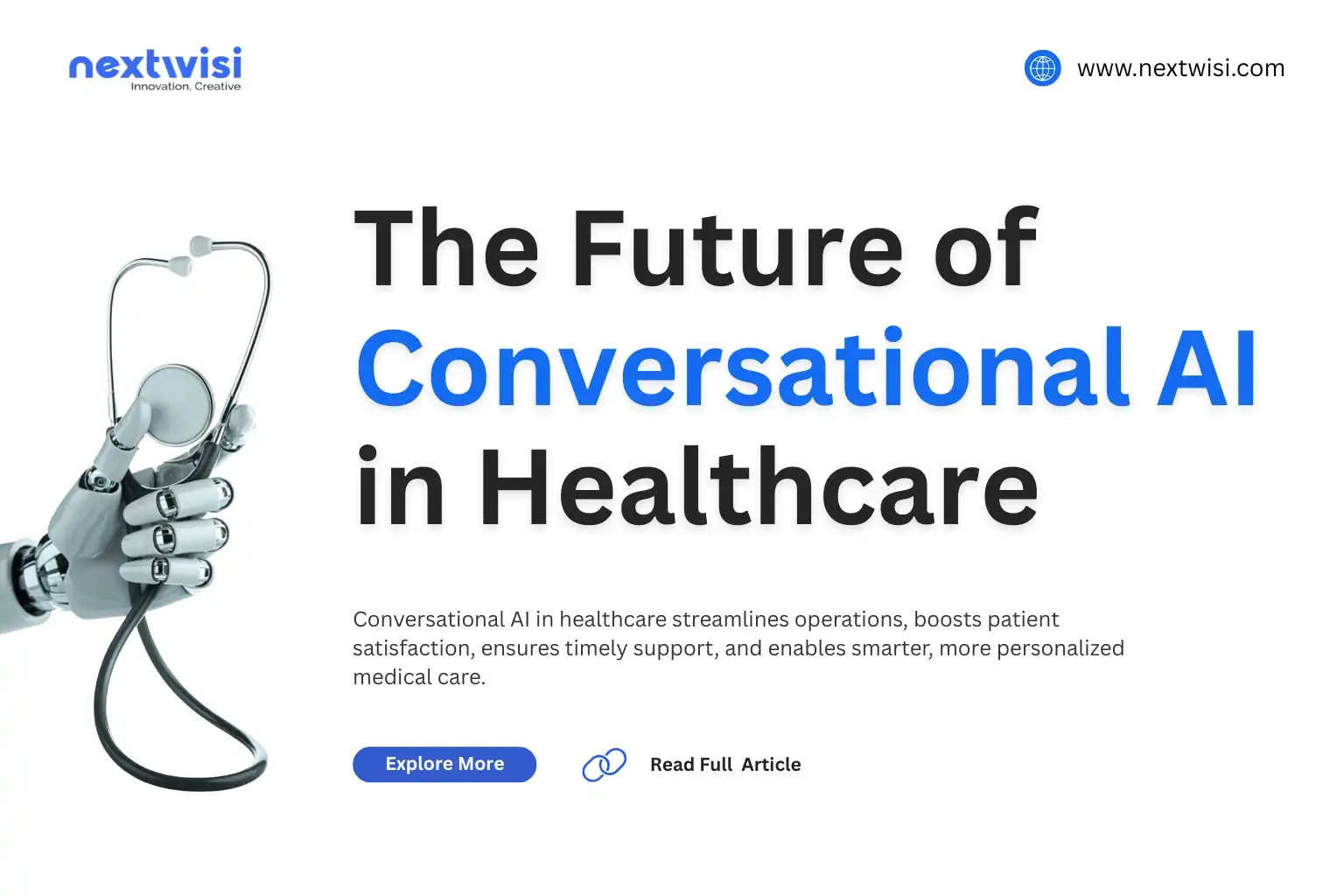
The healthcare industry is changing at a greater pace than ever as it requires a sense of real-time access, improved interaction with patients, and the ability to change operationally. As the pressure on hospitals, clinics, and digital health platforms increases, companies are turning to intelligent technologies that may aid in automating the communication process, as well as in making the experience of patients personal. Conversational AI in healthcare is one of the strongest innovations that drive this change.
In its simplest form, conversational AI in healthcare involves the application of smart chatbots and voice-activated virtual assistants to replicate the natural human dialogue. Such AI-based tools can respond to the questions of patients, handle appointments, and offer health advice and support clinical processes. Conversational AI is currently becoming significant in transforming the modern healthcare provision as demands for fast and convenient medical interactions continue to grow.
Why Conversational AI is Reshaping Modern Healthcare
Conventional healthcare procedures have a high reliance on manual processes, paperwork, and queues. This usually causes frustrations to the patients, administrative overloads, and misuse of resources. These issues can be solved with the emergence of conversational AI in healthcare, as it provides patients and healthcare systems with more personalized communication that is faster and smarter.
Healthcare professionals no longer have to provide 24/7 support to the extent of overloading human resources. Automated systems can provide patients with answers in real time and allow them to make appointments, get medication prescriptions, and get health education. The change is assisting the organizations in creating patient-centered models of care and enhancing the operations.
Top 10 Powerful Use Cases of Conversational AI in Healthcare
1. Intelligent Appointment Scheduling and Reminders
Automated appointment management is one of the most viable applications of conversational AI in the healthcare industry. Smart chatbots enable patients to make appointments, reschedule appointments, and cancel appointments without calling reception desks.
Messages or voice assistants can also provide patients with proactive reminders and make the rate of no-show significantly lower. This provides a better scheduling flow and enhances the general trust of the patients to the healthcare systems.
2. AI-Driven Symptom Assessment and Smart Triage
Development of AI and ML is a keyword that was employed to carry out this search.
The initial point of care is being changed by AI-driven symptom checkers. Patients are able to speak to the system about their symptoms, and the system poses pertinent follow-up questions to determine urgency.
In the background of this process is AI/ML development, in which the patterns of symptoms are analyzed by machine learning models and the situation is classified into risk levels. This assists in directing the patients to emergency care or primary consultation or even to self-care areas, avoiding unnecessary visits to hospitals.
3. Medication Adherence and Treatment Support
Among the largest reasons for poor treatment outcomes are missed medications. Using Conversational AI in Healthcare, smart chatbots will notify them about their medicine consumption.
These systems are able to modify reminders, depending on the behavior of patients and health data. They also inform the patients when they need to refill the prescriptions so that they are not left without treatment. In the long run, this enhances compliance and recovery rates.
4. Real-Time Lab Results and Secure Health Updates
Waiting for lab results can be stressful for patients. Conversational AI systems now provide real-time updates as soon as test results are available. This reduces anxiety and improves transparency.
With AI agent development, advanced AI agents are designed to securely handle patient data, authenticate users, and deliver sensitive medical information safely. These intelligent agents maintain privacy while offering quick and clear communication.
5. 24/7 Virtual Health Assistants
Virtual health assistants powered by conversational AI in healthcare provide support round the clock. Patients can ask questions about symptoms, treatment plans, or medical procedures at any time.
At the same time, strong cybersecurity solutions are integrated into these systems to protect personal health information. Secure architectures ensure that patient conversations, medical histories, and prescriptions remain confidential and protected from unauthorized access.
6. Automated Patient Feedback and Experience Analysis
Feedback provided by patients is critical in enhancing the quality of healthcare. Conversational AI systems automate the review and satisfaction rating procedures by utilizing chat surveys.
Healthcare organizations are able to store, process, and analyze high amounts of patient feedback in real time using scalable cloud services. This enables health care teams to understand the gaps in the services, enhance care delivery, and improve the experience of the patients.
7. Mental Health Support and Emotional Monitoring
Mental healthcare is characterized by the unavailability and social stigma. Conversation AI in healthcare industry is a secure and confidential area where people can share their feelings and get help.
An AI chatbot can help users learn breathing exercises and stress-coping methods as well as monitor their mood. With time, the system will learn and recognize the emotional trends and recommend professional assistance as necessary. This enhances the access of mental wellness, particularly in remote or underserved communities.
8. Insurance Claims and Billing Assistance
Medical billing may be daunting and difficult for most patients. Conversational AI systems assist patients in knowing the insurance benefits, deductibles, and claims procedures.
AI chatbots guide users through the claim filing process step by step, respond to billing questions in real time, and minimize reliance on call centers. The application of this will enhance financial transparency and administrative overheads for the healthcare providers.
9. Chronic Disease Management Through Smart Check-Ins
There are chronic diseases like diabetes, asthma, and hypertension, which need continuous monitoring. Conversational AI in healthcare assists patients in controlling such conditions by way of daily or weekly check-ins.
AI systems involve questions concerning the symptoms, medication use, nutrition, and exercise. The system gives customized lifestyle suggestions based on the feedback. Such continuous involvement increases patient responsibility and enhances disease management in the long run.
10. Preventive Care and Health Education
It is cheaper than emergency treatment to preventive care. Chatbots remind about vaccinations and screenings, as well as checkups, as timely as possible.
They are also able to deliver tailored information in terms of age, medical history, and lifestyle. Patients are more informed and active concerning their health, decreasing future health hazards and hospitalization.
Business Benefits of Conversational AI in Healthcare
Not only is the use of conversational AI in healthcare enhancing patient care, but it is also providing healthcare organizations with high business value.
Hospitals and clinics have:
- Lower operational costs
- Less reliance on massive support staff.
- Faster response times
- Increased rates of patient satisfaction.
- Improved care consistency
Through the help of automation, repetitive processes in healthcare can be given less attention as the staff is able to concentrate on serious cases of patients and other complicated medical conditions.
The Future of Conversational AI in Healthcare
The future of Conversational AI in Healthcare is very bright. With more sophisticated AI models, such systems will provide additional personalized medical advice, predictive health, and real-time behavioral change.
Conversational AI will be used in the future to integrate with wearable devices, electronic health records, and tools of remote monitoring. This will establish an interdependent healthcare ecosystem where the support to the patients will be proactive rather than reactive.
The healthcare facilities that will be at the forefront in investing in conversational AI technologies will have a massive competitive edge due to the ability to provide quicker, smarter, and more human-like online healthcare services.
FAQs
Q.1 What is conversational AI in healthcare?
People use it to schedule appointments, check symptoms, educate patients, remind them of medications, and provide real-time assistance with the help of intelligent chatbots and virtual assistants.
Q.2 Which are typical applications of conversational AI in healthcare?
The most common applications are patient triage, management of chronic diseases, billing support, mental health support and preventive care reminders.
Q.3 What is the greatest advantage of conversational AI in the medical field?
The greatest advantage is the enhanced patient accessibility and interaction and the decrease in the operational workload and healthcare expenses.
Q.4 Can AI chatbots be safe in healthcare?
Yes, AI chatbots provide privacy of patients, ensure safe data management, and adequate communication systems as long as they are constructed with effective security frameworks.
Leave a Reply