Tag: ai agent

  • Sarvam AI: India’s Multilingual Generative AI Startup

    Sarvam AI: India’s Multilingual Generative AI Startup

    Sarvam AI: India’s Multilingual Generative AI Startup Building the Future of AI Infrastructure

    Artificial Intelligence is reshaping industries across the globe. From chatbots and content creation to enterprise automation and voice assistants, AI systems are becoming deeply integrated into everyday digital life. However, most advanced AI technologies have historically been built with English-first datasets and global market priorities. For a country like India — with its massive population and extraordinary linguistic diversity — this creates a significant gap.

    Sarvam AI emerges at this crucial moment.

    Sarvam AI is an India-based generative AI startup focused on building large language models (LLMs) optimized for Indian languages and enterprise use cases. While global AI companies primarily develop English-dominant systems, Sarvam AI is building foundational AI models specifically designed for India’s multilingual population.

    Its mission is clear and ambitious: Build AI infrastructure for India, in Indian languages.


    Understanding the Indian AI Opportunity

    India is one of the fastest-growing digital economies in the world. With over a billion people and rapidly expanding internet access, the country represents a massive technology market. However, India is not linguistically uniform.

    There are 22 officially recognized languages and hundreds of dialects spoken across the country. Millions of internet users prefer interacting in their native languages rather than English. Despite this, many global AI systems perform best in English and struggle with regional nuances.

    This creates a huge opportunity: build AI systems that truly understand Indian languages, cultural context, and regional usage patterns.

    Sarvam AI is positioning itself to capture that opportunity.


    What is Sarvam AI?

    Sarvam AI is a generative AI company focused on building foundational models for Indian languages. Instead of simply creating AI applications on top of existing foreign models, the company aims to develop core AI infrastructure that businesses, governments, and developers can rely on.

    Foundational AI infrastructure includes:

    • Large Language Models (LLMs)
    • Speech recognition systems
    • Text-to-speech technology
    • Enterprise-grade APIs
    • Multilingual AI processing systems

    By focusing on these building blocks, Sarvam AI is not just creating tools — it is building the backbone for India’s AI-driven digital transformation.


    The Founders Behind Sarvam AI

    Sarvam AI was founded by Vivek Raghavan and Pratyush Kumar, both experienced in artificial intelligence research and machine learning systems.

    The leadership team combines deep research expertise with practical knowledge of deploying scalable AI systems. Building large language models requires significant technical capability, including:

    • Advanced machine learning research
    • Data engineering at scale
    • Infrastructure optimization
    • Distributed computing knowledge
    • Enterprise deployment experience

    Strong technical leadership is critical when building foundational AI models. The founders’ backgrounds enable Sarvam AI to focus not only on innovation but also on real-world usability.


    Funding and Investor Confidence

    Sarvam AI has secured funding from established venture capital firms including Lightspeed Venture Partners and Peak XV Partners.

    Investor backing is significant for several reasons:

    1. Training large language models requires expensive computing infrastructure.
    2. Data acquisition and processing demand significant resources.
    3. Hiring top AI researchers and engineers requires capital.
    4. Competing in the AI space demands long-term strategic investment.

    The involvement of experienced investors suggests confidence in India’s AI infrastructure potential and in Sarvam AI’s ability to execute its vision.


    Why Multilingual AI is Critical for India

    India’s internet growth is increasingly driven by non-English users. Tier-2 and Tier-3 cities, as well as rural regions, represent the next wave of digital adoption.

    Many of these users prefer:

    • Hindi
    • Tamil
    • Telugu
    • Kannada
    • Marathi
    • Bengali
    • Gujarati
    • Punjabi
    • Malayalam
    • Odia
    • And other regional languages

    AI systems optimized only for English fail to fully serve this population.

    Multilingual AI is not simply translation. It requires:

    • Understanding regional grammar structures
    • Handling code-mixed language (Hindi + English, Tamil + English, etc.)
    • Recognizing regional accents in speech
    • Managing cultural references
    • Adapting to local business terminology

    Sarvam AI’s India-first strategy directly addresses these challenges.


    Core Focus Areas of Sarvam AI

    1. Large Language Models (LLMs)

    Large Language Models are advanced neural networks trained on massive text datasets. They power chatbots, writing assistants, virtual agents, search tools, and automation platforms.

    Sarvam AI aims to train LLMs using Indian language datasets, ensuring better accuracy and contextual understanding for regional use cases.

    These models can support:

    • Government services
    • Customer support automation
    • Financial advisory systems
    • Content generation platforms
    • Educational tools

    2. Speech-to-Text Systems

    Voice interaction is increasingly important in India, where typing in regional languages can be difficult for many users.

    Speech-to-text systems allow users to speak naturally while AI converts speech into written text. However, accurate recognition requires:

    • Accent adaptation
    • Dialect awareness
    • Noise handling
    • Regional vocabulary support

    Sarvam AI is working to build speech systems that perform reliably across Indian linguistic diversity.

    3. Text-to-Speech Engines

    Text-to-speech technology enables digital systems to communicate verbally. High-quality regional voice output enhances accessibility, especially for users with limited literacy.

    4. Enterprise AI APIs

    Sarvam AI intends to provide APIs that businesses can integrate directly into their platforms. This allows companies to embed multilingual AI features into apps, websites, and digital systems.

    Enterprise applications may include:

    • AI-powered customer support
    • Regional chatbot automation
    • Automated documentation
    • Localized marketing content generation
    • Voice assistants for financial services

    Use Cases Across Industries

    Sarvam AI’s technology has broad applications across multiple sectors.

    Government Digital Services

    Governments increasingly rely on online portals for citizen services. AI that understands regional languages can dramatically improve accessibility.

    Banking and Fintech

    India’s fintech ecosystem is massive. AI chatbots in local languages can improve customer onboarding, support, and fraud detection.

    Education Technology

    Regional AI tutors can help students learn in their native language, improving comprehension and digital inclusion.

    E-Commerce

    Localized AI support systems can help users browse, search, and purchase products in regional languages.

    Media and Content Creation

    Publishers can generate regional content at scale, increasing reach and engagement.


    Sarvam AI vs Global AI Companies

    Global AI companies focus on worldwide markets. Their primary training datasets are heavily English-dominant, with additional support for major international languages.

    Sarvam AI differentiates itself through:

    • India-first strategy
    • Deep regional language optimization
    • Enterprise localization focus
    • Government integration potential

    This localization advantage creates a strong competitive moat within the Indian market.


    Strategic Importance of Sovereign AI Infrastructure

    Countries worldwide are investing in domestic AI capabilities to reduce dependency on foreign technology.

    Sovereign AI infrastructure provides:

    • Data security
    • Regulatory alignment
    • Cultural sensitivity
    • National technological independence

    India’s growing digital economy requires AI systems aligned with domestic needs. Sarvam AI represents a step toward building indigenous AI capability.


    Challenges Sarvam AI May Face

    While the opportunity is large, building foundational AI models is complex.

    Key challenges include:

    • High compute costs
    • Data availability and quality
    • Competition from global AI giants
    • Rapid technological change
    • Talent acquisition

    However, a focused strategy targeting a specific linguistic market gives Sarvam AI clarity and direction.


    The Future Roadmap

    Sarvam AI is expected to:

    • Launch India-focused LLM APIs
    • Expand enterprise integrations
    • Improve multilingual speech systems
    • Collaborate with digital transformation initiatives
    • Strengthen regional language performance

    As AI adoption grows in India, foundational infrastructure providers will become increasingly important.


    Frequently Asked Questions

    What does Sarvam AI do?

    Sarvam AI builds large language models optimized for Indian languages and enterprise AI applications.

    Is Sarvam AI an Indian company?

    Yes, Sarvam AI is an India-based generative AI startup.

    Who founded Sarvam AI?

    Sarvam AI was founded by Vivek Raghavan and Pratyush Kumar.

    Who invested in Sarvam AI?

    Lightspeed Venture Partners and Peak XV Partners are key investors.

    Is Sarvam AI competing with global AI companies?

    Sarvam AI focuses on India-first AI infrastructure, while global companies target worldwide markets.


    Conclusion

    Sarvam AI represents a major shift in India’s AI landscape. Rather than depending entirely on global AI providers, India is beginning to build its own AI infrastructure tailored to its linguistic and cultural diversity.

    As artificial intelligence becomes central to digital services, companies that build foundational AI systems will shape the future economy. Sarvam AI is positioning itself as one of those foundational players in India.

    For entrepreneurs, developers, investors, policymakers, and businesses, this is a company worth watching.

    India’s multilingual future demands multilingual AI — and Sarvam AI aims to build exactly that.
  • Affordable AI Avatar Services for Local Businesses: Smart Video Marketing on a Budget

    Affordable AI Avatar Services for Local Businesses: Smart Video Marketing on a Budget

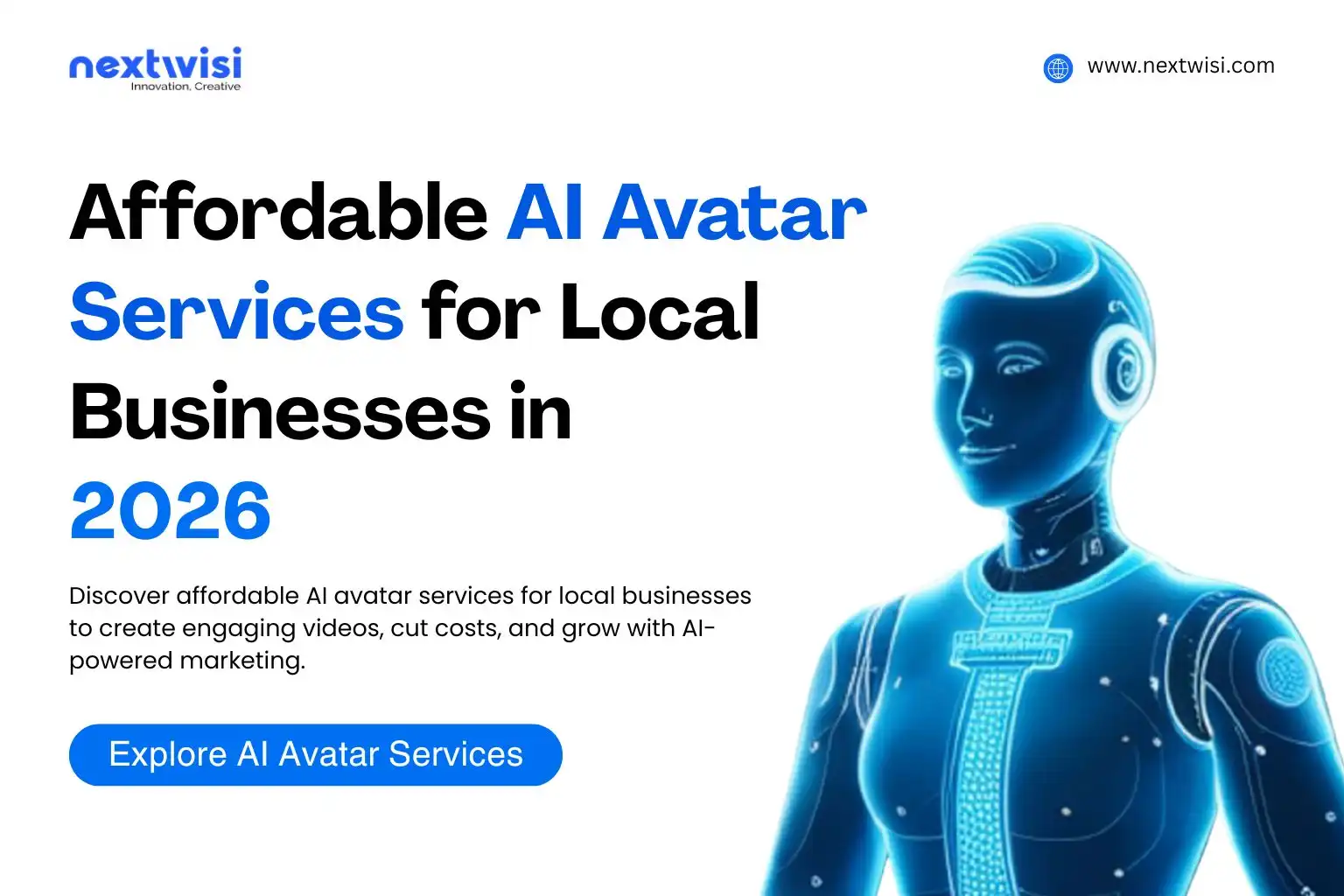
    In the digital marketplace, local businesses currently experience high levels of competition. The customers demand to see exciting videos and personalized communication where they can have quick responses on the websites and social media. Nevertheless, the conventional method of video production is costly and time-consuming. That is why affordable AI avatar services for local businesses are becoming a powerful solution for brands that want professional video marketing without high production costs.

    Through the introduction of AI video generation, digital avatar technology, and the use of automated video creation tools, local companies will now be in a position to produce high-quality videos at very low cost. Businesses do not need to pay actors or rent studios to create engaging marketing content; AI presenter software gives them the opportunity to create the content in minutes using simple scripts.

    What Are AI Avatar Services, and How Do They Work?

    The production of realistic digital presenters is done through AI avatar platforms, artificial intelligence, AI voice synthesis technology, and synthetic media solutions. These avatars have the ability to talk various languages, change tone, and send customized information to various groups of customers.

    Through AI-enhanced content generation, companies just have to input a script, select a style of presenter, and tailor branding features. The auto-generated professional video system uses AI text-to-video and lip-synching technologies to create a video in a realistic manner. This process will save time on production and still retain its brand.

    In the case of local brands with small budgets, low-cost AI avatar services of local businesses result in no longer having to do recurring video shoots to create valuable content to publish on websites and landing pages and promote the brand.

    Why Local Businesses Should Invest in AI Avatar Solutions

    Small and medium-sized enterprises usually find it hard to remain with regular content marketing practices because of the lack of financial and creative capabilities. The solution to these issues is adopting the affordable AI avatar services to be used by local businesses to solve their challenges on automation and scalability.

    To begin with, AI avatars assist in the creation of videos at low costs, and this considerably reduces marketing costs in comparison to the conventional video production techniques. With a limited budget on advertising, businesses are able to make several videos to promote themselves, demonstrate their products, and make announcements.

    Second, the sites allow the execution of content marketing strategies in a scaled manner. Depending on whether the business requires a single video a month or numerous campaigns every week, there will always be the opportunity to produce automated marketing videos because it does not require the involvement of any other production teams.

    Third, customer engagement can be strengthened using the video with the help of AI avatars that provide high-quality and professional communication. The video material has an advantage over the text one and enhances the conversion and brand recognition.

    Practical Use Cases for Local Brands

    Technological companies are not the only ones to use AI-powered avatars. They are convenient resources for retail stores, real estate brokers, medical facilities, eateries, and learning institutions.

    1. Website Introductions and Brand Awareness

    Virtual spokesperson services can be used by businesses to make their homepages have friendly and understandable videos to describe services to the visitors and make them trust them.

    2. Social Media Campaigns and Promotions

    With AI-based video marketing, brands will have the opportunity to post frequent promotional material without arranging frequent shoots. This guarantees regular posting and increased exposure in platforms.

    3. Product Demonstrations and Explainer Videos

    With the assistance of AI-created spokesperson technology, companies will be able to describe features of products, advantages of services, and promotions in a professional and convincing tone.

    4. Training and Internal Communication

    The video automation of SMEs can be applied by local businesses to develop the onboarding tutorials, compliance training, and operation guidance material effectively.

    In both instances, local businesses will have the flexibility, cost reduction, and better marketing performance through affordable AI avatars.

    SEO and Digital Expansion Advantages

    SEO-wise, videos enhance the dwell time and engagement levels of sites. By utilizing AI tools in the marketing of local businesses as part of the marketing strategy, businesses can always release new multimedia content that enhances the search visibility.

    Also, digital marketing of local businesses and personal video communication are even more effective and trustworthy. AI avatars enable businesses to customize messages to target certain groups of customers at no extra production costs.

    Using the assistance of marketing automation tools, companies can share videos with the help of emailing campaigns, landing pages, and advertisements on social media with no difficulties. This would boost brand power and general presence in digital.

    Role of IT Support in AI Avatar Implementation

    Although AI tools are future-proof, it is necessary to integrate them to maximize their performance. Professional IT services are required at this point. Nextwisi Solutions is a reputable IT solutions provider that assists companies in integrating AI solutions into business within their digital ecosystem.

    By leveraging AI integration services, deployment on a cloud, and secure infrastructure planning, Nextwisi will facilitate the easy adoption of budget-friendly AI avatar services for local businesses without any technical inconvenience.

    In addition, Nextwisi assists companies through the services of digital transformation and scalable infrastructure to ensure that the AI-powered marketing approach aligns with the long-term business targets. Through appropriate technical resources, companies can implement enterprise-level AI deployment without any doubt in terms of security and performance level.

    Cost Efficiency and ROI Advantages

    The main benefit of low-cost AI avatar services to the local companies is high ROI. Conventional video production involves the repetitive costs of actors, editing crews, and equipment. Conversely, AI-based solutions also offer subscription-based pricing, which facilitates cost-effective marketing solutions.

    By continually generating leads by use of video marketing, companies will be able to create more leads and generate more conversions without spending more on advertising. AI-driven systems can also be used to A/B test scripts and messaging styles; this enables the brands to optimize campaigns to achieve improved outcomes.

    Due to low-cost video production and automation features, even minor local shops can be able to compete with bigger players regarding professional digital presence.

    The Future of AI Avatar Technology for SMEs

    Digital marketing is becoming increasingly dynamic with the advancement of the interactive AI avatars and personalization algorithms. In the near future, local companies will have the opportunity to send hyper-targeted video messages depending on the behavior and the history of purchases made by the customer.

    With the further development of AI-driven content creation tools, businesses will enjoy a quicker production cycle, increased engagement rates, and loyalty to their brands. The opportunity to use AI avatars at low costs today makes local businesses ahead of the rest of the rivals that use the old marketing models.

    Final Thoughts

    The competition in the digital sphere is growing, and clients want to see attractive material on any brand. Through the integration of AI video generation, virtual spokesperson services, and automatic video creation services, businesses can make a professional marketing video and stay within budgets.

    AI avatars at affordable rates for local businesses are not merely a fad but a future scheduled move towards scalability. With the help of credible IT partners such as Nextwisi Solutions, businesses acquire the technical base on which to integrate AI without difficulties and threats.

    To achieve sustainable growth and stronger involvement, as well as increase ROI, the affordable AI avatar services to local businesses and the adoption of an intelligent local business digital marketing approach are a viable and future-proofed choice for local brands.

  • Best Sales Talent Recruiter Positions in Artificial Intelligence Organizations

    Best Sales Talent Recruiter Positions in Artificial Intelligence Organizations

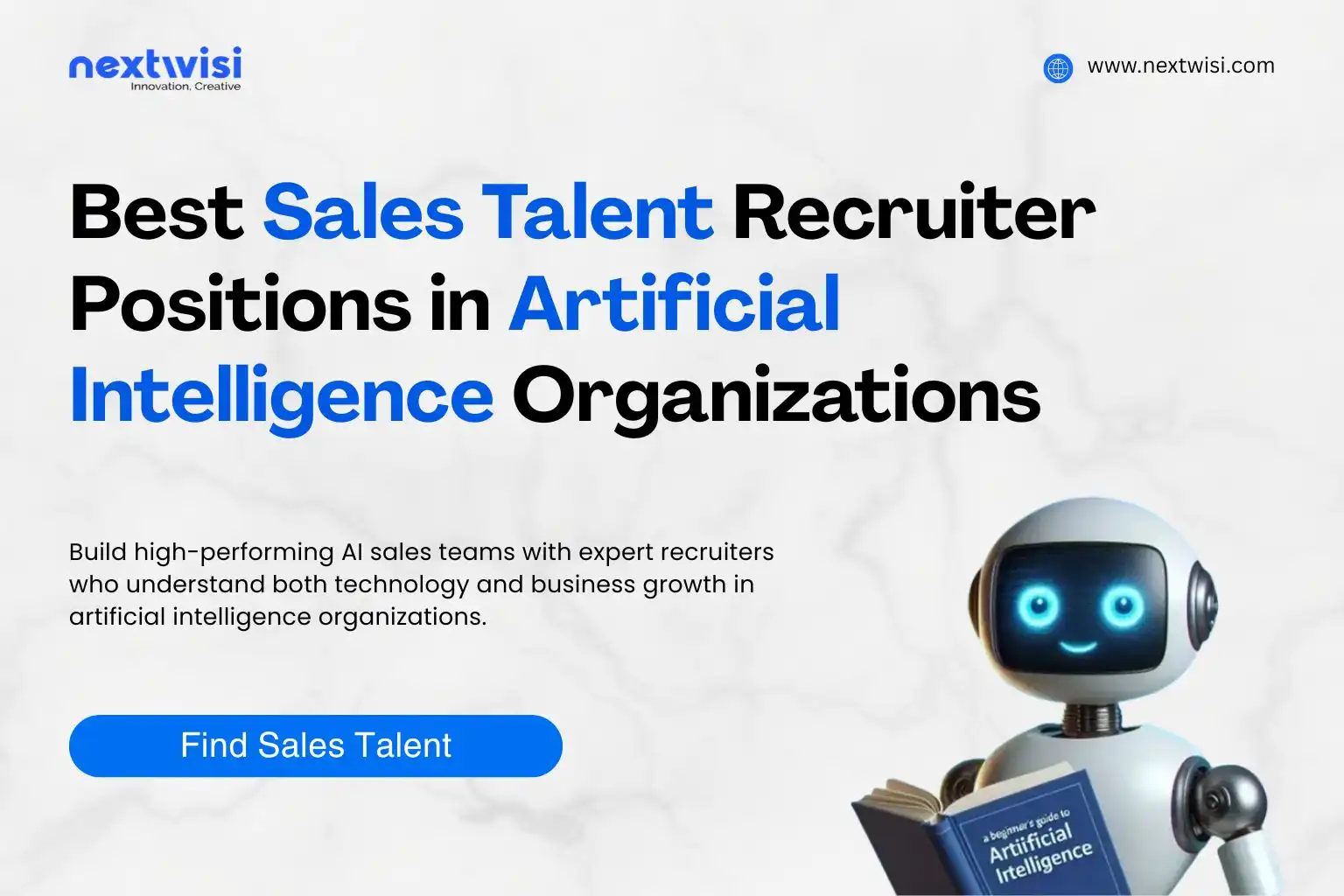
    The rapid growth of artificial intelligence is transforming global industries, from healthcare and finance to manufacturing and eCommerce. As AI solutions become more complex and competitive, organizations now depend heavily on skilled sales professionals who can explain technical products in simple business terms. This has created strong demand for the best sales talent recruiter positions in artificial intelligence organizations, making recruitment one of the most strategic functions in the AI sector.

    In contrast to the conventional hiring process, AI sales recruiting demands extensive knowledge of technology, market forces, and customer demands. Firms are not anymore in a hunt for generic sales personnel. Rather, they desire professionals that would sell machine learning platforms, predictive analytics solutions, and enterprise AI solutions. That is why the role of specialized recruiters has turned into a major necessity of AI-driven companies.

    Why Artificial Intelligence Companies Need Specialized Sales Recruiters

    Artificial intelligence organizations are very technical and dynamic. They have products that frequently entail intricate algorithms, cloud systems, and decision systems that depend on data. A recruiter in this area has to comprehend the technical and the commercial strategy.

    The artificial intelligence organizations are recruiting for the best sales talent positions that are aimed at selecting candidates that integrate business development capabilities along with technical consciousness. These recruiters become an interface between the engineering groups and the revenue objectives. They assist organizations to create sales teams that can communicate AI value propositions in a way that businesses of all types understand.

    Also, AI markets are competitive and international. The supply of skilled AI sales personnel is quite low, and this aspect implies that recruiters would have to be competitive in acquiring the best talents. This renders the recruitment functions more strategic than ever.

    Key Responsibilities of Sales Talent Recruiters in AI Organizations

    The work of recruiters in artificial intelligence firms is far more than mere duties of recruitment. They have strategic workforce planning and talent branding.

    Knowing AI product offerings is one of the big responsibilities. The recruiters should be aware of the functionality of the AI software, automation platforms, and data intelligence to assess the candidates appropriately. They also work hand in hand with hiring managers to create sales role requirements in terms of business goals.

    Sourcing niche candidates is another critical role in the most successful sales talent recruiter jobs in artificial intelligence organizations. This consists of the people who have worked in SaaS sales, B2B technology markets, and enterprise solution selling. Recruiting agencies employ niche hiring systems, professional networking, and online recruitment solutions to connect with qualified applicants at the global level.

    They also control pipelines of interviews, behavioral testing, and testing of communication skills. Technical knowledge is not as critical in the recruitment of AI sales as cultural fit and adaptability.

    Essential Skills Required for AI Sales Talent Recruiters

    The recruiters within the AI organizations need to have a combination of skills that is unique. There must be technical literacy. Although they are not required to write a code, they should be familiar with the principles of artificial intelligence, like machine learning, automation, and predictive analytics.

    Good communication skills are also necessary. Recruiters should be capable of clarifying to the applicants complex sales positions in a manner that will be convincing. They also need to bargain pay packages and control expectations in competitive labor markets.

    Another important requirement is data-driven decision-making. Most recruiters in artificial intelligence companies monitor successes in hiring, candidate engagement, and performance with the help of analytics. This is in line with the overall AI culture of data usage to make things better.

    Artificial intelligence organizations also require flexibility in the recruiter roles that involve the best sales talent. The AI companies are dynamic, and the staffing requirement may vary fast depending on the funding cycles, product release, and market trends.

    Types of Sales Roles Recruited in Artificial Intelligence Organizations

    The jobs that sales recruiters in AI companies are recruiting for include a broad spectrum of jobs. These are business development executives, enterprise sales managers, account executives, and solution consultants.

    Other recruiters focus on recruiting in a startup setting, and the candidates have to be flexible and growth-minded. The other ones are centered on enterprise AI companies that need the sales procedures to be systematized and the clientele management on a large scale.

    In most instances, the most desirable sales talent recruiter jobs in artificial intelligence companies are those relating to hiring people that know both SaaS selling and artificial intelligence applications. Such hybrid positions become particularly useful due to the combination of digital selling techniques and technical knowledge of products.

    Recruitment Challenges in AI Sales Hiring

    Recruiting AI companies with sales professionals does not have a standard solution. Shortage of qualified candidates is one of the greatest challenges. Several salespeople have no prior experience with artificial intelligence products, so the training and onboarding need to be more complicated.

    The competition of the employers is another problem. The same pool of sales talent competes with the startups in AI, tech giants, and consulting firms. To attract the best candidates, recruiters will have to make their company an appealing employer brand.

    There is also the issue of cultural fit. Innovation, experimentation, and quick decision-making are common in AI organizations. Recruiters have to make sure that candidates are able to fit this environment and at the same time achieve revenue targets.

    These difficulties render the most desirable sales talent recruiter jobs in artificial intelligence firms exceedingly useful and strategic in the businesses.

    How Artificial Intelligence Is Transforming Recruitment Itself

    Oddly, the recruitment process is also being transformed by artificial intelligence. Various AI companies employ artificial intelligence to screen resumes, match candidates, and schedule interviews.

    A recruiter in an AI firm tends to use machine learning to target the high-potential candidates in a shorter time. Predictive analytics will be able to estimate the success of candidates on the basis of skills, experience, and behavioral patterns.

    This gives a certain atmosphere of hiring and recruiting to AI and at the same time utilizes AI in their individual recruiting. The most appropriate roles in artificial intelligence companies that involve recruiting the best sales talent involve being conversant with online hiring and recruitment technology solutions.

    Career Growth in AI Sales Talent Recruitment

    The market of AI sales recruitment is growing at a tremendous pace. The recruiters may take on senior talent acquisition roles, HR strategy roles, or workforce planning leadership roles.

    As a result of experience, those most successful employees in the top sales talent recruiter roles in artificial intelligence companies can move over to global hiring manager or technology sales recruitment consultant.

    The business potential is also good because the talent of sales in AI-driven business is highly valued in this career path. Companies are ready to spend a lot of money on recruiters who manage to provide good candidates every time.

    Future Outlook for Sales Recruiter Positions in AI Companies

    The future of AI sales recruitment is bright. Due to the increased use of artificial intelligence in business practices, the demand for talented sales teams will remain the same.

    Recruiters will be more influential in determining the way AI products reach into the hands of customers. Their effort will determine the increase in revenue, customer satisfaction, and success of the market in the long term.

    Strategic hiring, talent branding, and workforce analytics will become the chief priorities of the best sales talent recruiting groups in artificial intelligence companies. These functions will not be limited to conventional recruitment but will be part of the business development strategy.

    Conclusion

    Artificial intelligence companies need to have highly qualified salespeople who would sell the value of the innovations. In order to develop such teams, the companies rely on specialized recruiters who know the technology and the sales strategy.

    Artificial intelligence organizations seek the best sales talent recruiter roles, which are technical awareness, strategic hiring, and relationship management. Such positions are crucial towards bridging the gap between advanced AI solutions and the practical needs of the business.

    These roles of recruiters will only grow as the markets of AI spread worldwide. Those organizations investing in effective recruitment plans will have an advantage, and individuals working as AI sales recruitment professionals will have a future and a place of opportunity in this dynamic field.

  • Deep Agents: The Future of AI in Research and Automation

    Deep Agents: The Future of AI in Research and Automation

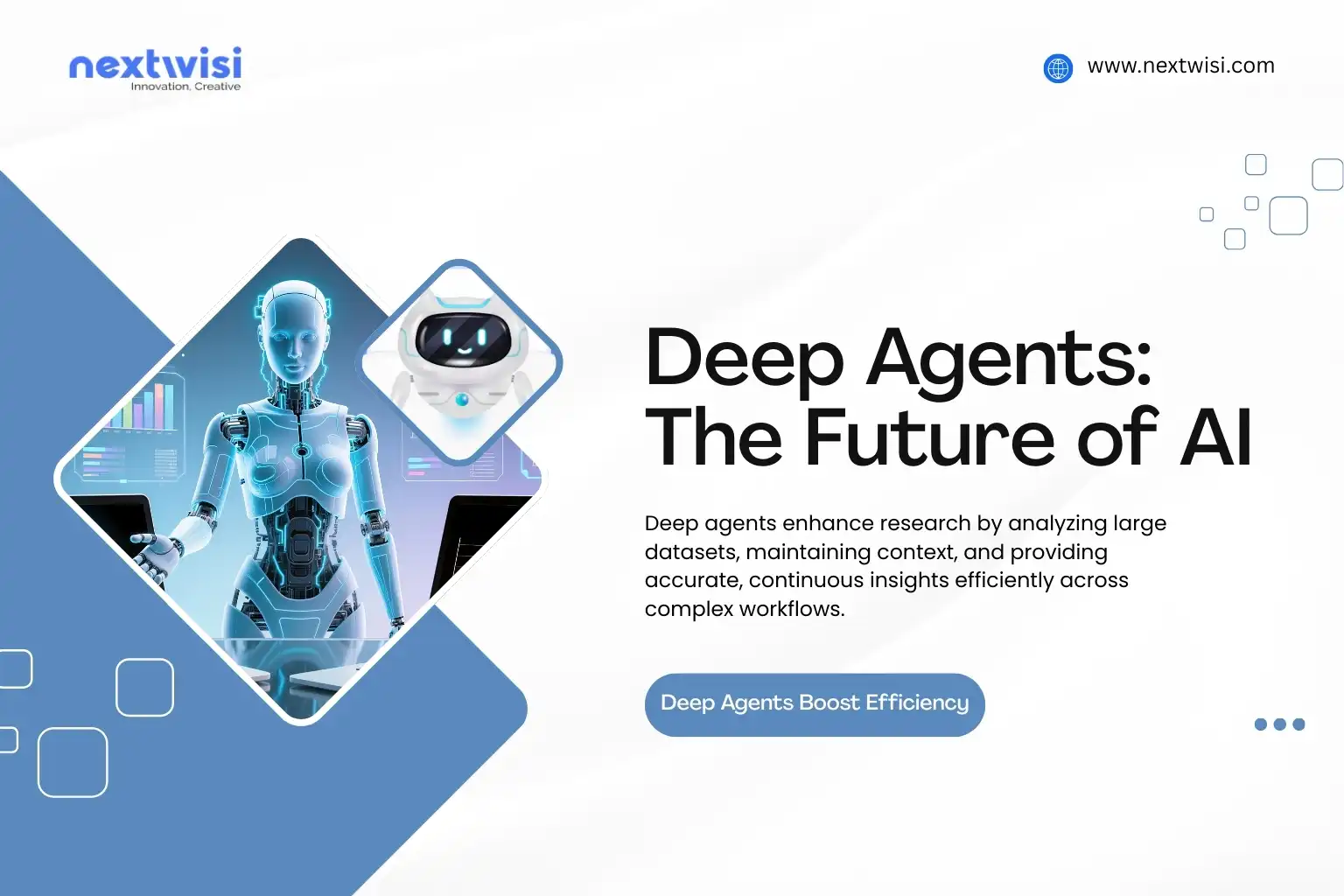
    Artificial intelligence (AI) is a rapidly developing area, and among the most current innovations in recent years, the development of deep agents can be listed. Deep agents, compared to shallow AI agents, can plan, store context, and perform complex and multi-step tasks over longer periods, unlike shallow AI agents, which only work in a single loop and use a tool to respond to input. They are a combination of structured planning, subagents, detailed system prompts, and a persistently maintained file system that helps to maintain memory, organization, and coherence. It is a combination that allows them to deal with long-horizon tasks like research, coding, analytics, and enterprise workflow automation with considerably greater efficiency and precision than traditional LLM loops.

    Advantages of Deep Agents

    The biggest benefit of deep agents is that they can be able to think long term and handle complex workflows without losing important context or accuracy. These agents do what shallow systems tend to fail to accomplish, which is to break big goals into small steps.

    Key Points:

    • Deep agents apply systematic planning tools to keep the workflow clear so that long tasks are always organized and rational during the multi-step processes in the most efficient way.
    • Sub-agents provide deep agents with the ability to delegate and delegate specific tasks, with each module working intensively to provide a part of a larger solution.

    Overcoming Memory Limitations with AI Agent Development Company

    One of the greatest weaknesses of naive AI agents is the absence of memory. They only use the context presented in the discussion, and it becomes impossible to remain consistent when it comes to the multi-hour tasks. Deep agents address this issue by use of a persistent virtual file system. Their note taking, keeping drafts, and shared data storage constitute a memory that can be shared across tasks and subagents. This system serves as a digital office where information may be stored, accessed, and updated, and the agent can repeat the actions previously performed, fix the mistakes, and enhance the accuracy as time passes. Even an AI agent development company will be able to rely on these frameworks to create custom agents for clients in healthcare, finance, logistics, software development, or scientific research. This is necessary in research, coding, and other work processes that take a long time.

    Importance of Detailed System Prompts

    The other characteristic of deep agents is that they use a highly detailed system prompt. In contrast to shallow agents, which use limited information to drive and maintain their operation, deep agents have a detailed blueprint teaching them how to utilize the tools, how to team with sub-agents, design workflows, and organize arguments. These cues usually consist of step-by-step illustrations, behavioral guidelines, and outlined directions for carrying out a given task. This makes the agent more predictable and intelligent even in situations where the agent is required to be creative and multi-step in solving problems or making complex decisions. In the absence of this formal mentoring, an LLM, however sophisticated, will tend to revert to superficial or intermittent behavior.

    Combining Planning, Subagents, and File Systems with AI/ML Development

    Planning, sub agents, and file systems enable deep agents to operate on the high complexity goals of research, coding, and enterprise automation. They are efficient, coherent and dynamically change their strategies. Integrating ai ml development tools further enhances predictive intelligence, workflow automation, and decision-making capabilities.

    Key Points:

    • Persistent file system means that deep file system agents can hold past knowledge and keep context, allowing long process execution without the loss of information.
    • Structured system prompts encourage deep agents to act in a manner that is predictable and enhances the accuracy of tasks in research, during multi-file coding, and in enterprise automation processes.
    • Sub-agents enable a breakdown of complicated goals, which provide deep agents with modular attention, quicker on-task execution, and enhanced quality in multi-step problem-solving.

    Frameworks for Building Deep Agents

    Such frameworks as deepagents have simplified the development of deep agents for developers and organizations. They offer a base such as a system prompt, planning tool, file system, as well as sub-agent support. It is customizable to particular industries or activities in a modular way, which makes it possible to create enterprise solutions that are capable of managing sophisticated research, coding, analytics, or workflow automation. This democratization of deep agents is transforming the approach of long-duration AI workflows and automations by businesses.

    Real-World Applications of Deep AI Agents

    Deep Agents for Research

    Deep agents make research more radical through the combination of planning, collaboration of sub-agents, and persistent memory. They process, summarize, and reconstruct big data sets with high-quality and contextual research products and in a time-saving, highly precise, and persistent manner.

    Deep Agents for Coding

    Deep agents in coding processes are autonomous developers. They design project outlines, test bugs, synchronize multi-file repositories, and ensure consistency across the long duration of development, further enhancing speed and reliability output.

    Transforming Industries with Deep AI Agents

    Deep agents are application of industries to be more effective in running workflows with long-term horizons and multi-steps. They are able to perform tasks in a very precise and steady manner with persistent memory, structured system prompts and cooperating sub-agents. Deep agents enhance productivity, lessen mistakes, and streamline decision-making in various sectors of the enterprise comprising research, coding, enterprise automation, and analytics, changing how businesses use AI intelligence to conduct vital operations.

    Rising Significance of Deep AI Agents in Business

    The significance of deep agents is also increasing because companies need AI that would handle complex workflows in a reliable manner. Their capacity to plan and execute, as well as store knowledge in long-term work, is becoming more critical in research, automation, coding, and analytics. By combining these systems, productivity will be high, there will be less error and scalability of performance, and even more so when other tools of AI/ML development are integrated to reach a greater level of intelligence, prediction, and automation.

    Conclusion

    Deep agents are a significant improvement in AI intelligence, allowing high-complexity tasks to be done over a very long period and with clarity and consistency. They are masters in research, coding, and automation of an enterprise through the use of planning tools, detailed system prompts, unrelenting file systems, and subagents. An Ai agent development company provides open-source frameworks such as DeepAgents and services, which are easier to adopt. It is the time of long-horizon AI, and deep agents are reinventing autonomous functionality.